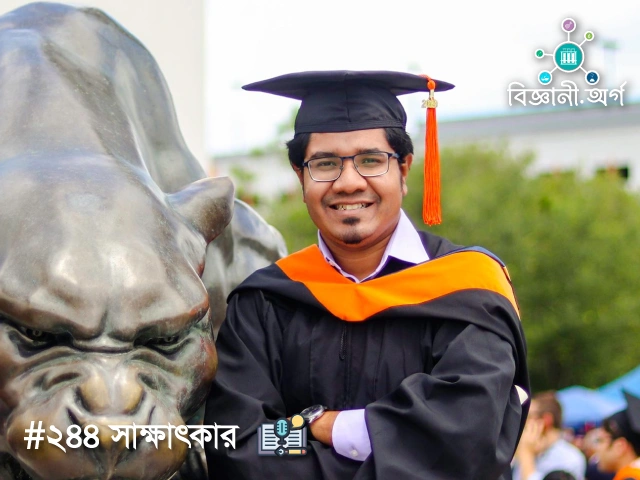


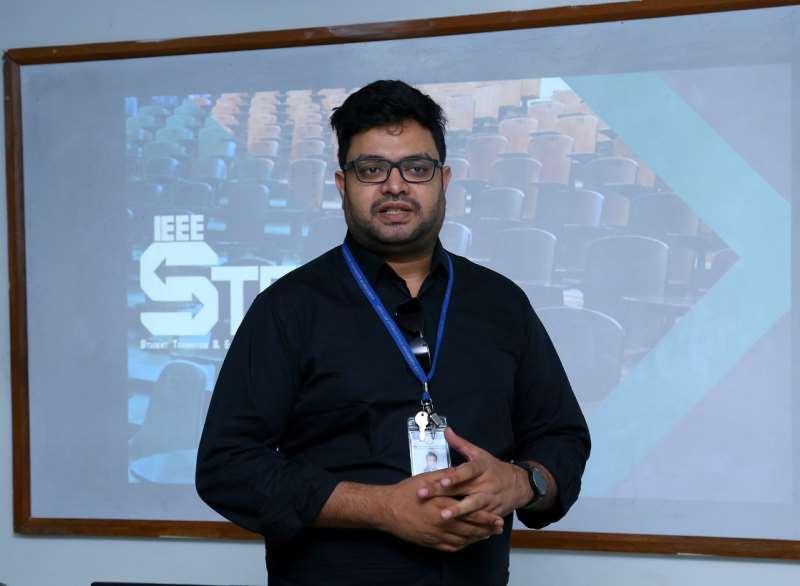
Dr. Tansir Ali is currently serving as a faculty member at the American International University – Bangladesh (AIUB). He began his academic journey in Physics and Applied Physics and later completed his undergraduate studies in Electrical and Telecommunication Engineering (ETE) at North South University. For higher education, he pursued an MSc in Communication Engineering at Robert Gordon University, Aberdeen, UK, and subsequently earned a PhD from Greenwich University.
His research primarily focuses on Amplifier Linearisation, Nanoelectronics, Wireless Body Area Network (WBAN), High Energy Electronics, and the Internet of Things. He has worked specifically on designing low-error CMOS chips and antenna design for WBAN. After returning to Bangladesh and joining AIUB, he has been helping students solve real-world problems through Capstone Projects. Additionally, he has conducted research on the effects of mobile phone radiation on the human brain.
💬 Q&A Session:
Question: Please tell us about yourself.
Answer: I am currently working at AIUB. My educational journey began at Harman Meiners School and College, then I completed HSC from Notre Dame College. I was admitted to the Department of Physics at Dhaka University, but since I preferred Applied Physics, I joined the ETE program at North South University and completed my undergraduate degree there in 2007. Afterwards, I completed my MSc and PhD in the UK, returning home in 2013. I am grateful to my family and my spouse for their support in my academic success.
Question: Please share your research experience in the UK.
Answer: While studying for my MSc, I had to work two jobs. I studied in the morning, went to my first job, and after classes, went to the second job. Maintaining a strict routine allowed me to achieve a Distinguished First Class in my MSc. After that, I got the opportunity to pursue a PhD at Greenwich University.
Question: What was your PhD research about?
Answer: My research was on Amplifier Linearisation, which focused on minimizing signal distortion in power amplifiers. For this research, I developed CMOS chips and introduced new methods from Nanoelectronics and Quantum Physics. As a result, it became possible to create chips with minimal errors.
Question: Please tell us about Wireless Body Area Network (WBAN).
Answer: WBAN is a technology for wireless communication over short distances around the human body. We designed antennas that are low-power and high-bandwidth. Applications include devices like Bluetooth headphones and smartwatches. The main goal is to keep harm to the human body to a minimum.
Question: What is the summary of your research on mobile phone radiation on the brain?
Answer: When talking on a mobile phone, radiation causes the temperature of the brain to rise by up to two degrees within one minute. Longer conversations increase the extent of potential harm.
Question: Please tell us about the Capstone Project.
Answer: The Capstone Project involves final-year students looking for solutions to real-world problems. This enhances students’ research and innovative abilities.
Question: What kind of research are you currently doing?
Answer: Alongside teaching, I am conducting research on Nanoelectronics, Nuclear Power, High Energy Electronics, Automation, the Internet of Things, and similar topics.
Question: What advice would you give to young students?
Answer: Science is essential for the advancement of human civilization. Research and engineering play a major role in solving important problems. Life is short, so making a meaningful contribution to the betterment of society is possible.
Dr. Tansir Ali’s research has opened new horizons in Nanoelectronics, WBAN, and High Energy Electronics. He has highlighted the importance of research and innovation for young scientists. The Biggani.org team wishes him continued success with his research. May his work serve as inspiration for students and researchers in Bangladesh.
Exploring New Frontiers in Science: Dr. Tansir Ali’s Research and Experience
Dr. Tansir Ali is currently a faculty member at the American International University – Bangladesh (AIUB). He began his academic journey in physics and applied physics and completed his undergraduate degree in Electrical and Telecommunication Engineering (ETE) at North South University. He earned his MSc in Communication Engineering from Robert Gordon University, Aberdeen, UK, followed by a PhD from Greenwich University.
His research focuses on amplifier linearisation, nanoelectronics, Wireless Body Area Network (WBAN), high-energy electronics, and the Internet of Things. Dr. Ali has designed low-error CMOS chips and contributed to antenna designs for WBAN applications. After returning to Bangladesh, he has been leading Capstone Projects to help students solve real-world engineering problems. He has also conducted studies on the effects of mobile phone radiation on the human brain.
💬 Q&A Section:
Question: Please tell us about yourself.
Answer: I am currently working at AIUB. My education started at Harman Meiners School & College, then I completed HSC from Notre Dame College. I joined the Department of Physics at Dhaka University but later chose Applied Physics and completed my undergraduate in ETE from North South University in 2007. I pursued higher studies in the UK, completing MSc and PhD, and returned to Bangladesh in 2013. I am grateful to my family for their support throughout my academic journey.
Question: Can you share your experience studying in the UK?
Answer: While pursuing my MSc, I had to work two jobs to support my living and tuition. I maintained a strict routine—study in the morning, first job, classes, then second job—but I never compromised my learning. As a result, I earned a Distinguished First Class in MSc. Later, I received a full scholarship to pursue a PhD at Greenwich University.
Question: What was your PhD research about?
Answer: My research focused on amplifier linearisation, aiming to reduce signal distortion in power amplifiers. I designed CMOS chips and explored new methods using nanoelectronics and quantum physics. Ultimately, I developed low-error chips, which required extensive learning of software tools and even travel to China for experiments.
Question: Tell us about Wireless Body Area Network (WBAN).
Answer: WBAN enables short-range wireless communication around the human body. We designed low-power, high-bandwidth antennas and published our findings. Applications include Bluetooth headphones and smartwatches. The main focus is to ensure minimal harm to the human body.
Question: Can you summarize your research on mobile phone radiation on the brain?
Answer: We found that during phone calls, radiation increases the brain’s temperature by up to two degrees within just one minute. Prolonged usage can lead to greater exposure and potential harm.
Question: Please explain the Capstone Project.
Answer: Capstone Projects involve final-year students conducting applied research to solve real-world problems that are commercially viable. These projects give students practical experience in tackling real-life challenges.
Question: What research are you currently pursuing?
Answer: Alongside teaching, I am working on nanoelectronics, nuclear power, high-energy electronics, automation, and the Internet of Things.
Question: What advice do you have for young students interested in science?
Answer: Science is crucial for human civilization. Research and engineering can solve real-world problems and improve lives. Life is short, so contributing to societal progress makes it meaningful.
Dr. Tansir Ali’s work in nanoelectronics, WBAN, and high-energy electronics opens new frontiers in applied science. His research and guidance offer inspiration for young scientists in Bangladesh. The biggani.org team wishes him continued success and hopes his work motivates future researchers and students.