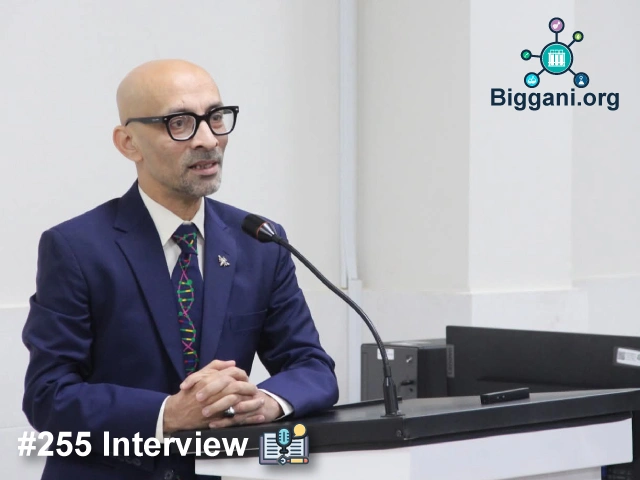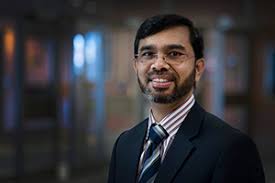
Dr. Salim Ahmed has been working as an Assistant Professor at the Faculty of Engineering and Applied Science, Memorial University of Newfoundland, since February 2012. He started his academic life at Rangpur District School and went on to receive his primary and higher education from Carmichael College and Bangladesh University of Engineering and Technology (BUET). He later pursued advanced research at the University of Alberta and Qatar University.
Dr. Ahmed’s primary research area is Safety and Risk Engineering. Currently, he is working on accident modeling and risk assessment in the chemical processing industry. His research mainly focuses on developing mathematical models to prevent major accidents by analyzing the sequential impact of mechanical failures and human errors. He proposes methods for identifying fire and explosion-related risks and recommends control systems to prevent accidents. Dr. Ahmed is engaged in research and teaching at Memorial University, located in St. John’s, Canada.
💬 Q&A Session:
Question: First, please tell us a little about yourself.
Answer: Thank you to everyone associated with Biggani.org. There’s nothing particularly extraordinary to share about myself. The life stories of those of us living abroad tend to be quite similar: finishing school and college in a small town, leaving home for university, going abroad for higher studies, and eventually rebuilding oneself in a new place. My educational steps were: Rangpur District School – Carmichael College – BUET – University of Alberta – Qatar University – Memorial University. I am currently working at Memorial University, St. John’s, Newfoundland.
Question: What are you currently working on?
Answer: My current research is on accident modelling. Specifically, I develop mathematical models to analyze how mechanical failures and human errors in chemical processing plants can step by step lead to major accidents. The purpose of these models is to determine effective preventive measures.
Question: In your PhD, you worked on “identification of continuous-time models from sampled data.” Can you explain this in simple terms?
Answer: Simply put, it means determining mathematical relationships among multiple variables from collected data. This can be static or dynamic. My work focused on building dynamic models. For example, by analyzing how increased allocation in education impacts quality over time, you can build a mathematical model. Similarly, relationships among variables in chemical processes can be modeled this way.
Question: Could you elaborate on Safety and Risk Engineering?
Answer: Safety and Risk Engineering involves estimating and controlling risks in engineering-related activities. The main objective is to identify risk levels and apply necessary technologies and processes to keep those risks within acceptable limits.
Question: How can your research benefit us?
Answer: Global statistics show that risk-taking tendencies are higher in developing countries. For example, the environment in Dhaka is extremely hazardous. My research is related to fires and explosions, which are critical in chemical processing plants. By applying the preventive measures proposed in my research, accidents can be avoided.
Question: What are your experiences with the University of Alberta?
Answer: The University of Alberta is a high-quality institution. In 2001, we established the first Bangladeshi Student Association there. Experiencing -40 degree Celsius winters is especially memorable.
Question: Tell us about the Memorial University of Newfoundland.
Answer: Memorial University is the largest university in Atlantic Canada. Situated in St. John’s, the island’s natural beauty is exceptional. Through the co-op program in the engineering faculty, students gain two years of work experience. Currently, five Bangladeshi professors are working here.
Question: What research do you want to pursue in the future?
Answer: I want to continue research in Safety and Risk Engineering. My goal is to reduce the number of accidents and casualties in chemical factories globally and to expand a culture of safety.
Question: Can Bangladeshi students get admission?
Answer: Currently, 400–500 Bangladeshi students are studying here. Admission information is available at www.mun.ca.
Question: Any advice for young students?
Answer: A curious mind is essential for working in science. The impact of research depends on how closely your interests align with your chosen field.
🔗 Profile Link:
https://www.mun.ca/engineering/people/saahmed.php
🪶 Closing Remarks:
Dr. Salim Ahmed’s research is making important contributions to Safety and Risk Engineering. Centered on accident prevention and risk analysis in the chemical processing industry, his work is a guiding light for young Bangladeshi scientists. The Biggani.org team wishes Dr. Salim Ahmed the greatest success in his research. May his work continue to inspire students from Bangladesh.