👨🔬 Researcher Profile:
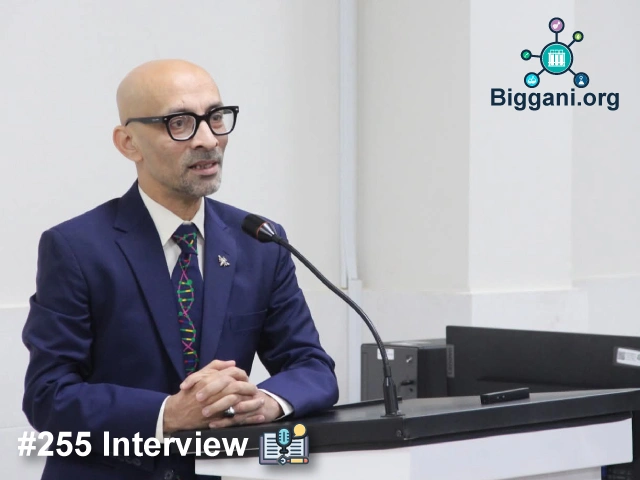
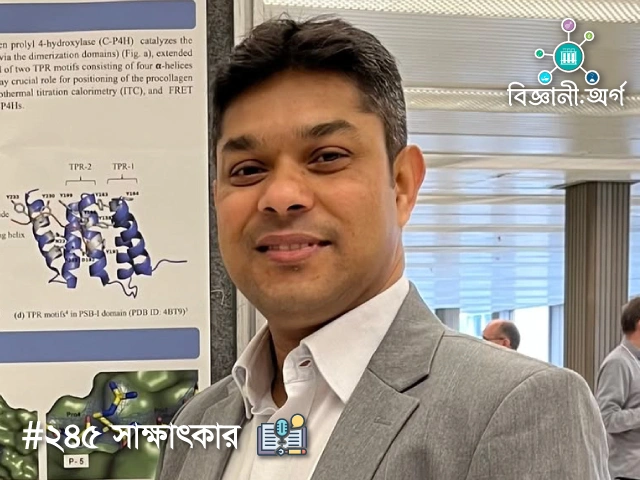
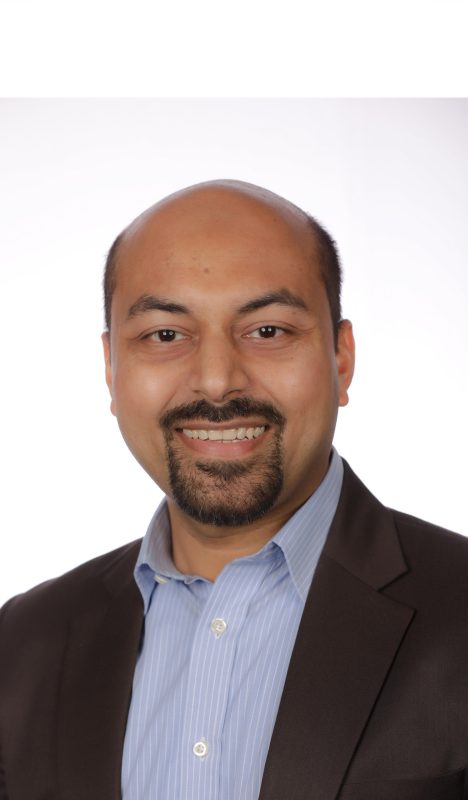
Dr. Manjurul Amin Rony is working as an Assistant Professor in the Department of Pharmaceutical Sciences at Hampton University, Virginia, USA. For over a decade, he has been involved in research and teaching in pharmaceutical sciences and neuropharmacology.
In 2009, he joined a PhD program in the United States and completed his PhD in Pharmaceutical Sciences under the supervision of Professor Shafiqur Rahman at South Dakota State University in 2014. Six of his research papers have been published in international journals.
In Bangladesh, he earned his B.Pharm (2003) and M.Pharm (2004) degrees from the University of Dhaka and subsequently taught at a private university.
His main research areas are drug delivery, neuropharmacology, and psychopharmacology. He is a reviewer and editorial board member for several international journals, including Neuroscience Letters.
💬 Q&A Session:
Question: First, please tell us a bit about yourself.
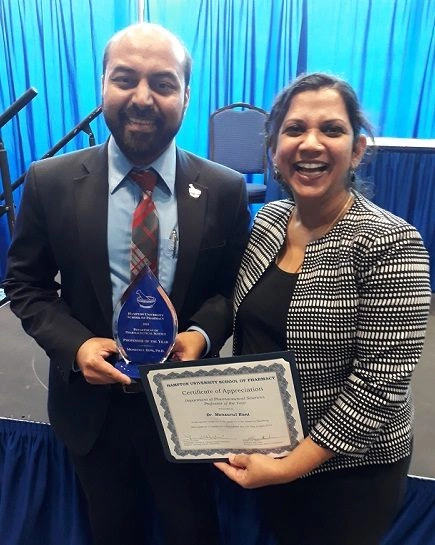
Answer: I have been engaged in research and teaching in the United States for the past ten years. Currently, I am working as an Assistant Professor in the Department of Pharmaceutical Sciences at Hampton University. In recognition of my teaching, I have received the “Professor of the Year” and “Academic Excellence Award” from the university. I first came to the United States in 2009 to join the PhD program at South Dakota State University, where I completed my degree in Pharmaceutical Sciences five years later. Before that, after completing my B.Pharm and M.Pharm at the University of Dhaka, I worked as a lecturer at a private university.
Question: You are primarily a pharmacist, but how did your interest in research begin?
Answer: At the very start of my career as a pharmacist, I chose research because of an insatiable curiosity to learn new things. While working in the formulation development department of a pharmaceutical company in Bangladesh, I gained experience in “extended release drug delivery” and “drug stability,” which played an important role in my master’s thesis as well. My interest in research, support from my teachers, and encouragement from my family inspired me to pursue this path.
Question: Could you briefly explain the field of Pharmacology?
Answer: Pharmacology is an important branch of pharmacy that provides knowledge about how drugs work, their side effects, uses and contraindications, drug interactions, and the pharmacokinetics of drugs in the body. It is an essential subject for healthcare professionals.
Question: What kind of research are you doing in neuroscience?
Answer: I have been working in the applied branches of neuroscience, specifically neuropharmacology and psychopharmacology.
Question: Please tell us about your research on drug delivery.
Answer: The main goal of our research is to increase the solubility of poorly soluble drugs. Drugs that are not sufficiently soluble in water cannot be absorbed in the body and thus are less effective. We have successfully enhanced the solubility of some drugs using “self-emulsification” and “solid dispersion” methods, which can help improve their effectiveness.
Question: Tell us about your research in psychopharmacology.
Answer: The main aim of psychopharmacology is to develop more effective medicines for the treatment of mental health disorders like depression and addiction. Currently available drugs are limited in their effectiveness and tend to have more side effects. We have developed an experimental drug that significantly reduces depression and alcohol addiction in animal models. More research is needed on its mechanism in the brain before it can be tested in humans.
Question: You have received the Elsevier Outstanding Reviewer award—could you tell us about that?
Answer: In 2017, I received the Elsevier Outstanding Reviewer award for my contributions as a reviewer to the journal Neuroscience Letters. As a neuropharmacology expert, I have also taken on editorial and reviewer responsibilities for several other international journals.
Question: What are your plans for future research?
Answer: Besides my current research, I want to encourage a greater interest in neuroscience and pharmacology among young students in Bangladesh. To this end, I am working as General Secretary of the Bangladesh Neuroscience Society and have taken the initiative to create an educational website called pharmacoloz.com.
Question: What advice do you have for young scientists?
Answer: The purpose of learning science should be to understand, not simply to memorize. Always try to find the answers to the “why” and “how” of every topic. To become a scientist, curiosity, humility, and hard work are essential. Young people in Bangladesh are very talented; they just need proper guidance and opportunity. I would advise them to pursue overseas training for higher studies and research.
Question: Are there opportunities for young researchers to be admitted to your university?
Answer: Hampton University offers master’s and PhD programs in various disciplines. Interested applicants can find details on the university’s Graduate College website. TOEFL and GRE preparation is necessary for admission.
Dr. Manjurul Amin Rony is representing Bangladesh in pharmaceutical and neuroscience research in the United States. His research has created new possibilities for the treatment of depression and addiction. His initiatives to inspire young students in scientific pursuits are praiseworthy.
The biggani.org team wishes him continued success in his research and hopes that his contributions will be a source of inspiration for young scientists in Bangladesh.
Representing Bangladesh in U.S. Pharmaceutical Research — Dr. Manjurul Amin Rony
Dr. Manjurul Amin Rony is an Assistant Professor in the Department of Pharmaceutical Sciences at Hampton University, Virginia, USA. For over a decade, he has been engaged in teaching and research in pharmaceutical sciences and neuropharmacology.
He came to the United States in 2009 to pursue his Ph.D. at South Dakota State University, where he completed his doctorate in Pharmaceutical Sciences under the supervision of Professor Shafiqur Rahman. His doctoral work resulted in the publication of six peer-reviewed research papers.
Before moving abroad, Dr. Rony earned his B.Pharm (2003) and M.Pharm (2004) degrees from the University of Dhaka, Bangladesh, and served as a lecturer in a private university. His primary research interests include drug delivery systems, neuropharmacology, and psychopharmacology.
Dr. Rony has served as a reviewer for more than a dozen international journals, including Neuroscience Letters, and received the Elsevier Outstanding Reviewer Award (2017) for his contributions.
💬 Interview:
Question: Please tell us a bit about yourself.
Answer: I have been engaged in teaching and research in the United States for the past ten years. Currently, I am working as an Assistant Professor in the Department of Pharmaceutical Sciences at Hampton University. In recognition of my academic work, I received the “Professor of the Year” and “Academic Excellence Award.” I came to the U.S. in 2009 to pursue a Ph.D. at South Dakota State University and completed my degree in Pharmaceutical Sciences five years later. Before that, I completed my B.Pharm and M.Pharm at the University of Dhaka and worked as a lecturer at a private university in Bangladesh.
Question: You started as a pharmacist. What inspired you to pursue research?
Answer: From the beginning of my career, I chose research out of an unending curiosity to learn new things. While working in the formulation development department of a leading pharmaceutical company in Bangladesh, I had the opportunity to study extended-release drug delivery and drug stability, which later became central to my master’s thesis. My teachers, family support, and a genuine desire to explore the unknown have been the key inspirations behind my research career.
Question: Could you explain what Pharmacology is?
Answer: Pharmacology is one of the core branches of pharmacy. It deals with how drugs act on the body, their mechanisms of action, side effects, indications and contraindications, drug interactions, and how the body metabolizes and eliminates them. It provides essential knowledge for pharmacists and health professionals.
Question: What kind of neuroscience research are you involved in?
Answer: I work in the applied area of neuroscience, particularly in neuropharmacology and psychopharmacology.
Question: You have done extensive work on drug delivery systems. Could you elaborate?
Answer: Our main research goal has been to enhance the dissolution of poorly soluble drugs. Most newly discovered drugs are poorly water-soluble, which limits their absorption and effectiveness. Using techniques like self-emulsification and solid dispersion, we have successfully improved the solubility of certain drugs, which could make them more therapeutically effective.
Question: Tell us about your work in psychopharmacology.
Answer: The aim of psychopharmacology research is to develop more effective medications for mental disorders like depression. Current antidepressants have significant limitations—they take 6–8 weeks to work and often cause side effects. We have developed a novel experimental drug that has shown positive results in animal models by reducing both alcohol addiction and alcohol-induced depression. More studies are needed to fully understand its effects on the brain before it can be considered for human use.
Question: You received the Elsevier Outstanding Reviewer Award. What was that recognition for?
Answer: In 2017, I received the Elsevier Outstanding Reviewer Award from Neuroscience Letters for my contributions as a peer reviewer. As a neuropharmacology specialist, I have been invited to review many manuscripts and provide detailed scientific feedback. I also serve on the editorial boards of several other international journals.
Question: What are your future research and academic plans?
Answer: In addition to my ongoing research, I hope to promote neuroscience and pharmacology among young Bangladeshi students. The United States offers numerous funded opportunities for graduate research. To connect students with these opportunities, I am serving as the General Secretary of the Bangladesh Neuroscience Society (BNSS) and have initiated a website for students interested in pharmacology education — pharmacoloz.com.
Question: What advice would you give to young students aspiring to become scientists?
Answer: Learn science in a way that allows you to teach it to others. Focus on understanding concepts rather than memorizing them. Always ask “why” and “how.” To become a scientist, curiosity, humility, and hard work are far more important than innate intelligence. Bangladeshi students are highly talented — they just need the right guidance and opportunities. For advanced training, I encourage them to pursue graduate studies abroad.
Question: Are there opportunities for graduate students to join your university?
Answer: Yes, Hampton University offers both master’s and Ph.D. programs in various fields. Interested students can find details on the university’s Graduate College website (http://www.hamptonu.edu/academics/schools/gradcol.cfm). Applicants generally need to take the TOEFL and GRE exams for admission.
Dr. Manjurul Amin Rony represents Bangladesh in cutting-edge pharmaceutical and neuroscience research in the United States. His work on drug delivery and psychopharmacology opens new possibilities for treating depression and addiction. His dedication to mentoring young scientists and promoting neuroscience education in Bangladesh is equally commendable.
The biggani.org team wishes Dr. Rony continued success in his scientific journey and hopes his work inspires aspiring researchers across Bangladesh.