


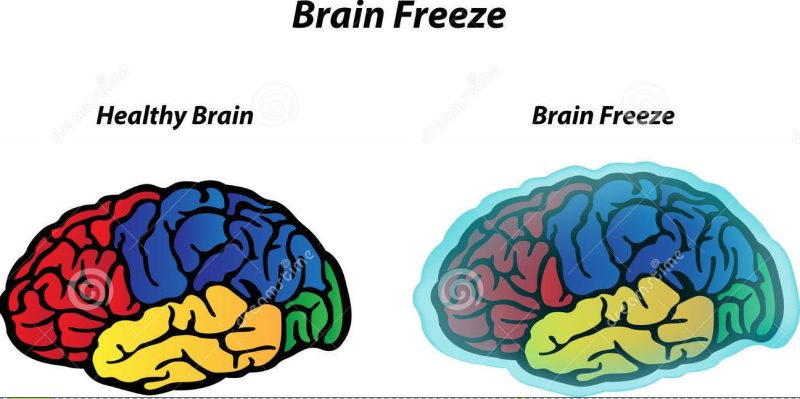
Some sensations are truly delightful during the hot summer—like the taste of cold ice cream. But you might notice that if you eat very cold ice or ice cream too quickly, you experience a sudden, sharp pain in your head. This phenomenon, discussed in neuroscience, is commonly known as “brain freeze” among people.
Parents or elders always advise us to eat slowly and chew our food well—because this helps us digest what we eat. The sudden sharp pain in your head when you eat very cold food quickly is a kind of natural restriction directly imposed by our brain, but unlike the advice for digestion, this warning has nothing to do with digesting food. Actually, our brain cannot easily adapt to sudden changes of any kind. When you quickly put very cold ice or ice cream in your mouth, the temperature inside your mouth drops rapidly—leading to an unusual reaction from your brain. To understand the scientific steps behind how this abnormal reaction occurs when eating ice cream too quickly, we need to know a bit about the human circulatory and nervous systems.
Let’s first learn about the essential aspects of the circulatory system. On the left side of our neck is the left carotid artery, and on the right side is the right carotid artery. Think about how in vampire or zombie-themed horror movies, they often show the creatures biting the neck to suck blood—there’s a scientific reason for this: it’s because they can quickly draw a large amount of oxygen-rich blood, which is possible due to the presence of the left and right carotid arteries. We know that arteries circulate pure, oxygen-rich blood from the heart throughout the body. Each carotid artery divides into two branches—the internal carotid artery and the external carotid artery. The internal carotid artery supplies the brain with pure blood, while the external carotid artery supplies pure blood to the face and neck. The internal carotid artery further splits into branches to distribute oxygen-rich blood throughout the brain. Among these, an important branch is the anterior cerebral artery, which delivers oxygen-rich blood to the central parts of the brain’s frontal lobe and superior parietal lobe.
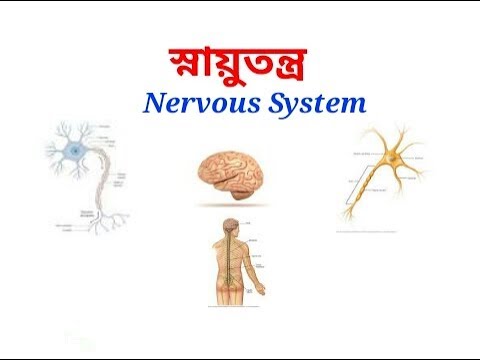
Now, let’s cover a few relevant points about the human nervous system. Let’s start with those two parts of the brain—the “frontal lobe” and the “superior parietal lobe.” The frontal lobe, located at the front of the brain, is a crucial part that controls emotional expression, problem-solving, memory, language, judgment, and reasoning. The superior parietal lobe chiefly helps us perceive our surroundings with our five senses, and helps us understand the position and movement of our own body in relation to our environment.
The entire human nervous system, including the brain, is made up of numerous neurons or nerve cells. Each neuron has a long, thread-like part called the “axon,” and the round part of the neuron, which contains the nucleus, is known as the “cell body” or “soma.” In many cases, several neurons cluster together, with their cell bodies forming special groupings called “ganglia.” You’ve probably experienced your mouth watering just by seeing or smelling delicious food. This is due to a special type of ganglia called the “parasympathetic ganglion.” The “sphenopalatine” is such a parasympathetic ganglion that regulates the blood flow in the external carotid artery to increase or decrease the temperature of the face (namely the inner lining of the nasal cavity, the roof of the mouth, the four pairs of sinuses around the nasal cavity, etc.) and the neck.
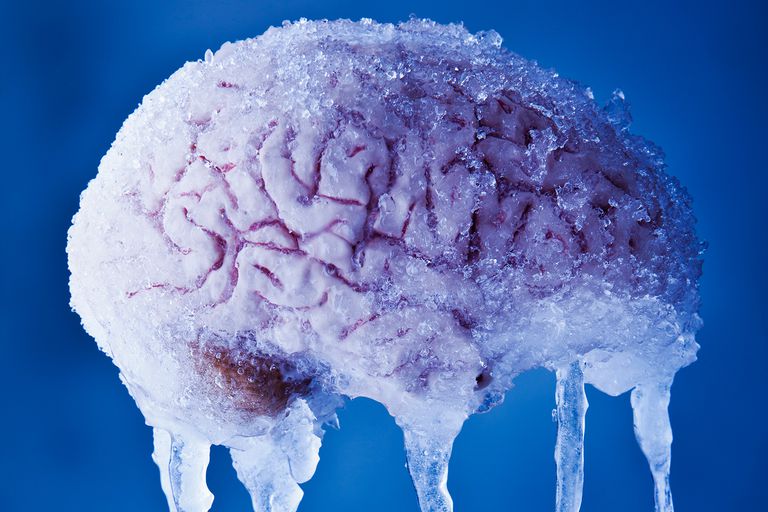
Now it will be easier to understand how the brain acts to stop us when we eat very cold ice cream in a hurry. If you don’t eat cold foods like ice cream or kulfi slowly, the sphenopalatine ganglion rapidly decreases the blood flow in the roof of the mouth to quickly lower its temperature. As a result, blood flow in the external carotid artery quickly drops. The blood flow from the heart that travels through the left or right carotid arteries is divided into the external and internal carotid arteries—so when the blood flow rate in the external carotid artery drops drastically but remains constant in the main carotid arteries, the blood flow in the internal carotid artery, especially its branch the anterior cerebral artery, rises very rapidly. This sudden surge increases blood flow to the central part of the brain’s frontal lobe and superior parietal lobe, causing a momentary, intense headache.
Any pain in the nervous pathway is called “neuralgia” in the language of neuroscience. Due to the key role of the sphenopalatine ganglion in the headache we’ve discussed—brain freeze—another name for this pain is “sphenopalatine ganglioneuralgia.”
Similarly, if very hot air touches the neck or face, or if you suddenly step outside into blazing sunlight after staying indoors at a normal temperature for a long time, you might feel a sudden headache. This is because the sphenopalatine ganglion quickly increases blood flow to the neck or face. Try explaining the rest of the explanation for heat-induced headaches on your own now.
Subscribe to receive more news on science and technology.
[mc4wp_form id=”3448″]











very helpful post
Thank you so much.