
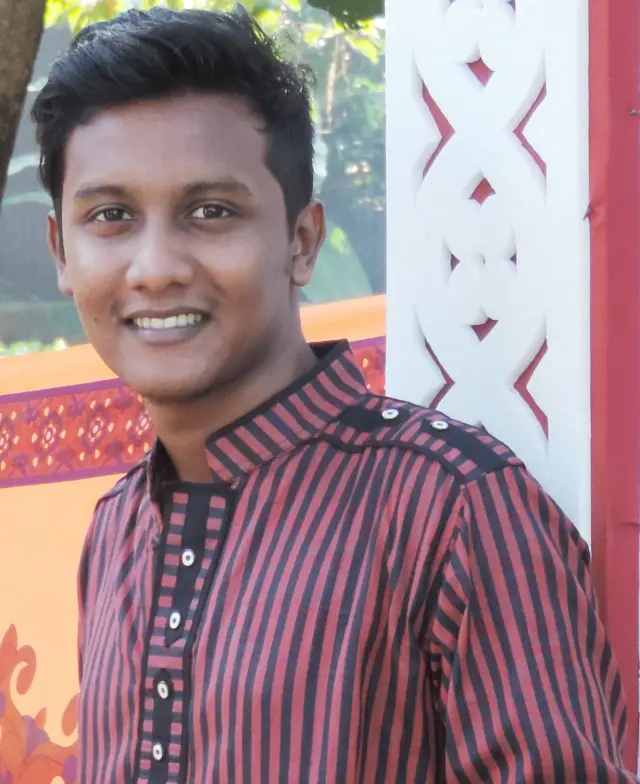
At Biggani.org, we are interviewing members of the Z-Gen generation. In this series, we have interviewed Diponker Sarker Dipto. He is currently working as a research assistant to Professor Dr. Mahdi Rahman Chowdhury in the NSU Optics Lab at North South University.
Tell us about your research topic
My research mainly focuses on machine learning in the biomedical sector. To be specific, I work on computer vision and medical image analysis. The main aims of my research are twofold.
1) How to leverage the advancements made in the field of computer vision through artificial intelligence for the analysis of medical images (X-rays, MRI, ultrasound).
2) How to adapt and refine the field of computer vision to solve numerous problems related to medical imaging.
Overall, my goal is to advance the fields of artificial intelligence, computer vision, and medical image analysis.
How does your research benefit us?
Different types of pathological tests are irreplaceable when it comes to disease diagnosis, treatment, and prognosis. Among these, many diseases are diagnosed and treated using various imaging technologies. Now, with the advancement of science and technology, making proper use of the data collected from these imaging technologies and ensuring their effective application for diagnosis and treatment is an open challenge. Through my research, I try to find solutions to this challenge. The results of my research will directly benefit the software development of devices used in disease diagnosis and treatment. In other words, regardless of whether a country is developed, developing, or underdeveloped, my research will help make disease diagnosis and treatment more accessible and affordable to the general public by reducing dependency on expert personnel.
Would you like to share any research experiences with us?
One of my research projects was focused on dealing with data imbalance in cancer diagnosis datasets. Specifically, the aim was to find algorithmic techniques that properly address the often severe imbalance in the number of infected versus healthy cells in real-life cancer datasets. By conducting research on multiple cancer datasets, we were able to demonstrate that a particular technique is comparatively more effective in highly imbalanced datasets.
What qualities do you think a scientist should have?
First and foremost, a scientist should have immense interest in science and technology. Secondly, they need the mindset and perseverance to invest time and effort in their area of interest. Thirdly, I believe a scientist’s ethical standards should be exceptionally high. Because without this last quality, it is not possible to truly pursue science for the benefit of humanity.
Do you have any message for the young students in Bangladesh who want to pursue science?
I heard this advice in a Japanese animation: “The best time to plant a tree was 20 years ago. The second best time is today.” So, start from where you are, study a lot – this will help instill deep interest in your chosen subject. Connect with your university professors and give your all according to their guidance. If you’re unable to connect with professors, reach out to your senior peers for advice and act accordingly. No matter how small your contribution is, don’t hesitate. Above all, aim to join a community dedicated to science-mindedness and research.
Your LinkedIn site address
https://www.linkedin.com/in/deponker-sarker-depto-607559224