In discussions about healthcare in Bangladesh, we often focus on Dhaka and other major cities. Yet, nearly 68% of the country’s population lives in rural areas, where the light of modern medical care still hasn’t fully reached. According to the Bangladesh Bureau of Statistics 2023 report, only 30 to 40 percent of rural residents regularly access healthcare. That means two-thirds of the population still stand outside or at the margins of the healthcare system.
The root cause of this disparity lies in the severe unevenness of healthcare infrastructure and the distribution of specialist doctors. Recent analysis by the World Health Organization shows that about 70–80 percent of specialist doctors and quality hospitals are concentrated in Dhaka and other urban centers. As a result, complex treatments for heart disease, cancer, kidney, or neurological conditions are virtually absent in rural areas. For a rural patient, reaching the capital means a long battle of time, money, and stress.
This harsh reality is further reflected in upazila health complexes and union-level health centers. Regular scenes include shortages of doctors, nurses, lab technicians, or medicines. Due to the lack of modern diagnostic facilities or advanced lab services, diseases are not detected at early stages, leading to complications, higher treatment costs, and premature deaths. To this is added the absence of electronic health records—making it difficult for a patient’s medical history to travel easily from one hospital to another, posing a challenge for doctors to understand a patient’s condition.
It’s not just infrastructural weaknesses; there’s a deep link between rural healthcare and the limitations of poverty and education. Economic surveys show the poverty rate in the country is 20.5 percent, with extreme poverty at 10.5 percent. Literacy rates in rural areas remain below 65 percent, and primary health awareness is nearly nonexistent. As a result, even preventable conditions like diarrhea, waterborne diseases, malnutrition, or skin diseases cripple rural people and often claim lives.
Every day, about 50,000 to 70,000 patients crowd hospitals in Dhaka, of which 60 percent come from rural areas. These patients often become helpless under the pressures of a long journey, accommodation challenges, lengthy queues, and costly treatment. According to World Health Organization guidelines, there should be 4.5 doctors per 10,000 people, but Bangladesh has only 5. Even greater disparity is found in the national budget—while at least 5 percent of GDP should be spent on health, Bangladesh allocates only 2.3 percent.
This gap and loss of trust is driving millions to seek treatment abroad. According to Bangladesh Bank, where about 2 billion dollars was spent on foreign treatment in the 2018–19 fiscal year, this rose to almost 5–7 billion dollars by 2023. Every year, 1 to 1.2 million people travel to countries like India, Singapore, Malaysia, or Thailand for medical treatment. The main reasons are clear—wrong diagnoses, a shortage of specialist doctors, lack of evidence-based second opinions, and a crisis of trust in local doctors.
The result is not just a waste of money, but a deep distrust in the healthcare system. On one side, the domestic health sector is losing the pressure—and thus value—of outbound patients, while on the other, there’s increasing pressure on the national economy. Only 16.9 percent of Bangladesh’s healthcare spending comes from the government budget; the remaining 73 to 96 percent is paid out-of-pocket by patients. As a result, advanced treatment remains an unattainable dream for rural or middle-class people.
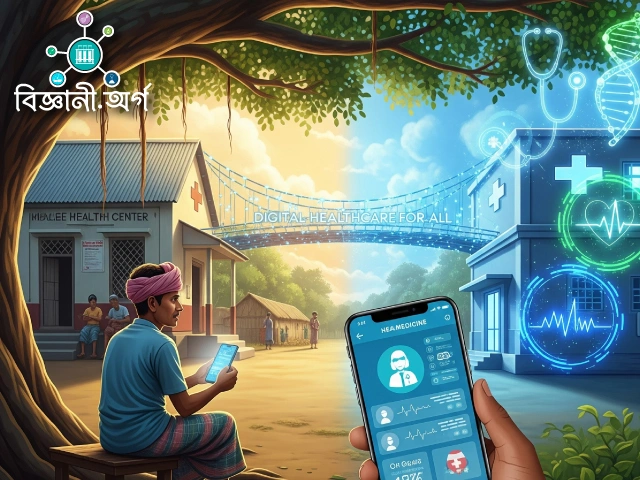
This is where technology comes in. Global health experts repeatedly point out that leveraging artificial intelligence (AI), big data, and machine learning to build telemedicine and predictive diagnostics can break down these walls of disparity. Recent studies suggest that if electronic health records are established for patients, up to 97 percent of services can be covered. Add to that telemedicine, online report analysis, AI-driven diagnostic apps, and health insurance—all together can create an integrated healthcare ecosystem.
A new name in this context of potential is Wikimedix. This AI-powered app could be an affordable and accessible primary healthcare solution for both rural and urban populations. This mobile-based platform offers skin disorder analysis, lab report and radiology interpretation, AI-driven “Ask Your Doctor” feature, digital health record storage for patients, the option to get second opinions, and even health insurance integration. Best of all—it works even with limited internet connectivity.
If this technology is utilized properly, it could yield multi-dimensional benefits. First, patients will save time and money, as many common issues can be resolved within the village. Second, the excessive patient load on Dhaka hospitals will decrease, allowing doctors to focus more on complex cases. Third, a national integrated health database will be established, which will be invaluable for the future. Most importantly, such platforms will gradually help reduce the trend of seeking treatment abroad.
Bangladesh’s healthcare sector now stands at a crossroads. On one side, there are infrastructural limitations, budget shortfalls, and shortages of specialist doctors; on the other, there is the potential of AI-powered technology, telemedicine, and digital health services. Initiatives like Wikimedix may not have reached the stars just yet, but they are undoubtedly bold and timely steps.
The future of healthcare is no longer just for Dhaka. If a farmer, laborer, or student can receive primary healthcare and accurate diagnosis on their mobile phone, that will be the true democratization of health services. If this dream of digital equity becomes reality, Bangladesh will not only reduce overseas expenditure, but also build a trustworthy, modern, and inclusive healthcare sector.
Healthcare will be for everyone, not just the cities—but for every person in the country.
✍️ News Desk, Biggani.org
📧 [email protected]