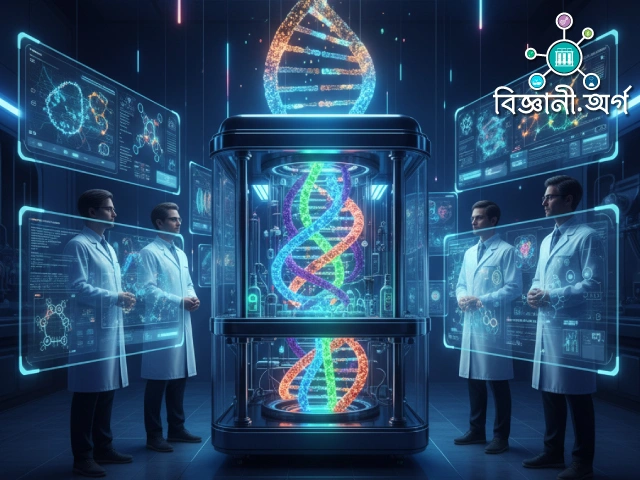
When we read a book, each letter, word, and sentence combine to create a story. But if we want to uncover the secrets of the human body or any living organism, that story is written in just four letters—A, T, G, C. These are the four nucleotides of DNA. The question is—how can millions upon millions of these letters be read? The answer is a device called a DNA Sequencer. This is the key to unlocking the complete dictionary of life.
History: Who Gave Birth to It
The first era of DNA sequencing began in 1977, when British scientist Frederick Sanger invented a method, later named after him—Sanger Sequencing. For this contribution, he received the Nobel Prize in Chemistry for the second time. Sanger’s method was relatively slow and laborious, but for the first time, it allowed scientists to unravel the “alphabet of life.”
Then, in the 1990s, came the automated DNA sequencer. Large machines could then read thousands of DNA fragments simultaneously. And in the early 2000s, Next-Generation Sequencing (NGS) emerged—a true revolution. Now, a single device can read the entire human genome in just a few days, whereas it used to take years.
Scientific Principles: How Does It Work?
The core principle of a DNA sequencer is to repeatedly copy a piece of DNA, and at the end of each copy, add a labeled nucleotide.
- Sanger Sequencing: This method uses fluorescent-labeled nucleotides. Whenever a chain terminates, a specific letter is detected. This way, one by one, the full sequence is assembled.
- NGS (Next Generation Sequencing): Here, millions of small DNA fragments are copied at once and read by cameras or sensors. As a result, an enormous amount of data can be gathered in a short time.
- Third Generation Technologies (Oxford Nanopore, PacBio): In this method, DNA flows directly through a sensor, and the electrical signal of each nucleotide is detected separately. This allows for continuous reading of long DNA strands.
What Types of Experiments Use It?
DNA sequencers are used in numerous important research areas:
- Human Genome Research: The Human Genome Project was completed thanks to sequencers.
- Disease Diagnosis: Identifying which gene is affected in cancer, thalassemia, diabetes, or rare genetic diseases.
- Virus and Bacteria Identification: The first complete genome of the COVID-19 virus was sequenced in just a few weeks, which aided vaccine development.
- Agricultural Research: Gene sequencing is used to improve varieties of rice, wheat, and maize.
- Forensic Science: Beyond DNA fingerprinting, sequencers are used for in-depth ancestry analysis.
Significance and Accessibility
The DNA sequencer is one of the most important tools in modern science. It has sparked revolutions not only in fundamental research but also in medicine and industry. However, one limitation is that the machine is still extremely expensive and complex. In Bangladesh, a few research institutes have sequencers on a limited scale, but operating and maintaining them is challenging.
The good news is—NGS technology is becoming more affordable. Where reading a human genome once cost millions of dollars, now it’s possible for just a few hundred. At the same time, many international companies have developed smaller benchtop sequencers that are comparatively more affordable.
Scientific Milestones
Thanks to DNA sequencers, here are some major breakthroughs we have achieved:
- Human Genome Project (2003): The first complete reading of the human genome.
- Cancer Genome Atlas: Identification of the genetic causes of various cancers.
- COVID-19 Vaccine: Rapid genome sequencing of the virus enabled vaccine development in less than a year.
Relevance for Bangladeshi Researchers
The use of DNA sequencers in Bangladesh is still limited, but its applications are growing every day. In agricultural research, medical research, and even environmental science, DNA sequencing is becoming increasingly important. Often, Bangladeshi researchers collaborate internationally and send samples abroad for sequencing.
There are also opportunities for students—they can learn analysis using online DNA sequencing simulators, tutorials, and open datasets. For example, sequence data analysis can be done using the NCBI Genome Database or Ensembl.
Conclusion: The Tool for Reading Life’s Code
The DNA sequencer is a device that helps us unlock the fundamental mysteries of life. It is not just a tool for disease diagnosis or agricultural research—it has opened the door to reading the genetic blueprint of our very existence.
This is a message for young researchers in Bangladesh—if you want to lead the science of the future, master DNA sequencing technology. Learn online, analyze open data, and try to engage in international research. Perhaps one day a Bangladeshi researcher will discover a new genetic cause of a disease, or identify a new gene for agriculture.
The story of life is written in DNA—the DNA sequencer is the first ray of light in reading that story.