Biggani.org: Greetings from Biggani.org. Thank you for agreeing to this interview. To start, could you tell us a bit about yourself?
Dr. Mohammad Rasel: Many thanks to Biggani.org and also from myself for inviting me. I was born in Dhaka district. I completed my SSC from Motijheel Model High School in Dhaka and my HSC from Titumir Government College, both with First Division in 1995 and 1997, respectively. After that, I earned my BSc degree with distinction in Leather Engineering from the Institute of Leather Engineering and Technology under the University of Dhaka. After finishing my BSc, I joined a private company. After working for about a year and a half, I felt I wasn’t learning anything new. The job was quite different from my academic background, and I learned it quickly. So, I realized the only way to learn something new was to pursue higher studies. I then decided to go abroad on a scholarship and began applying to various countries. I received my first offer from China after seeing an announcement from our Ministry of Education. That was in 2006. At the time, China wasn’t a very popular country for higher studies, but I had only one thought in mind—that I would get a higher education, no matter which country it was. So, when I got the first scholarship offer from China, I accepted it without hesitation and enrolled in Environmental Science, Science and Technology at the Chinese University of Geoscience for my MSc.
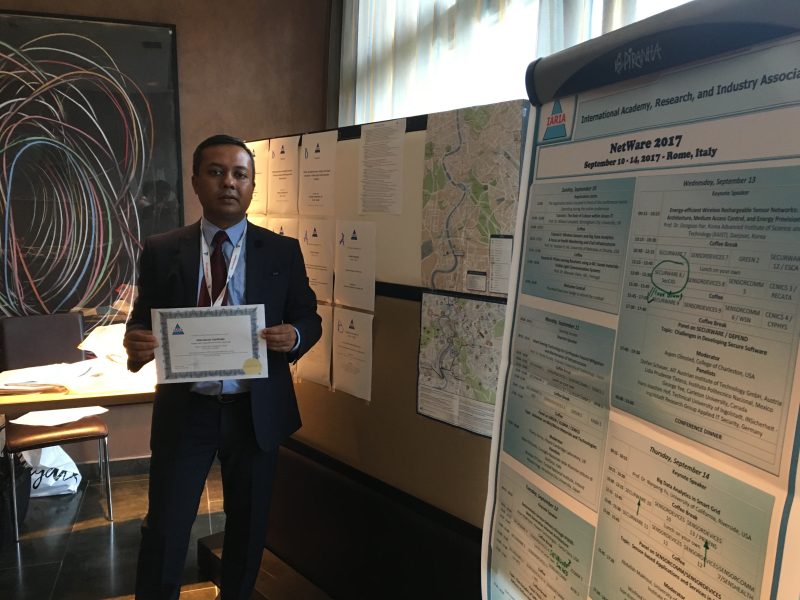
I earned my MSc degree with distinction in July 2009, and at the same university I received a PhD Distinguished Fellowship, as my MSc thesis was awarded the “Outstanding Thesis Award.” During the same period, I also received PhD research fellowships from New Zealand and Slovenia. For the first two years of my PhD, I conducted research at Waikato University and the Agrsearch Institute in New Zealand. Alongside my research, in 2010 I had the opportunity to intern at the United Nations Headquarters, and I successfully completed my internship there. In July 2012, I earned my PhD from China University of Geoscience. After completing my PhD, I joined an international China-based consulting firm as an Environmental Specialist and worked there for one and a half years. At the same time, I worked as a Visiting Scholar at the Institute of Hydrobiology, China Academy of Science. Once I had gained significant experience, I joined Dalian University of Technology as an Assistant Professor in September 2013. After five years, I was promoted to Associate Professor in July 2018. I am currently working here as a full-time permanent faculty member.
Biggani.org: Who or what inspired you to become a scientist?
Dr. Mohammad Rasel: I come from a very ordinary family and had to overcome many obstacles to get here. I believe my perseverance and hard work inspired me to become a scientist. There’s another thing I can’t help but share—I’ve always had an interest in new things since childhood. Whenever something new came around, I felt compelled to try it. Any change or advancement in technology always made me more curious. The environment I grew up in, my attitude, and social interactions all inspired me to become a scientist.
Biggani.org: Where and in which subject did you complete your PhD?
Dr. Mohammad Rasel: I pursued my PhD in “Environmental Science & Engineering” in a joint PhD program between China and New Zealand. The title of my research was “Studying the geomicrobial behaviours of Environmental Pollutants using combine Method.” I also received a one-year Research Exchange Fellowship from the Slovenian “University of Novagonica.”
Biggani.org: You are currently teaching and conducting research at Dalian University of Technology in China. Please tell us about this institution. What research are you currently doing?
Dr. Mohammad Rasel: Dalian University of Technology (DUT) is a renowned university for all fields of science and technology. It is a World Ranking University, ranked 346 according to QSI, 22nd locally, and 121st in subject-specific rankings. DUT offers 77 undergraduate programs, of which 23 are National Special Programs. Currently, there are 42,041 full-time students studying at DUT, including 4,836 PhD students, 10,893 Master’s students, 25,380 undergraduates, and 860 international students. There are 4,321 faculty members, including 726 PhD supervisors, 808 full professors, and 1,098 associate professors. Most of the faculty here are highly talented with outstanding international experience.
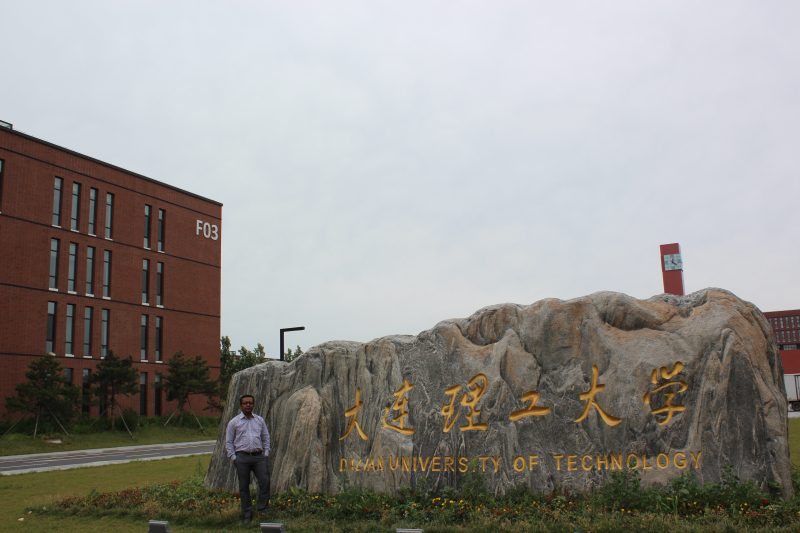
Currently, my research focuses on “Environmental Monitoring,” “Environmental Risk Assessment,” and “Environmental Remediation.” A key aspect of my work is robustly and rapidly investigating current environmental challenges like solid and water pollution/contamination in a fast, simple, and effective way. My research contributes to environmental pollution control and raising health safety awareness.
Biggani.org: You have done considerable research on signal and image processing, which might be a new area for many of our readers. Could you tell us a bit about this field?
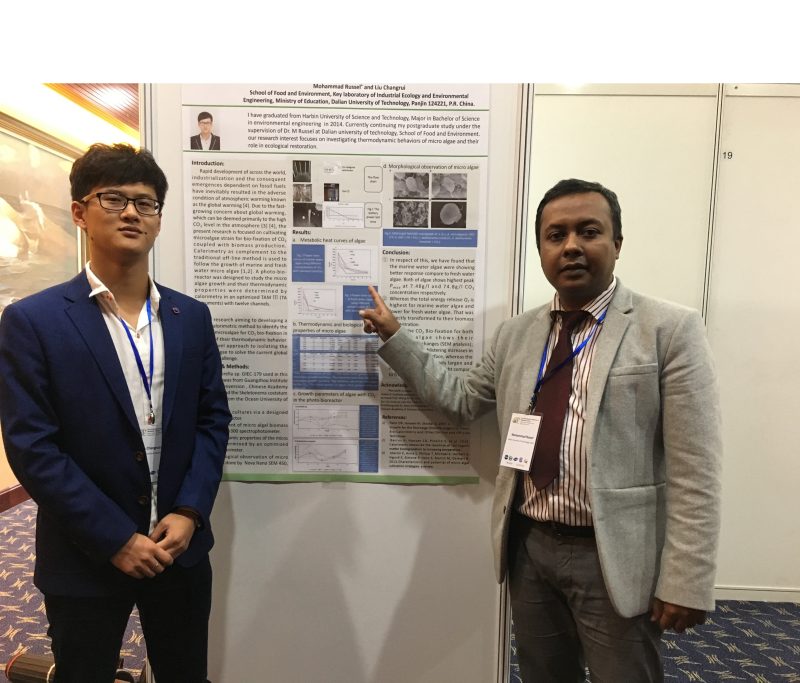
Dr. Mohammad Rasel: Yes, one of my research areas is “Sensor Device Designing & Probe developing for online Monitoring: The environmental cannot challenges.” I’d like to share with you a recently published research paper of mine in the renowned scientific journal “Analytical Chemica Acta.” The main focus of this research is how to easily detect pathogenic bacteria using the high-frequency dielectric spectroscopy method. To conduct this research, I first designed a sensor and later developed it into a prototype probe. This high-capacity probe can produce dielectric spectroscopic signals against various samples. Different samples generate different dielectric spectroscopic signals. By analyzing these signals, we can determine the biophysical properties of pathogenic bacteria, which enables easy identification of their presence. This method is faster and more cost-effective than traditional techniques. This innovation can be applied to drinking water safety and food safety to address public health safety issues.
Biggani.org: You serve on the editorial board of several journals. Please tell us about these scientific journals.
Dr. Mohammad Rasel: These scientific journals mainly publish research articles on various innovations and technologies related to environmental science and pollution. I work primarily as a scientific reviewer on their editorial boards. My main responsibility is to evaluate various authors’ research papers, maintain the quality of the journals, and share my personal feedback, which helps ensure timely publication of valuable research work.[/box]
Biggani.org: What would you like to work on in the future?
Dr. Mohammad Rasel: In the future, I want to work on more innovative and novel approaches to environmental protection so that pollution can be easily and quickly detected and controlled. I also wish to pursue research in the field of bioremediation.
Biggani.org: Many Bangladeshi scientists are now pursuing teaching and research in China rather than Western countries. Why do you think this change is happening? Tell us about the research environment and the sources of funding in China—are there more government or private investments?
Dr. Mohammad Rasel: Yes, you are absolutely right. Not just from Bangladesh, scholars from many countries—including Western nations—are turning to China for teaching and research. The first reason is China’s unprecedented development, and the second is the abundance of funding. The research environment in China is highly advanced. Some Chinese universities have research and education systems rivaling or even surpassing many acclaimed institutions in the developed world. We now see many international researchers collaborating with Chinese researchers. The only reason is that the research facilities and resources are world-class. For example, advanced equipment and analytical facilities in Chinese universities are often superior to those in the West, attracting researchers globally to conduct their research here.
In China, government investment is greater. Research funding is provided at the national, provincial, and city levels, and universities also have their own central basic funding. Personally, I am working as a Principal Investigator in several national and central university-level projects. While there is also some private funding, it is less than governmental funding. The Chinese government’s research funding is instrumental in maintaining the country’s rapid development and helps transform the nation into a developed country. The results of this approach will become apparent soon, and the Chinese model will serve as an example for developing countries worldwide.
Biggani.org: What advice would you give to those who want to pursue research in China?
Dr. Mohammad Rasel: For those who want to come to China for research, I would say it is a groundbreaking decision that will help elevate their professionalism in research and teaching. You will have the opportunity to conduct world-class research and contribute to global knowledge. However, you must be diligent and work hard to become well-qualified and prepared to join China’s research and academic community. There is fierce competition in this field, and you need to prove that you are a suitable candidate with advanced knowledge and training. It’s worth mentioning that even the local Chinese are now returning from higher education abroad to join research and teaching positions here. So, to join research and teaching professions in China, you truly need to be talented, highly trained, innovative, and qualified.
Biggani.org: Do you have any advice or message for young students who want to pursue a career in science?
Dr. Mohammad Rasel: The youth are our future; they have the potential to conquer the world. My main advice is to prepare themselves and move forward with a concrete plan to reach their goals. Regarding science, it’s a highly popular field for young people, but they must be extremely dedicated and hardworking to become skilled and build a career in this area. Most importantly, they have to have a passion for science if they want to pursue it as a career in the future.
Biggani.org: Are there opportunities for young researchers to enroll in Masters and PhD programs at your university? How can one get in touch, and how should they prepare?
Dr. Mohammad Rasel: Absolutely, there are opportunities for young researchers to enroll in Masters and PhD programs at my university. They can contact us in several ways. First, they can reach out directly to faculty members of different departments in my university. In this case, it’s best to visit the profiles of DUT faculty to understand their research interests, and then contact the relevant professors via email about their interest in Masters or PhD research programs and seek their consent. Another way is to apply directly online for the CSC (Chinese Scholarship Council) Government Scholarship for Masters and PhD programs. They can also apply for scholarships to study in China through our Ministry of Education. The web address of my university is: www.diut.ed.cn. Besides, students can enroll as self-funded candidates by applying directly to the university. Generally, to be admitted to Masters and PhD programs, candidates must meet certain age limits and requirements. Notably, good GPAs in BSc, HSC, and SSC, English proficiency through IELTS/TOEFL scores, and basic knowledge of the Chinese language are all beneficial. I hope all this information will be helpful for young students who wish to pursue higher education in Chinese universities.