Biggani.org: Greetings from the Biggani.org team. Thank you for agreeing to this interview. First, please tell us a little about yourself.
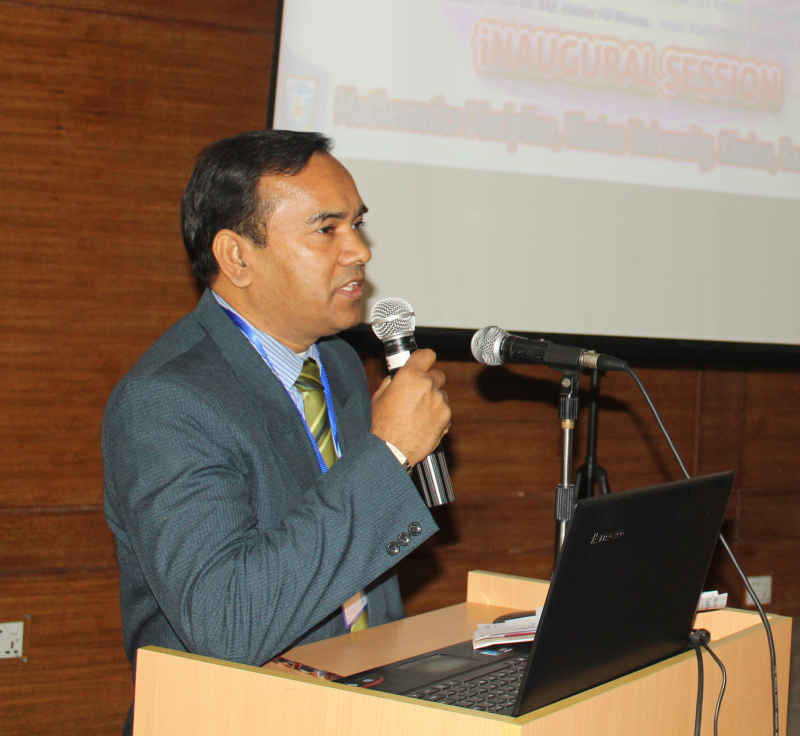
Professor Md. Mahbub Alam: Bismillahir Rahmanir Rahim. My heartfelt greetings to the Biggani.org family. Thank you for conducting this interview. I was born in Charchakla village, Debinagar Union, Chapainawabganj district. I grew up in Debinagar until high school, after which in 1986 I migrated to Godagari upazila, Rajshahi district. I completed my HSC at Chapainawabganj College and my BSc at RUET, Mechanical. After three years of active teaching at RUET, I received the Mombusho Scholarship and went to the ‘Kitami Institute of Technology’ in Japan for my Masters (2001) and PhD (2004). From 2004 to 2009, I was at THE HONG KONG POLYTECHNIC UNIVERSITY in the small country of Hong Kong, working as a postdoctoral fellow, research fellow, and visiting lecturer. In 2010, I moved to South Africa, the land of forests, joining PRETORIA UNIVERSITY as a senior lecturer.
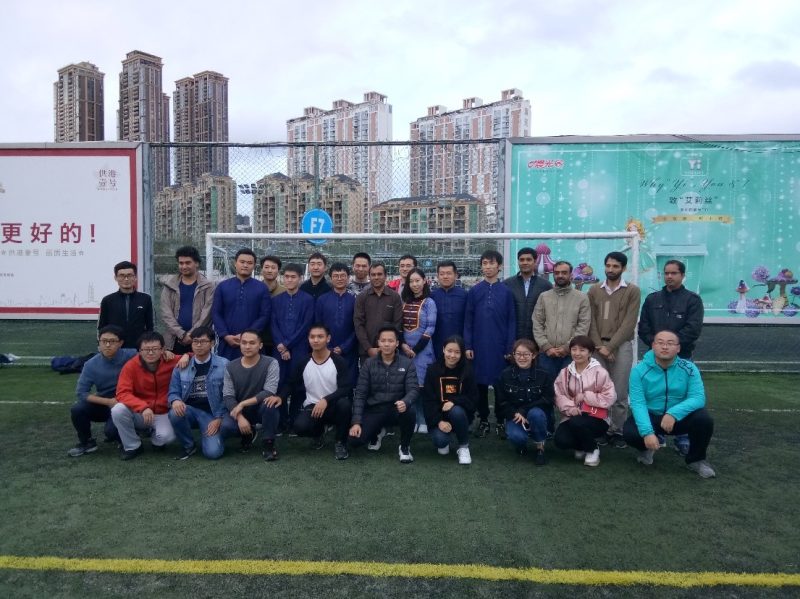
In 2012, I joined the Harbin Institute of Technology, Green City Shenzhen Campus as a professor under China’s Thousand-Talent–Program. Here, I had the opportunity to form a research team. Currently, my team consists of 2 postdoctoral fellows, 4 PhD, and 13 Masters students; previously, 3 postdocs, 4 PhD, and 35 Masters students completed their theses and research under my supervision. My research output includes 95 SCI research papers, 15 book chapters, 2 complete books, and 130 international conference proceedings. I became part of the editorial team for the “Wind and Structures” journal. Other achievements include the National Research Foundation (NRF) Rating Award (South Africa), Overseas High-Level Talent Award (Shenzhen), 2015 Shenzhen Outstanding Teaching Award (by Shenzhen Govt), 2016 Creative Talent Teacher Award (by University), and 2017 Nanshan District High-Level Talent Award.
Biggani.org: Who inspired you to become a scientist?
Professor Md. Mahbub Alam: You are calling me a scientist, but according to my wife, I don’t know anything! Whom should I believe? For now, I’ll believe you—otherwise you might stop the interview right here! Thank you once again. Honestly, I don’t know if I’ve truly become a scientist, but to reach this stage, first and foremost, I thank Allah. Since childhood, I have balanced studies, farming, sports, and fishing (as a hobby) up to my final year at RUET. From school to college, I only had private tuition for a few months, so I developed the habit of self-studying science books and solving math problems by following examples, which I greatly enjoyed. I did not have the skill to distinguish between important and less important chapters in a book—I studied all chapters equally, unwilling to take risks in exams by skipping content. During my BSc in Engineering, mathematics and mathematical subjects particularly attracted me; I enjoyed studying them as much as one enjoys a game. In a PhD, analyzing research results and writing research articles are both crucial. If you can digest the first, the second becomes easier. Some people find these tasks laborious, others enjoyable. I was able to deeply analyze research results, which my supervisor appreciated, and I felt proud of it myself. Even peer review reports often included praise. That was my turning point. Research work is driven by curiosity and enjoyment; that’s why I continued. I also fondly remember and honor the encouragement and wishes of my dear parents. Please keep me in your prayers.
Biggani.org: You completed your PhD from Kitami Institute of Technology, Japan. What was your research topic?
Professor Md. Mahbub Alam: When fluid (like air or water) flows past a structure, that flow exerts a force on the structure. If these flow forces are not properly considered during the design stage, the structure can fail. When multiple structures are grouped (such as a cluster of high-rise buildings, or oil extraction risers from the ocean bed), it is essential to determine how much force will act on each structure due to the flow. This does not depend solely on the flow speed, but also on the arrangement of the structures. My research focused on how the flow forces on these structures depend on their relative positioning. The research revealed that certain structures, depending on their position, experienced up to three times more force unexpectedly. The next task was to find ways to reduce these unexpected forces. By applying passive control techniques, forces were reduced by up to 90%.
Biggani.org: What was your research experience and the environment like in Japan? Please share your experience.
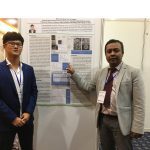
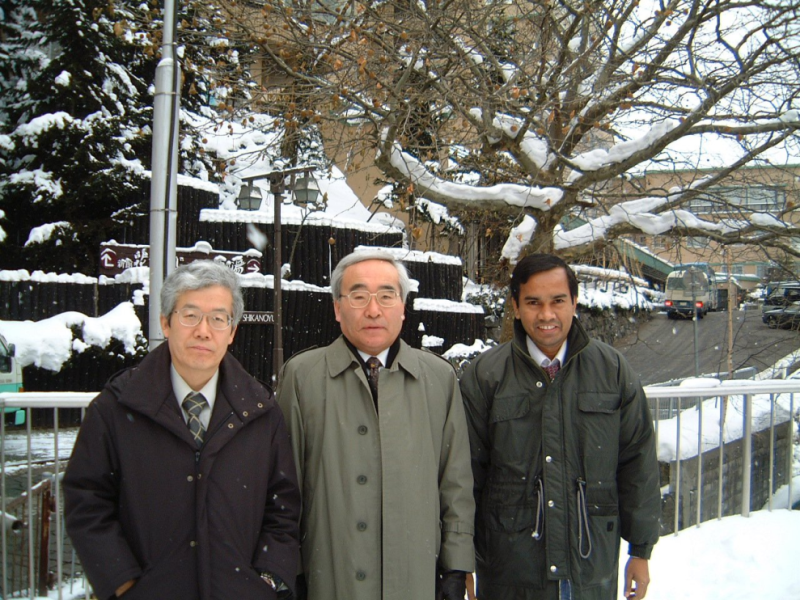
Professor Md. Mahbub Alam: From the very start of my lab work in Japan, I became familiar with new types of instruments. There were about 15 students in that lab. For research infrastructure, we had four wind tunnels and three water channels. I was assigned a set of instruments and one wind tunnel for my own research. For a new student, getting accustomed to the instruments and starting work in the wind tunnel was not easy. Other students, along with my supervisor, always helped me. I would also observe experiments conducted by others, which later helped expand my own research scope. Every student had their desk in the same room, attached to a large research room. I spent five and a half years in that same lab, witnessing the arrival of new students and graduation of older ones. But I never once saw any dispute or loud exchanges between students. There were no fixed lab hours, yet nearly everyone worked from morning till 7–11 pm. On days someone didn’t feel like working, they would leave early. In summer, before lunch, we’d often play football with labmates and other students. Sometimes, I even went to the lab on weekends, or played badminton. The absence of a rigid schedule created a sense of freedom. This free environment offered no bitter experiences. My mind always felt refreshed and fully concentrated on work. The work environment was full of sincerity, honesty, and decorum. The environment encouraged life to blossom with the clarity of crystal. Japanese labs are neatly organized and equipped with up-to-date instruments. Highly original research takes place. As I mentioned, I had exclusive access to a wind tunnel. Later, in other countries, I saw that a wind tunnel must be shared among 5–10 students. Sharing results in time lost with model installation and uninstallation, and you have to check setup accuracy every time, which can introduce instrument error. I was fortunate to use a wind tunnel by myself. Thanks to my respected supervisor Professor Hiroshi Sakamoto (center figure in the picture below).
Biggani.org: After that, you did your postdoc at Hong Kong Polytechnic University. What was your research topic there?
Professor Md. Mahbub Alam: There my research topic was ‘rain-wind-induced vibrations.’ For example, suspension bridges have many cables (inclined bars) supporting the bridge deck. These cables don’t vibrate significantly in just rain, nor in just wind, but when rain and wind occur together, they vibrate violently. My work was to find out the cause of this violent vibration and how to mitigate it. In the video below, you can see how a cable of a suspension bridge vibrates.
Biggani.org: Later, you taught at the University of Pretoria in South Africa. What subjects did you teach? Did you conduct research there? Tell us about the research environment in South Africa.
Professor Md. Mahbub Alam: There, I taught THERMAL & FLUID MACHINES to undergraduate students and ‘ADVANCED FLUID MECHANICS’ and ‘FLUID-STRUCTURE INTERACTIONS’ to postgraduate students. Some universities in South Africa have good research programs. Governmental funding is moderate, but those who obtain NRF rating find it much easier to get funding. It was here that I started working on wind turbines with a PhD student.
Biggani.org: You are now teaching and researching at Harbin Institute of Technology. What research are you conducting here?
Professor Md. Mahbub Alam: Since I have more postdocs and students here, I’ve had to broaden the scope of my research. I am working on four fundamental topics. The first is reducing the cut-in speed of wind turbines so they can operate even at low wind speeds. The second concerns increasing the lift force on aircraft wings. To investigate this, I experimentally examined the effect of feathers on a bird’s wing. I first created a simplified model of a featherless wing, collected feathers from a Chinese spot pigeon (a fastest-speed racing pigeon species), and made a strip from the feathers to attach to the leading edge of the upper wing surface. Then I installed the feathered model in a wind tunnel and measured the lift force. I repeated the experiment by moving the feather strip to the middle and trailing edge of the wing, then on the lower surface in different positions. The surprising result: the leading-edge feathers under the wing could increase lift by up to 186% without changing the angle of attack. The experiment also revealed the function of feathers in different parts of a bird’s wing. The third is understanding the mechanism of structural vibration caused by fluid (air or water) flow, and suppressing these vibrations. Nowadays, many skyscrapers are being built that can vibrate violently and collapse in a storm. See the video showing how a suspension bridge collapses during strong winds. Similarly, offshore marine structures (like oil risers) vibrate due to ocean currents. Without understanding the exact mechanism of vibration, we cannot find solutions. In the experimental video below, see the mutual influence between two cylindrical structures. The cantilever cylinder (subjected to wind) does not vibrate when alone, but when another cylinder is placed nearby, it does. Interestingly, this behavior mirrors human life: the pace is more hectic when married, calmer when single. The fourth topic is how small fish protect themselves from bigger fish and how they get caught. My research shows that small fish can sense the presence of bigger fish from a distance by moving their tails. When a big fish approaches to catch a small fish, the swimming efficiency of the small fish increases—meaning, as the predator approaches, the prey can achieve higher speeds with the same energy. That’s how small fish protect themselves. For this reason, even when still, fish are always moving their tails, especially if they sense a threat, or to stay alert. Perhaps Allah has, through this physics, created a system that helps the small survive. Interestingly, as the big fish gets closer, its swimming efficiency decreases, making it harder to catch the small fish. And if the big fish tries to approach with its mouth wide open, it can never catch up—the swimming efficiency drops drastically. Only if the big fish manages to get very close (a distance proportionate to the two fishes’ sizes), can it then open its mouth to strike.
Biggani.org: Tell us about the research environment and methodology in China.
Professor Md. Mahbub Alam: China provides an excellent environment for research. Funding opportunities exist at state, provincial, and city levels. If you have the qualifications, you can design your lab with state-of-the-art equipment and foster a stimulating research environment. The cost of living is low, so stipends for students are also lower; a teacher can supervise a PhD student at a lower cost.
Biggani.org: You are a leading global researcher on the effectiveness of wind turbines. What have you discovered in this research?
Professor Md. Mahbub Alam: In this research, I’ve investigated (1) how to select the location of a turbine, (2) how many days per year a turbine can generate power or remain idle in a given location, (3) the relationship between turbine height and turbine power, and (4) how power from turbines can be hydraulically stored.
Biggani.org: You have published several books. Tell us about your books.
Professor Md. Mahbub Alam: I have published two books and a proceeding. The first book is on “Physics of flow around cylindrical structures in a cross flow,” discussing steady and fluctuating fluid forces, surface pressure, vortex shedding frequency, flow structures, wake characteristics, flow switching mechanisms, and possible interaction mechanisms and instabilities. The second book is on “wind speed characteristics and effect of tower shading on wind measurements.” The proceeding is a collection of 35 conference papers from a conference held in Kerala, India in 2015. Additionally, three special issues have been published in the SCI journal ‘Wind and Structure’.
Biggani.org: Your research paper “Pumped hydro energy storage system: A technological review” is heavily cited as a reference. What is this paper about?
Professor Md. Mahbub Alam: Yes, you are right, this research article has been identified by Thompson Reuters as a ‘TOP 1% highly cited article’, which is regarded as an award. The paper was published in 2015. Since 2016, it has been identified as a highly cited article. In just four years, it has been referenced in 152 articles according to the ESI database and 255 according to Google. It is a review article. This paper shows how Pumped Hydroelectric Energy Storage systems can function like a battery. Its applications, feasibility, advantages, disadvantages, and importance are discussed. To summarize: imagine a place with a solar system and/or wind turbine that produces surplus energy during the day or in certain seasons, which needs to be stored on a large scale. That stored energy can be used at night, during peak seasons, or during a power shortage. For storing such electricity, you need two reservoirs at different heights. When solar or wind produces surplus electricity, that energy is used to pump water from the lower reservoir to the higher one. Later, as needed, water from the higher reservoir is released through a hydraulic turbine to generate electricity again. The higher reservoir acts as a battery by storing gravitational potential energy.
Biggani.org: Many Bangladeshi scientists are now getting involved in teaching and research in China instead of Western countries. Why do you think this change is happening? Tell us about China’s research environment. Is governmental or private investment higher in China? Please tell us about funding. What advice would you give for those who want to do research in China?
Professor Md. Mahbub Alam: Not only Bangladeshis, but scientists from other countries are also coming to China. The Chinese government has launched various programs to attract foreign scholars. As an incentive, foreign scholars are granted tax-free settlement allowances by the state, province, and city—a unique perk. China’s goal is to elevate research quality to the highest level, and it’s succeeding. Their target is not just young scientists but Nobel laureates as well. In Shenzhen alone, nearly ten Nobel Laureate labs have been established since 2016. China has both a favorable research environment and strong funding. Some people even create Chinese-like environments at home by marrying Chinese women. Foreign researchers can gain permanent residency based on their rank. Now, you might ask if there are any challenges despite such marvelous opportunities in China. Yes, there are! For example, children’s education: international schools here are extremely expensive. If you choose Chinese schools, it’s cheaper, but admission is quite difficult. Another issue is language—it’s a significant challenge for foreigners.
Thinking about coming to China for research? For those who have just finished their PhD, China is a fertile field for working as a postdoctoral fellow. If you want to join as faculty, enrich your publication track record with quality publications. Here, total citation count is also considered very seriously. My best wishes in advance.
Biggani.org: Do you have any advice or messages for young students wishing to pursue science?
Professor Md. Mahbub Alam: There are various grades of government scholarships available in China (CSC, CAS-TWAS), as well as local government and university-specific scholarships. At the Masters and PhD levels, focus on your research, and strive to enjoy it. You will do well at these levels if you have independent learning skills (learning without a teacher’s help). Students used to private tutoring often lag behind in developing this skill. When writing research articles, practice writing concisely and following standard grammar. For both physical and mental fitness, combine your favorite sport with your leisure time—replace part of your free time with sports. This will boost both your fitness and mental sharpness. If you ever find your work attracting you (rather than the other way around), you’ll know you truly enjoy it. Wherever you are—lab, home, or sports field—be considerate of your own time and respectful of others’ time. Best wishes to you all.
Biggani.org: Are there opportunities for young researchers to enroll in Masters and PhD at your university? Where should they contact and how can they prepare?
Professor Md. Mahbub Alam: The main campus of this university has nearly 70 CSC scholarship slots. You can find out about application timelines and rules on the university website. Besides that, the ‘Shenzhen Universiade International Scholarship’ is available for self-financed students.