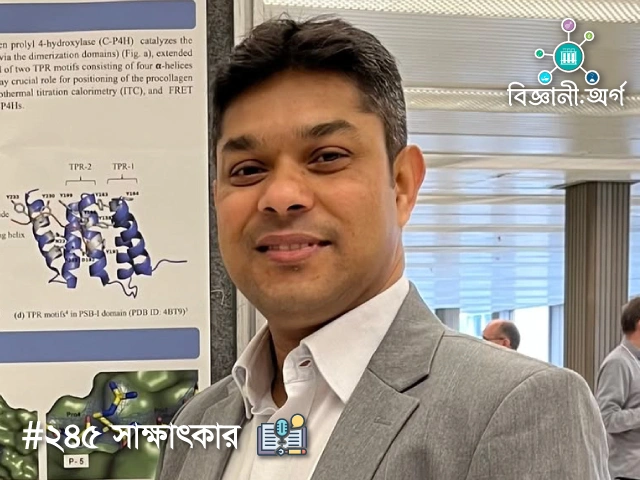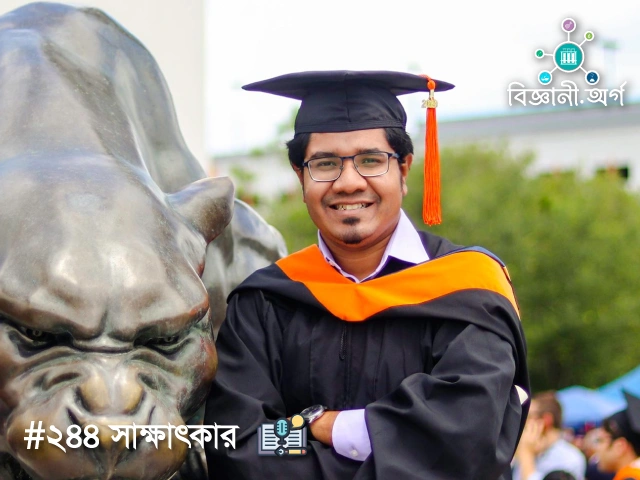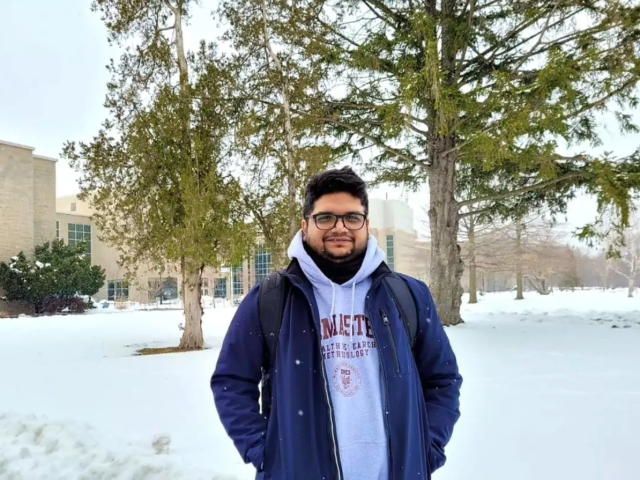
In this edition, we have interviewed Dr. Nazmul Islam. He is currently pursuing his PhD in Health Research Methodology at McMaster University in Canada with a full scholarship and is working as a research assistant. During both his master’s and PhD studies, he has received several awards and research grants. In this interview, he discusses many important topics. Read his interview below:
First of all, could you tell us about yourself?
I completed my Bachelor of Medicine and Surgery (MBBS) from the University of Dhaka. After that, I earned a master’s degree in Public Health from Qatar University and worked as a lecturer for five years. Currently, I am pursuing a PhD in Health Research Methodology at McMaster University in Canada with a full scholarship and working as a research assistant. During my master’s and PhD studies, I have received several awards and research grants.
What is the subject of your research?
The main goal of my PhD research is to improve the care of food allergies. As part of this, I am analyzing the causes of food allergies and attempting, through evidence-based research, to identify key features or factors that can predict the progression or outcome of the disease. Once the modifiable predictive factors are identified, they will be selected for clinical trials to be conducted by our research team. Through this, it will be possible to determine the best treatment approaches.
How are your research activities benefiting us, or will benefit us in the future?
Food allergy is a rapidly growing public health issue for which there is still no cure. Its causes and treatment methods are still developing. My research will provide deeper knowledge about food allergies, and that information will be translated into improved clinical approaches. This knowledge will be directly included in updated food allergy guidelines, which will be used in diagnosis, prevention, and treatment, and ultimately improve the quality of patient care.
Would you like to share any special experiences from your research work?
Once, I was working on a project conducting long-term research on patients with food allergies. One patient, who had a very severe allergy, spoke about his quality of life and the impact it had on his family. That moment was very moving for me, because I realized that research results not only contribute to scientific knowledge but can directly change people’s lives. That experience inspired me further and gave me a deeper sense of commitment to my work.
What qualities do you think a scientist should have?
A scientist should be curious and always try to understand how things work. Patience and perseverance are also important, as scientific discoveries often require time and effort. Critical thinking skills are necessary, which help analyze data and find effective solutions to problems. Additionally, a scientist should keep an open mind, as new evidence may challenge old ideas. Finally, communication skills are important so that scientists can share their findings in simple language with everyone, making scientific knowledge more accessible to all.
Do you have any messages or advice for young students in Bangladesh who want to pursue science?
My advice is—never let your curiosity stop. Interest in science and a desire to learn new things will always keep you moving forward. Don’t be afraid to make mistakes, because often, mistakes teach you the biggest lessons on the road to success. Challenge your ideas and explore them deeply.
Science is a field that requires patience, perseverance, and continuous hard work. There will be obstacles along the way, but never give up. The most important thing is self-confidence. Believe in what you are doing and move forward with confidence. Self-confidence is the key to success. At every step of research, and in decision-making and learning new things, confidence will take you forward. Learn from mistakes, but never lose trust in yourself.
Additionally, learning research methods is extremely important. It will not only teach you how to conduct research correctly but will also provide you with skills to identify credible evidence and information. In this age of easy access to information, not all information is reliable. Proper research methods will help you analyze information and make decisions based on credible evidence.
Your Email : [email protected]
Your LinkedIn : https://www.linkedin.com/in/dr-nazmul-islam-6b4b24154/
Finally, on behalf of Scientist Org, we extend our heartfelt congratulations and best wishes to Dr. Nazmul Islam. We are delighted with his interview. He is a unique role model for our young researchers. We wish him great success.