


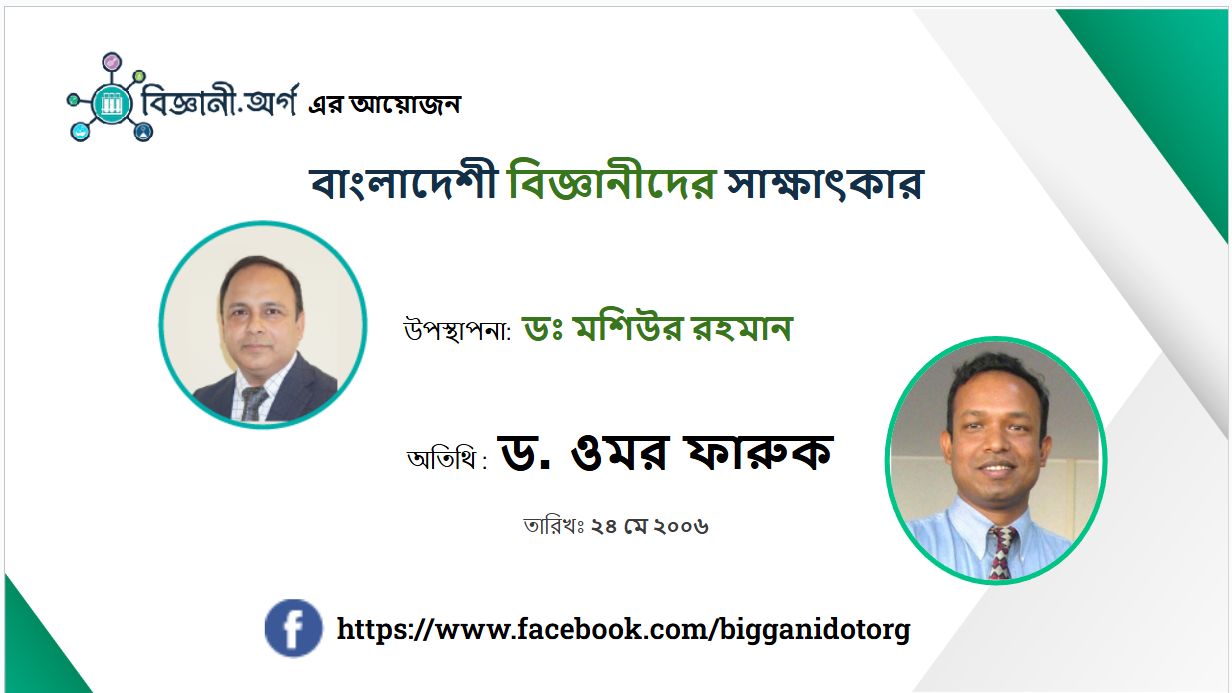
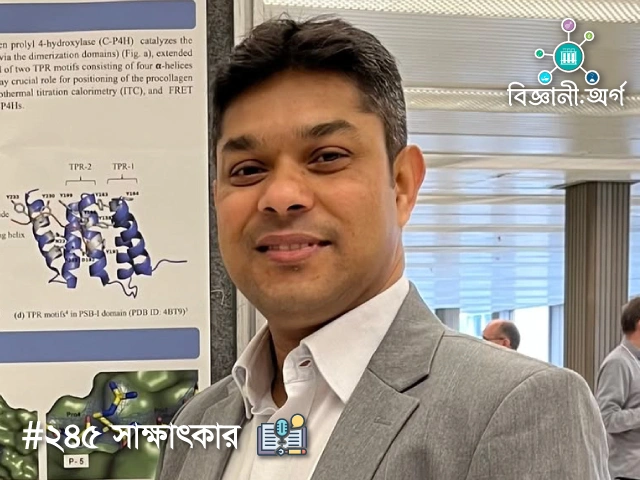
Many people might not realize that the luxurious Mercedes Benz, BMW, or Volkswagen cars cruising over the roads of Germany could contain a touch of Bangladeshi jute. Yet this seeming impossibility has been made real by the magic of science, thanks to the proud son of Bangladesh, renowned polymer scientist Dr. Omar Faruq. On May 24, 2006, Dr. Moshior Rahman from Biggani.org conducted a telephone interview with Dr. Faruq all the way from America. Over the course of this 50-minute conversation, they discussed the multifaceted potential of jute and the story of a Bangladeshi scientist’s global achievements.
From Chittagong to Germany: A Scientist’s Long Journey
Dr. Omar Faruq began his higher education in the Department of Chemistry at the University of Chittagong. After completing his bachelor’s and master’s degrees there, he joined the MPhil program at Bangladesh University of Engineering and Technology (BUET), where he also worked as a teaching assistant. In 1999, he received the prestigious ‘DAAD’ scholarship and went to Germany. In 2002, he was awarded the ‘Young Scientist Award’ in Germany for outstanding research achievements. In 2005, he earned his doctorate from the University of Kassel in Germany in the field of ‘Natural Fiber and Wood Reinforced Composites’. Currently, he is conducting important research as a Visiting Research Associate at Michigan State University in the United States. Over his long research career, he has published more than 45 scientific articles and contributed to a book.
Jute & Environmental Protection in Automotive Components
The main focus of Dr. Omar Faruq’s research is ‘bio-fiber’ or natural fibers. Simply put, these are a kind of composite material or ‘bio-composite’. When natural fibers (such as jute, kenaf, hemp, flax, sisal, or banana fiber) are mixed with plastic, the resulting material becomes lighter and stronger than glass fiber.
In the article attached to the interview, he included images demonstrating how these fibers are being used. According to European Union regulations, automobile components must be recyclable or reusable. Dr. Faruq has shown that these bio-fibers are significantly lighter than glass fibers, which reduces the weight of vehicles and saves fuel. Major brands like Audi, Ford, and Mercedes are now using jute composites in making car interior doors, dashboards, and seat backs. Even the exterior of buses has started seeing the successful application of these composites.
Commercial Potential of Jute in Bangladesh: Wood Alternatives & Export Markets
The use of jute is not limited to burlap sacks or bags. According to Dr. Faruq, as Bangladesh does not have a major automobile industry, we should focus on making high-quality furniture using jute and plastic composites. This could serve as an excellent alternative to regular wood.
Dr. Faruq reports that jute composites are much more durable than Malaysian wood or particle-board. While ordinary wood deteriorates within a few years when exposed to humidity or moisture, jute-plastic composites remain virtually unchanged for 10-15 years. In terms of long-term maintenance or upkeep costs, it is more affordable than teak wood. There is currently huge global demand for products made from natural fiber. If Bangladesh can utilize the right technology, a whole new horizon for exporting local jute could open up in this vast market.
Nanotechnology & Microcellular Foaming: New Frontiers in Science
At present, Dr. Faruq is working on ‘microcellular foaming’ at Michigan State University. To explain simply, just as adding baking powder makes a cake rise and lighter in weight, a similar technology is being used to reduce the weight of plastics. At the same time, he is working on ‘nanotechnology’, using ultra-small nano particles to create ‘nano-composites’. For those seeking new commercial opportunities with jute, Dr. Faruq’s research insights are extremely valuable.
A Helping Hand for Future Scientists
Dr. Omar Faruq is not just a researcher; he is also a guide for Bangladeshi youth pursuing higher education. For those aspiring scientists dreaming of advanced study abroad, he offers some key advice:
1. Language Skills: A strong command of English is essential for overseas research.
2. Report Writing: The ability to independently write research proposals is extremely important.
3. Teamwork: Developing the mentality to work collaboratively in a laboratory is necessary.
Dr. Faruq has announced that if any Bangladeshi student is interested in advanced research on polymer science or bio-fiber, he will personally help them to find a supervisor or navigate the application process.
Conclusion
Thanks to scientists like Dr. Omar Faruq, Bangladesh’s golden fiber is now shining on the global stage in a new identity. That interview from 2006 still reminds us today that with talent and hard work, it’s possible to achieve global success. His long journey is not just the triumph of one scientist, but an inexhaustible source of inspiration for Bangladesh’s young generation. We wish Dr. Omar Faruq continued success and a long life. May Bangladesh be further honored worldwide through science—this is our hope.
The interview was conducted over telephone on May 24, 2006. The interviewer was Dr. Moshior Rahman from Biggani.org.
Listen to the complete interview at the YouTube link below.
https://youtu.be/Cc2tyMBjqJ8





This comment has been sanitized for the English site.
I am working with enzymatic treatment of jute cotton blend fabric for eco friendly processing in our university lab.
I have a question ,did its (jute fiber) opportunity find in bangladesh specially in Jute Research Institute ? Or share it with them!
Shamim,
Thanks for your comments and interests. We will contact you if there is any lead.
Shuvarthee,
Shafiul.
Azhar,
Thanks for your comments and interests on eco-friendly enzymatic treatment of jute cotton blend fabric. Feel free to share with our readers your research findings.
Good luck to your research endeavour!
Shuvarthee,
Shafiul
Salma,
Thanks for your comments and interests in jute fiber and its prospective applications. Aapnar prosnota thhik bujhte parini? Asha kori prosnota bujhte sahajjyo korben.
Shuvarthee,
Shafiul
This comment has been sanitized for the English site.
Dear Sir
Have a nice day.please note that I want to invest this amount of money in our textile industry in bangladesh but I can’t find any suitable field to invest this.As you know in bangladesh every entreprenuer invested their money in traditional business like garments,dyeing,printing ,spinning etc .
So would you please suggest me where i can invest the money like technical textile or other speciality in a small scale .
wait for your suggestion.please keep it hidden .don’t publish it here.
Thanks
M.M.Hossen khokon