


Introduction:
Every day, households generate more or less waste. We usually throw away this waste. But did you know that energy can also be produced from waste? In various countries around the world, energy is now being generated from waste. Currently, there are waste-to-energy plants in over 35 countries worldwide. Among these, the top 5 countries are Denmark, Switzerland, France, the United States, and Spain. There are special plants designed to produce energy by incinerating waste. Worldwide, there are over 600 such plants. The energy produced in these plants can be used for:
– Producing steam to heat rooms in colder countries.
– Generating electricity.
Methods of Generating Energy from Waste:
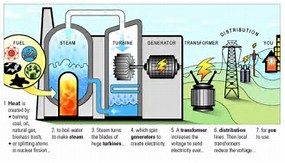
Power plants that generate electricity from coal and those that generate energy from waste are more or less similar, with the only difference being the fuel—waste instead of coal. The steps for generating electricity in these plants are as follows:
First step: The waste is burned to produce heat energy.
Second step: The generated heat energy is used to produce steam from water.
Third step: The generated steam is used to turn turbines and generate electricity.
In fact, the way electricity is generated in conventional power plants is almost identical to the process of generating electricity from waste. However, you don’t get as much heat energy from waste as you do from coal. Typically, burning 2,000 pounds of waste produces the same amount of heat energy as burning 500 pounds of coal.
Image:
Burning 2,000 pounds of waste produces as much heat energy as burning 500 pounds of coal.
In addition to dedicated power plants, researchers in the United States are currently working on developing an effective ‘Mobile Waste-to-Energy’ converter. This mobile converter can generate electricity from burning various types of waste. Moreover, researchers are considering using this converter to supply electricity to American soldiers on the battlefield. If such a converter is successfully developed, it may even be used in homes in the future, allowing us to generate our own electricity from household waste and meet our daily needs ourselves.
Sources of Energy in Waste:
The question is, what is the source of energy in waste? Let’s try to find the answer. Besides other garbage, waste contains various metals, paper, plastic, etc. Plastics are generally made from petroleum (hydrocarbons). There are also various organic materials in waste that act as sources of energy.
Although many countries generate electricity from waste, there is ongoing debate about this method. Currently, a popular term among engineers is ‘Recycle’. Recycling is a process by which reusable materials can be processed out of waste. Many people prefer recycling waste instead of burning it. There are several advantages to recycling. The cost of products made from recycling often decreases. However, there are also disadvantages. For example, colored and glossy papers are difficult to recycle. So, it can be said that both processes are usable. In waste-to-energy plants, most of the waste is burned. However, some parts of the waste do not burn; this is called ash. The main components of this ash are various metals, which can be recovered and used again for various purposes.
According to experts, more than 80% of waste that is rich in paper and plastic can be burned to generate energy. Typically, 1 ton of waste can produce about 525 kilowatts of electricity.
Coal is a natural resource. When coal reserves dwindle, waste may become the primary fuel for these power plants. Denmark, the leading country in waste-to-energy production, burns more than 54% of its waste to generate electricity. In addition to electricity generation, another benefit is that burning most of the waste reduces the space needed for disposal.
Energy from Waste and Environmental Pollution:
When using alternative sources of energy, one important consideration is environmental pollution. Incinerating waste in energy plants can produce toxic gases and various particles that may pollute the environment. To prevent environmental pollution, these plants use different types of separator devices and filters. These include:
– Scrubber
– Fabric filter
– Electrostatic Precipitator

Image: Waste-to-Energy Plant
Additionally, such plants have built-in environmental pollutant control devices. Waste is burned at very high temperatures (1800-2000 degrees Fahrenheit), which breaks down complex toxic compounds into comparatively less harmful substances. This has a positive effect on the environment.
Bangladesh Context:
Waste management is a major concern in most parts of Bangladesh. In the Bangladesh National Energy Policy 2004, some projects were mentioned regarding electricity generation from waste in Dhaka city. However, none of these projects have yet seen the light of day. If such projects are implemented, they will make waste management much easier in addition to meeting electricity demand. In October 1997, a French organization named CGEA-ONYX conducted a feasibility study on waste-to-energy for Dhaka city. According to this survey, the amount of solid waste in Dhaka city is as follows:
Source Amount
Household 1400 tons
Commercial 600 tons
Industrial 800 tons
Medical 200 tons
One of the main problems currently facing our country is the electricity crisis. Therefore, the issue of generating electricity from waste should be considered more seriously in our country as well.
This article was published on Technology Today, Amader Projukti , and on my blog.









Thank you for ur nice information.Also thanks for bengali version.