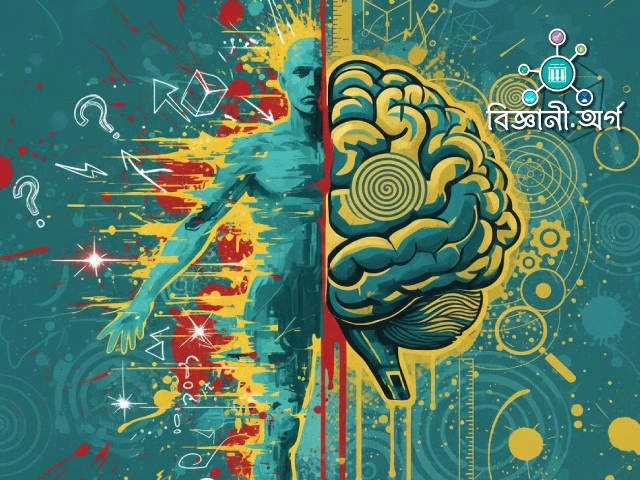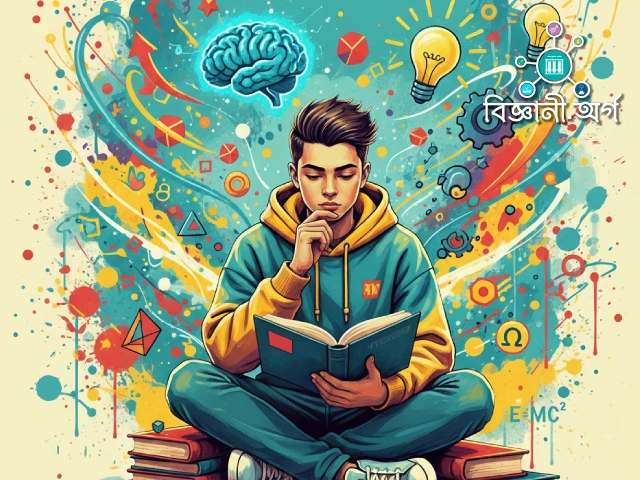
Does learning simply mean flipping through the pages of a book and taking notes in a classroom? Or is there a complex and mysterious process taking place within our brains that we ourselves don’t fully understand? To find answers to these questions, science journalist Benedict Carey takes us deep into the science of learning in his renowned book How We Learn. For students in Bangladesh, this book is more than just a reading experience—it opens the door to rethinking learning methods. In the competitive society of the 21st century, not just hard work but also intelligent studying is equally important. Carey’s book is like a ‘map of intelligence.’
We usually think that relentless reading, studying at fixed times every day, and maintaining hour-long focus are the keys to being a good student. But Carey challenges these common beliefs. He says learning is a living process—where rest, mistakes, forgetting, and even what we consider wasted time, are all part of learning. Carey shows there is a strong link between sleep and learning. Rather than staying up all night before an exam, getting proper sleep can be much more effective, because while we sleep, our brain reorganizes knowledge and arranges information.
This book presents “making mistakes” as a remarkable strength in the learning process. Many of us feel embarrassed when we make a mistake, believing mistakes mean failure. But Carey argues that mistakes are an important step in learning. If we make a mistake the first time we encounter some information and learn it afterwards, it leaves a much deeper impression in our memory. In other words, mistakes can serve as a “gateway to memory.” This perspective is particularly important for Bangladeshi students, many of whom are afraid to ask questions or think deeply out of fear of losing marks on exams.
The book also highlights a fascinating aspect of the science of learning: the habit of so-called “multitasking,” or doing multiple things at once, actually hinders learning. Studying with a mobile phone in hand, or reading a book while browsing Facebook—these modern habits shatter our concentration. Carey says that attention is a limited resource. If you stretch it in multiple directions, it’s impossible to give full focus to any one task. In today’s age of mobile dependency in Bangladesh, this message holds deep significance for teenagers and young adults.
Another unique aspect of this book is its discussion of techniques called the “spacing effect” and “interleaving.” Many people want to finish one subject at a time, such as completing all of history or math in a single sitting. But research shows that spacing out study sessions and alternating between different subjects is much more effective for the brain. These techniques can help Bangladeshi students break free from traditional methods and prepare more effectively, especially for those studying long term for BCS, medical, or university entrance exams.
The book isn’t limited to just strategic advice—it also clearly highlights several psychological aspects of learning. For example, many believe they are a “visual learner” or “audio learner”—some learn best by seeing, others by listening. But Carey reveals that these categories have weak scientific backing. Instead, he argues that challenging the learning process itself, by varying how you study, helps information stick in our memory for the long term.
The greatest strength of this book is probably its simplicity. Instead of difficult neuroscience or psychological theories, this science-based yet deeply human book is written in open language, using examples from real life and student experiences. In Bangladesh, where education is still largely dependent on rote memorization, this book can shine a new light—a human, scientific, and effective philosophy of learning.
It can be said that How We Learn is not just for students, but also presents striking realities for teachers, parents, and even policymakers. If the true science of learning were valued at every level of our education system, not only would educational standards improve, but the joy of learning would increase many times over. Teaching methods for children would become more individualized and more compassionate.
This book proves that learning does not have an age limit—not just for school or university students. At every stage of life, our learning process is ongoing, and we can all use science to make that process more efficient and enjoyable. In a 21st-century world where knowledge is the greatest power, knowing how to learn becomes one of the most crucial skills.
If the concepts from this book can gradually be introduced into the Bangladeshi education system—such as emphasizing depth of learning over exam-centric practices, accepting mistakes rather than fearing them, recognizing the importance of rest, and developing the habit of seeing learning as a scientific process—then perhaps our young generation will learn to think more freely and question more deeply.
Ultimately, How We Learn is a call—to know yourself, to understand the habit of learning scientifically, and to shape your own learning journey in your own way. It’s not just a book—it is a revolution, a learning revolution. Whether you are a student, a teacher, or a curious reader, we can all be part of this revolution. If learning is the journey of life, then this book is a reliable map for that journey.