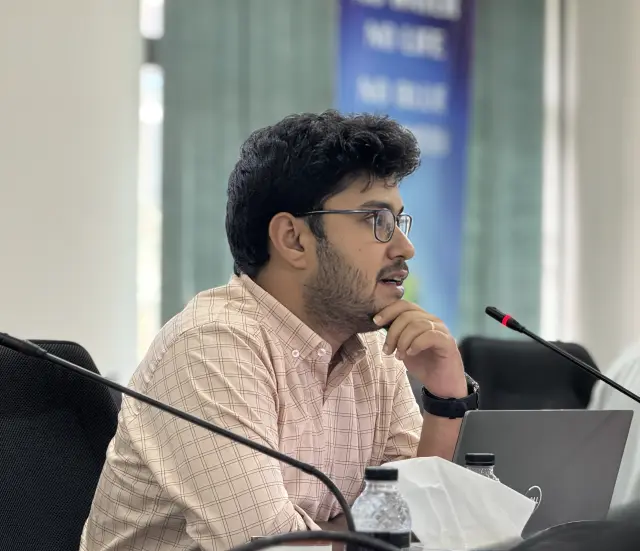
I always follow the work of Bangladeshi scientists for the interview series with the new generation. It was during such a time that I came across a scientific paper on the development of membrane bioreactor (MBR) technology and sustainable industrial wastewater management, which truly surprised me. Today, there’s an immense need for this kind of technology—especially in a country like Bangladesh, where research facilities and equipment are scarce, and above all, there’s a lack of funding and skilled personnel. In such a context, young researchers like these truly give us hope. In his paper, he analyzed how industrial wastewater management can be made more sustainable through the development of membrane bioreactor (MBR) technology. Compared to conventional methods, MBR technology requires less space, is more efficient, and can be effective at a relatively lower cost. The traditional activated sludge (CAS) process and tertiary filtration can be replaced by MBR technology. However, there are some limitations to MBR technology, such as sludge quality, equipment requirements, and fouling issues. Even so, it may provide a sustainable and effective solution for water purification.
E-waste (electronic waste) refers to waste generated from old, unnecessary, broken, or obsolete electronic devices and equipment. This includes computers, mobile phones, televisions, refrigerators, microwaves, and other electronic products. E-waste has become a major environmental issue because it contains harmful chemicals such as lead, mercury, cadmium, etc., which, if not properly disposed of, can pollute soil, water, and air.
Through e-waste processing or recycling, many valuable materials like metals and plastics can be reused, which helps reduce environmental damage. However, without proper measures, this can also pose health risks for humans.
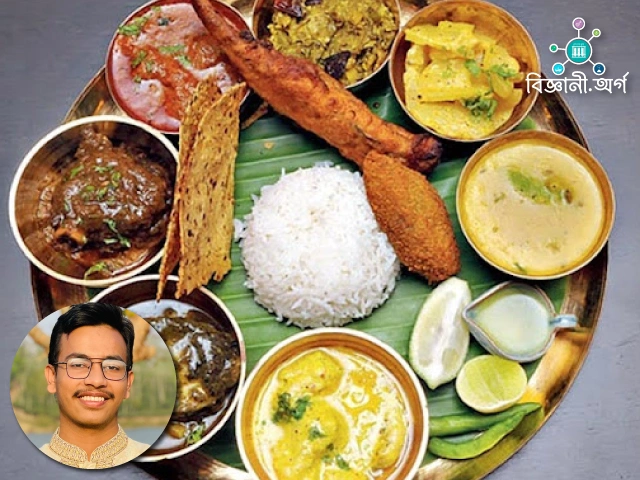
When I contacted him on Facebook and expressed my interest in an interview, he gladly agreed. He is currently working in the Chemical Engineering Department of Bangladesh University of Engineering and Technology (BUET). There are very few researchers in Bangladesh working on e-waste. Among them, one emerging researcher is Hridoy Roy. Read his interview below:
First, could you tell us a bit about yourself?
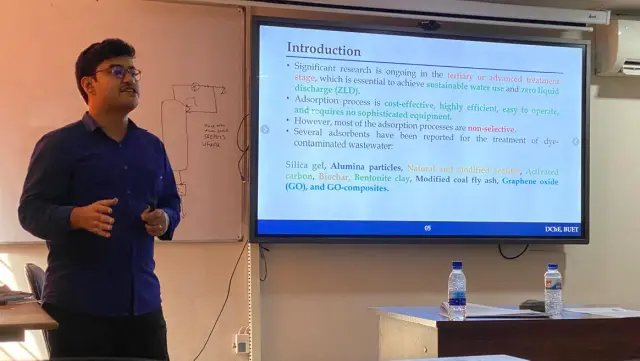
I am Hridoy Roy. I was born on April 2, 1998, in the tea garden surrounded district of Moulvibazar, Sylhet. After completing my school and college education in the suburbs of Moulvibazar, I enrolled at the Bangladesh University of Engineering and Technology (BUET) in 2017, and graduated in 2022. From my second year at university (Level-2, Term-1), I got involved in laboratory-based research and continued to pursue research alongside my studies. In November 2022, I joined BUET’s Chemical Engineering Department as a part-time lecturer, and in April 2023, I began my career as a full-time lecturer. I got the opportunity to teach at BUET mainly due to my research profile. Since joining the university, I have been striving to make my research activities beneficial for the country. In this continuity, I am currently serving as a co-researcher in three research projects. I received the Best Presenter Award at Kyushu University, Japan, for producing sustainable materials and using them in water treatment. I have also worked as a protagonist in a collaborative project with the German media “Deutsche Welle” on e-waste contamination in Dhaka city’s open landfills. In the future, I am committed to continuing research activities for the development of the country.
What is the focus of your research?
I still consider myself a novice in the world of research. Even so, I have explored quite a few fields within Chemical Engineering already. I would mainly divide the focus of my research into two categories: 1) Micro/nano-scale, and 2) Macro-scale. At the micro/nano-scale, I work primarily on materials design, which is later used for the purification of contaminated water, and in producing biodegradable soft materials. At the macro-scale, I work on municipal solid waste management, electrical waste recycling & recovery, and river pollution and restoration.
How do your research activities benefit us?
One specialty of research work is that while some research yields immediate benefits, most research focuses on long-term and sustainable solutions. Due to the unplanned proliferation of industries in Bangladesh, water pollution has reached an alarming level. These factories use vast amounts of groundwater, which is causing the underground water table to fall, and at the same time, the discharge of polluted water from the factories into our reservoirs is making them unusable. For this reason, I am working on designing long-lasting substances or sustainable materials to prevent water pollution, which would make water purification practical and affordable.
On the other hand, there is no effective plan or progress in managing the thousands of tons of solid waste produced by the city of Dhaka. Therefore, creating value-added products from this solid waste through valorization is another scope of my research.
Recently, a particular type of waste has become a cause for concern in Bangladesh—electronic waste or e-waste. Yet, there are many promising prospects with e-waste. It is possible to extract many valuable metals from e-waste, and that is the focus of our research as well.
What qualities do you think a scientist should possess?
Although we are called researchers, not scientists. Only by working objectively can a researcher earn the right to be considered a scientist. Rather, let me point out the minimum qualities a scientific researcher should possess:
1. The patience to read research papers
2. A clear understanding of their research topic
3. The mentality to work tirelessly in the laboratory
4. The ability to express their ideas in writing
5. The ability to correctly interpret lab-generated data
6. The mentality to help fellow researchers
7. The willingness to discuss research with collaborators
8. The ability to generate new ideas
In short, possessing the above-mentioned qualities makes a researcher complete.
Do you have any message for young Bangladeshi students who want to work in science?
The field of science is so vast that there are many people working in this sector. Bangladesh may be a step behind in this regard. But it is promising that young Bangladeshi researchers are continuously demonstrating their talent both at home and abroad.
To the young students of Bangladesh, I would say:
“The path of research is not smooth. In this field, self-satisfaction is far more important than fame or recognition. With concentrated effort, success in research is possible. Nothing can be achieved through haste. That’s why it’s essential to start reading research papers from the second year of university; there’s no alternative if you want to find your sector of interest. Lastly, I would say, it is most important for students to develop an attitude of being able to work with everyone.“
Your contact information:
hridoyroy @ che.buet.ac.bd
Your LinkedIn site address
https://www.linkedin.com/in/hridoy-roy-798369186
Your website, links to your research, etc.
https://scholar.google.com/citations?user=nrASVqEAAAAJ&hl=en
We at Biggani.org wish this young researcher continued success. Thank you for giving us your time.