


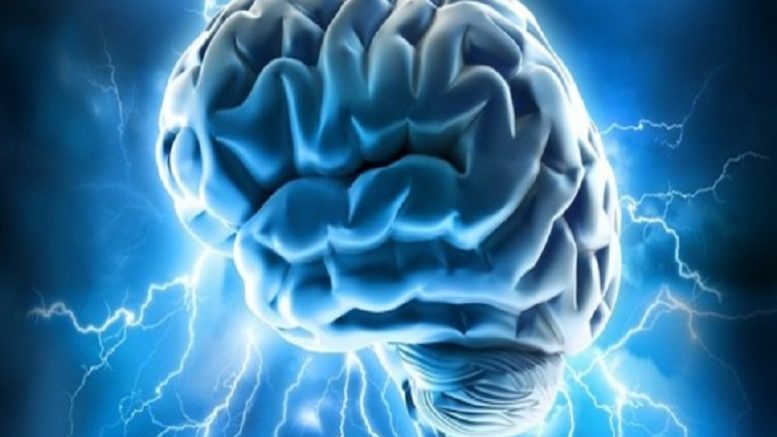
Although in the Bengali language the phrase “matha mota” (thick-headed) is often used to mean unintelligent, from a scientific perspective, we can actually regard it as a compliment, because the healthy functioning of the brain and intelligence truly require it to be rich in lipids. While the structure of the brain continually changes depending on human lifestyle, unique ways of thinking, or age, the brain is generally made up of about 100 billion nerve cells, or “neurons,” and several supportive cells called “glial cells.” Each neuron typically has three parts—the spherical part containing the nucleus is called the “cell body” or “soma,” the thin, long, thread-like part is known as the “axon,” and the numerous small, branching extensions are called “dendrites.” The cell body of each of these countless neurons is covered by a membrane (plasma membrane) composed of a double layer of lipids. Not only that, but in the “white matter”—that is, neurons that are longer and carry stimuli across greater distances in the brain—their axons are covered with a myelin sheath that is 80% lipid. All this information makes it clear that all of our heads are quite “thick”!

What we can do depends on how interested we are in learning about ourselves. Undoubtedly, our brains steer us, so it can be said that the brain’s potential depends on how eager it is to know itself. This eagerness within a brain to learn about itself is measured by “memory” and “thought.” Not only do you remember or think about yourself, but in many cases, you also retain information about other people or think about others; however, do not forget that your brain only retains that information and recalls or thinks about it as needed because it is interested in knowing itself better. The edifice of “intelligence” is built on the twin pillars of “memory” and “thought,” that is, the measure of what the brain can do is this “intelligence.”
Human intelligence is mainly of two types—”rationality,” and “imagination” & “intuition” [intuition is essentially the ability to imagine in the face of a particular situation or problem]. Although neuroscience makes it difficult to definitively state what rationality is, or to establish a fixed explanation for imagination or intuition, attempts can certainly be made to offer plausible explanations.
Rationality
The cerebral cortex of our brain is divided into several lobes—”frontal lobe,” “parietal lobe,” “occipital lobe,” and “temporal lobe.”
Near the “visual cortex” in the occipital lobe is a neural loop (a neural loop is a group of neurons connected in a sequence for a specific task, transferring stimulation from one part of the brain to another), which is used as a “short-term memory” for visual information. Additionally, there is a phonological neural loop that works in conjunction with “Broca’s area” in the frontal lobe to serve as a short-term memory for sound and language-related (auditory) information. Let me clarify what “short-term memory” means in this context. When you read a sentence and try to understand its meaning, you need to remember the beginning of the sentence as you read to the end, and your brain’s short-term memory does this job—it holds a small amount of information for a short period (10 to 15 seconds or sometimes up to a minute).
The brain gathers information through the eyes into “visual short-term memory,” where it analyzes it into two sub-components—”spatial visual information” and “temporal visual information.” Similarly, the brain collects sound and language information into “auditory short-term memory” and breaks it down into “spatial auditory information” and “temporal auditory information.” Then, the spatial components of visual information are encoded in the “ventral intraparietal area” and “lateral intraparietal area” of the brain and then move to the central executive part of the “prefrontal cortex” located at the anterior part of the frontal lobe. Meanwhile, the spatial components of sound and language information are encoded in the “primary auditory cortex,” “caudal auditory belt,” and “parabelt,” and then also converge in the same region of the prefrontal cortex. This central executive part of the prefrontal cortex uses all this encoded visual, sound, and language information as search criteria to retrieve, or decode, certain items from the “declarative long-term memory,” which stores various experiences, events, facts, and concepts in an encoded form—this process is called “recalling” in the brain. If this central executive area of the prefrontal cortex re-encrypts the recalled, decoded information, that process is called “thinking something new through logic.” [That is, any new idea in a brain is essentially an encrypted version of one of its own memories.] The ability to perform these processes of “recall” and “logical thinking” is what we call “rationality.”
Now, it is important to understand what “encoding” and “encryption” mean. Information is encoded so that most consumers can decode and interpret it, but information is encrypted so that only a select few can decrypt and understand it. Others besides the intended recipients may eventually comprehend the encrypted information, but it often takes time. The history of the “special theory of relativity” is proof of this. The thoughts that gave rise to Albert Einstein’s theory were so strongly encrypted that most of the brilliant minds of his era did not immediately grasp its meaning—except for the scientist Max Planck. Eventually, the theory gained acceptance in the scientific community, but it took several years to do so.
We have yet to discuss what “declarative long-term memory” is. Thanks to this type of memory, you can easily recall the content of a movie you saw three or four years ago or recount what you did or saw during a trip. The brain decides which information to store in this declarative long-term memory; the “hippocampus,” “entorhinal cortex,” and “perirhinal cortex” located in the middle regions of the temporal lobe encode this information, after which it is consolidated and usually stored in the “temporal cortex.”

Intuition and Imagination
There are some things you don’t need to consciously memorize or remember yet they linger in your memory. For example, after learning to ride a bicycle and cycling for three years, I didn’t even touch a bicycle for the next twelve years, but I am confident that I won’t lose my balance if I try again. This is because the information necessary for cycling (or for playing a musical instrument) is naturally stored by the brain in its procedural long-term memory. However, there is much information that, while suitable for declarative long-term memory, is used so frequently in daily life that the brain needs to recall it quickly or, due to personal preference or emotional attachment, wants to make it permanent. In such cases, the brain relies on procedural long-term memory. The “cerebellum,” “putamen,” “caudate nucleus,” and “motor cortex”—mainly these four parts—create procedural long-term memory, where both encoding and storing of information are carried out.
The temporal components of sound and language-related information are first encoded in the “superior temporal sulcus” based on time and then by frequency in the “associative auditory cortex,” and finally reach the “visual cortex.” Meanwhile, the polysensory part of the “superior temporal sulcus” encodes the temporal components of visual information and sends them to the visual cortex. The visual cortex uses this encoded information as search criteria to retrieve or decode stored information about various acquired skills and tasks from procedural long-term memory—the brain’s ability to execute this process is called “intuition.” And if the visual cortex can then re-encrypt this retrieved, decoded information for use, the brain’s ability to do so is called “imagination.”
Conclusion
No matter how many times the brain recalls certain information from long-term memory, only particular active neurons are stimulated, and when making an intuition-based decision, certain specialized neurons become excited—because in such cases, only the “decoding” process occurs. However, when recalling information from short-term memory, during imagination, or when thinking something new through logic, after each “decoding” process, the “encryption” process is also performed; thus, alongside the excitation of some active neurons, some inactive neurons also become active and are stimulated. In this way, the brain’s twin processes—”decoding” and “encryption”—manifest intelligence by putting memory to use!
So, what does your intelligence say about intelligence?
Subscribe for more news and updates on science and technology.
[mc4wp_form id=”3448″]











Very Good Article
Thank you.
awesome article tnx
Thanks a lot.
Nice Article
ooo,,,so amazing articles
Onek ojana informatio…
Very helpfu…
Thanks