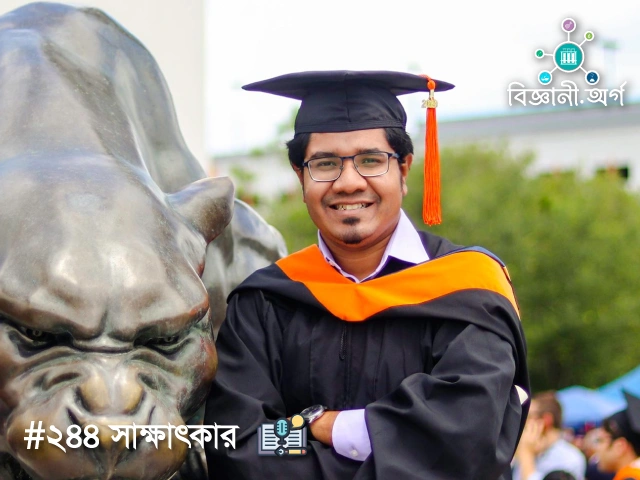
Md. Ishtiaq Iqbal is currently pursuing his PhD at Universiti Putra Malaysia (UPM). His primary research area focuses on the detection of plant leaf diseases and using computer vision, deep learning, and artificial intelligence to combat them. Notably, he has improved the YOLO computer vision model to accurately identify plant diseases.
He is particularly interested in expanding the use of AI in agriculture to develop new methods for smart farming. His research helps farmers to make quick and precise decisions, increases crop yields, and supports sustainable agriculture. Md. Ishtiaq Iqbal’s innovations have been implemented for practical use in the field, accessible via mobile devices or drones. Though he is Bangladeshi, he is currently conducting research abroad, aiming to develop innovations that meet international standards.
💬 Q&A Session:
Question: First, we’d like to know about you.
Answer: My name is Md. Ishtiaq Iqbal. I am currently pursuing my PhD at Universiti Putra Malaysia (UPM), where I am developing new and effective frameworks for diagnosing and treating various diseases of plant leaves using computer vision, deep learning, and related technologies. My main goal is to create efficient AI-based methods for smart agriculture, enabling rapid and precise decision-making in crop disease detection, automated monitoring, and data analysis.
Question: What is the subject of your research?
Answer: The main objective of my research is to use modern technology to detect plant diseases quickly and accurately, ensuring crop protection. I apply the YOLO computer vision model to identify unhealthy parts of plants and have optimized it so that it can recognize disease symptoms like an expert. There are three key innovations: focused attention, flexible perspective, and speed and efficiency. The model is trained using thousands of plant images, so farmers can detect diseases and take action right in the field.
Question: How does your research benefit or will benefit us?
Answer: Early detection of plant diseases saves farmers time, costs, and effort. Diseases can be treated in a targeted manner before they spread, reducing input and environmental pressures. Because the model is lightweight and fast, it can run on mobile devices or drones, enabling instant field-level reports. This technology strengthens food security, stabilizes production, and provides practical solutions for sustainable agriculture.
Question: Can you share any special experiences from your research work?
Answer: Recently, a disease was spreading rapidly on the land of a small farming family. Using the prototype of the new model, the affected areas were identified within seconds through a mobile phone, and targeted treatment began right away. Within a few weeks, the disease did not spread further. This demonstrates that AI is not just an algorithm, but a powerful tool for solving real-life problems.
Question: What qualities do you think a scientist should possess?
Answer: Curiosity and a questioning mind, the mindset to learn from failure, patience for the long journey, and a commitment to continuous improvement. With these qualities, becoming a good scientist is only a matter of time.
Question: What message do you have for Bangladesh’s young students who wish to work in science?
Answer: Never lose your curiosity. Interest in learning, patience, and creative thinking will pave the way for your greatest achievements. Don’t be afraid of minor mistakes or failures; they are the greatest ways to learn. Aim to use science to solve your country’s problems and gradually develop skills to international standards.
Question: Your contact information:
Answer: Email: [email protected]
Question: Your LinkedIn link:
Answer: LinkedIn Profile
Md. Ishtiaq Iqbal’s research is opening new horizons in agriculture by using artificial intelligence for plant disease detection. His work is not just a technological innovation but also delivers practical tools to the hands of farmers and agricultural officials. The Biggani.org team appreciates his dedication and vision. We hope his research will inspire young scientists in Bangladesh and that he will contribute to the development of the country’s agricultural sector with further internationally acclaimed innovations.
AI in Smart Agriculture: Research Insights from Md. Ishtiaq Iqbal
Md. Ishtiaq Iqbal is currently pursuing a PhD at Universiti Putra Malaysia (UPM). His research focuses on detecting and managing plant leaf diseases using computer vision, deep learning, and artificial intelligence. Specifically, he has enhanced the YOLO computer vision model for accurate identification of plant diseases.
His work aims to advance AI applications in smart agriculture by creating tools that allow farmers to detect crop problems quickly and accurately. His research provides practical solutions that can run on mobile devices or drones, making it field-deployable. While originally from Bangladesh, Md. Ishtiaq Iqbal is conducting research abroad with the goal of developing innovations that meet international standards.
💬 Q&A Section:
Question: Could you tell us a bit about yourself?
Answer: My name is Md. Ishtiaq Iqbal. I am currently pursuing a PhD at Universiti Putra Malaysia (UPM), where I research various leaf diseases and explore how computer vision, deep learning, and AI can be used to detect and treat them. My main objective is to develop effective AI-based methods for smart agriculture, enabling crop disease detection, automated monitoring, and fast, accurate decision-making.
Question: What is the focus of your research?
Answer: My primary goal is to detect plant diseases quickly and accurately using modern technology to ensure crop protection. I use the YOLO computer vision model as a digital “detective” to identify disease-affected areas in leaves. The model has three main innovations:
- Focused attention: The model prioritizes diseased leaf areas, ignoring irrelevant features.
- Flexible perspective: It can recognize irregularly shaped or scattered disease patterns.
- Speed and efficiency: The model is lightweight and fast, making it deployable on mobile devices or drones while maintaining high accuracy.
Thousands of healthy and diseased leaf images are used to train the model, ultimately providing farmers with a simple tool to detect issues early and take timely action.
Question: How does your research benefit society?
Answer: Early and accurate detection of plant diseases saves farmers time, effort, and cost. It allows targeted treatment before diseases spread, reducing unnecessary pesticide use and environmental impact. The lightweight and fast model can run on mobile devices or drones, providing instant field reports. Overall, this technology strengthens food security, stabilizes crop production, and supports sustainable agriculture.
Question: Can you share a memorable experience from your research?
Answer: Recently, while capturing leaf images on a small farmer’s field, a disease was spreading rapidly. We tested the prototype model on a phone, and within seconds, it detected the affected areas. Targeted treatment was applied, and after a few weeks, the disease stopped spreading. This demonstrated that AI is not just an algorithm but a practical tool for timely decision-making in real-life farming scenarios.
Question: What qualities do you think a good scientist should have?
Answer: Curiosity, a questioning mindset, the ability to learn from failure, patience for long-term research, and consistent effort are essential qualities. With these, becoming a successful scientist is only a matter of time.
Question: What message do you have for young Bangladeshi students interested in science?
Answer: Never lose your curiosity. Interest in learning, patience, and creative thinking will guide you toward significant achievements. Don’t fear mistakes or failures; they are the greatest source of learning. Use science to solve the country’s problems and gradually develop skills to meet international standards.
Question: Contact Information:
Answer: Email: [email protected]
Question: LinkedIn Profile:
Answer: LinkedIn Profile
Md. Ishtiaq Iqbal’s research on AI-powered plant disease detection opens new avenues in agriculture. His work provides not only technological innovation but also practical tools for farmers and agricultural officers. The Biggani.org team appreciates his dedication and vision. We hope his research inspires young Bangladeshi scientists and that he continues to achieve international recognition and contribute to sustainable agriculture.