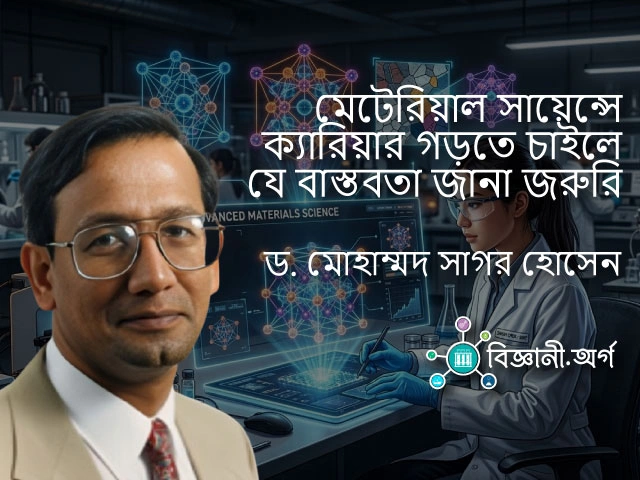
In a recent interview with biggani.org, Dr. Mohammad Sagar Hossain presented a realistic picture of studying material science in Bangladesh and building a career in this field. According to him, this subject is still relatively unfamiliar in Bangladesh, resulting in limited interest among students. While many universities have chemistry or physics departments, integrated departments like Materials Science and Engineering are still not easily available.
In the interview, he explains that material science is a subject where knowledge of chemistry, physics, and engineering works together. Because of this interdisciplinary nature, studying it requires a fundamental understanding of various fields. However, since this discipline is not widely established as a separate department in Bangladesh, students have limited opportunities to get familiar with it from the outset. As a result, material science is rarely considered by many students when enrolling in university or planning their careers.
Dr. Sagar Hossain further notes that not only are there fewer study opportunities, but even after gaining expertise in this field, the direct scope for application in the country is also limited. In Bangladesh’s industries, there is generally a higher demand for graduates in chemistry or chemical engineering. There are comparatively fewer dedicated positions or research opportunities for specialists in material science. As a result, many students feel that studying this subject may make it difficult to secure direct job opportunities in the future. This reality is also a major reason behind the declining interest among students.
In the interview, he emphasizes the need to raise awareness. According to him, until industries and engineering sectors recognize how crucial the role of material scientists is in selecting materials, the importance of this field will not increase. Choosing the most suitable alloy or material for a particular job requires specialized knowledge about the properties and structure of materials. Without this knowledge, it can often be difficult to select the right material for the job.
Dr. Sagar Hossain’s comments indicate that the future of material science in Bangladesh depends entirely on raising awareness and creating real opportunities for application. Alongside students, both the industrial sector and policymakers need to take an interest in this field. His interview given to biggani.org brings these realities to light and encourages young people to rethink—material science is not just a subject for the laboratory but a field deeply connected to industry and development.
Read the full interview with Dr. Mohammad Ataul Karim: