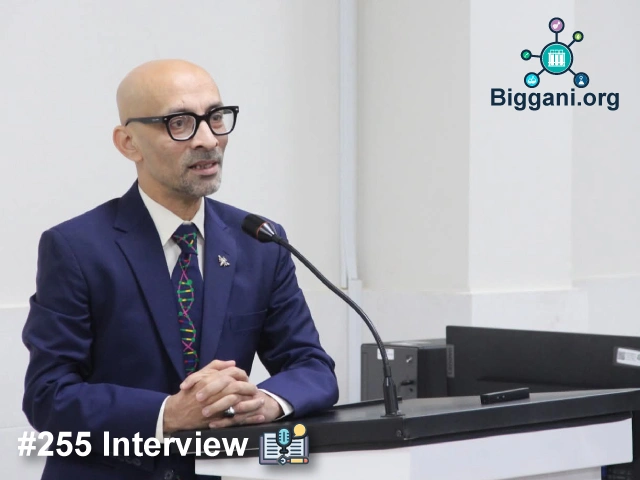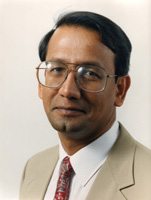
In the history of scientific and technological advancement, some individuals leave such a mark that they not only create new knowledge in the laboratory, but also pave the way for future generations of researchers. Dr. Mohammad Ataul Karim is one such scientist and academic leader. This Bangladeshi scientist, who served as Provost and Executive Vice President at Old Dominion University in the United States, has been engaged in research in high-tech fields such as optics, electronics, night vision displays, and optical computing for several decades. His life is not just a story of personal achievement; it serves as a guide where scientific pursuit, leadership, and collective success are deeply interconnected.
The Journey into Science: From Physics to Engineering
Dr. Karim’s academic journey began in physics. Coming to the United States from Bangladesh, he studied physics at first. For his master’s, his research focused on biophysics—in particular, the structure and characteristics of crystals that can cause cancer. By “crystal studies”, he explored how the arrangement of molecules and atoms affects matter and, if altered, what impact this has on substances or cells. Simply put, just as changing the internal structure of a grain of salt changes its physical properties, altering the structure of harmful crystals within living bodies can raise the risk of disease—this was the essence of his research.
He later shifted to electrical engineering, where his work expanded into image and information processing. Image processing refers to analyzing and enhancing images by computer—for example, extracting subtle details from a medical scan or satellite image. Information processing mainly deals with methods for processing data more quickly and efficiently.
Research with Light: The Concept of Optical Computing
One of the most significant chapters in Dr. Karim’s research career is optical computing. Conventional computers operate using electronic signals—transmitting information through the flow of electricity. But electronic processors have a limitation: working at very high speeds generates heat, coming up against physical speed limits. To overcome these limitations, scientists began contemplating the use of light for computing.
Optical computing is essentially built on this idea—computing using light. Light can travel through multiple paths simultaneously, making parallel processing possible. As Dr. Karim describes, employing light as a “two-dimensional parallel processor” could potentially result in much faster computation than electronic processors. During the Cold War era, large-scale projects like the United States’ “Star Wars” defense initiative intensified the need for ultra-fast computing, accelerating research in this field.
This research was not confined to theory alone. Dr. Karim’s work found crucial practical application in optical displays, night vision technology, and sensor-based systems. Night vision displays typically refer to specialized cameras and screens used in military or rescue missions at night, enabling clear vision even in very low light conditions.
From Research to Leadership: The Philosophy of Building Infrastructure
Another key aspect of Dr. Karim’s career is his role in academic leadership. He did not limit himself to personal research, but also focused on creating a conducive environment and infrastructure for research. In Dayton, Ohio, he established an electro-optics program—one of only a few specialized programs worldwide. Later in New York, he helped found a biomedical engineering department. Upon joining Old Dominion University, he set out to expand their research infrastructure from about $30 million to over $50 million in just a few years.
His core leadership philosophy is team-building. He says, “Listen more, talk less”—that’s the fundamental principle of building a good team. Leadership is not about imposing decisions swiftly; rather, it’s about making decisions based on data analysis, maintaining transparency and fairness. He believes that no university or research institute can be the best in every field at once. Therefore, you must set focused goals and invest and develop human resources in select areas. He compares this process to a “control system”—where regular coordination and adjustments are necessary to reach the desired objectives.
Bangladesh Perspective: Possibilities Amid Limitations
Dr. Karim regularly visits Bangladesh and is connected to various sectors. In his view, Bangladesh does not yet offer the same advantages for research as the United States—there is a lack of adequate funding, infrastructure, and industry involvement. Yet he sees tremendous potential in Bangladesh’s youth. He believes that with the right environment and opportunities, young Bangladeshi scientists are quite capable of conducting research to global standards. He wants to foster change from within—gradually building a research culture rooted in local realities.
The Results of Collective Effort: Books, Patents, and Hundreds of Studies
Dr. Karim’s achievements include around eight books, two patents, and over three hundred research papers. His extensive contributions in fields such as optics, electronics, and night vision displays are not the product of solo efforts. He openly acknowledges that many new ideas actually came from his students and colleagues. The success of a scientist is truly a collective endeavor—where teachers, students, and collaborators stand on each other’s shoulders to advance together.
A Message for Young People: Learn to See the Bigger Picture
Dr. Karim’s most important advice for young researchers and future scientists in Bangladesh is to “learn to see the bigger picture.” In science and engineering, we often get absorbed in very narrow problems. This is necessary, but for work to have a lasting impact, you must understand the broader context—what are the social, economic, or technological impacts of this research? How can it be integrated with other fields?
He reminds us that modern research is not confined to the laboratory. It is also connected to legal affairs, financial management, commercial applications, intellectual property, and marketing. To become a successful scientist, one must work collaboratively, learn from others’ experiences, and relate one’s own work to the broader needs of society.
A Beacon of Inspiration
The life of Dr. Mohammad Ataul Karim reminds us that practicing science is not just a matter of personal achievement; it’s a social responsibility. The brilliance of his research illuminates the technology of the future, while his leadership and vision set an example for a new generation of scientists. This philosophy of finding possibility amidst limitations is especially relevant for the youth of Bangladesh. If inspired by this light, more young scientists take up the path of research, then that will be Dr. Karim’s greatest achievement—a proud legacy for the nation.
Date: June 2, 2006 (12 minutes)
Biography:
Mohammad A. Karim currently serves as the Vice President for Research at Old Dominion University (ODU) in Norfolk, Virginia. Under his leadership, the university runs research initiatives with an annual expenditure of $50 million, involving six colleges, over 20 research centers, 600+ faculty, and more than 5,000 graduate students. Karim is a member of the Virginia Research and Technology Advisory Commission (VRTAC) and serves on the Board of the Southern Universities Research Association (SURA). Since 1999, he has chaired the International Program Committee of the International Conference on Computing and Information Technology (ICCIT). Karim is North America Editor for Optics and Laser Technology, Associate Editor of IEEE Transactions on Education, and serves on the editorial board of Microwave and Optical Technology Letters. He has also worked as guest editor for 16 technical journal issues.
Before joining ODU, Mohammad Karim served as Dean of Engineering at the City College of New York, City University of New York from 2000-2004; as Head of the Department of Electrical and Computer Engineering at the University of Tennessee from 1998-2000; and as Chair of the Department of Electrical and Computer Engineering and Founding Director of Electro-Optics at the University of Dayton from 1994-1998.
Karim has authored 8 textbooks and reference books, over 325 research papers, 6 book chapters, 10 book reviews, 2 US patents, and numerous technical reports and editorials. His books—such as Digital Design: A Pragmatic Approach (1987), Electro-Optical Devices and Systems (1990), Optical Computing: An Introduction (1992), Electro-Optical Displays (1992), Continuous Signals and Systems with MATLAB (2001), and Contemporary Digital Design (2005)—are used in undergraduate and graduate programs at universities and institutions worldwide. He is a Fellow of the Optical Society of America (OSA), the Society of Photo-Instrumentation Engineers (SPIE), and the Bangladesh Academy of Sciences (BAS), and a Distinguished Engineering Fellow of the University of Alabama.
Karim’s research areas include optical computing, information processing, pattern/target recognition, night vision, displays, electro-optical systems, and sensors. His past and current research sponsors include the US Air Force, Naval Research Laboratory, US Army, National Science Foundation, NASA, US Department of Education, Ohio Aerospace Institute, US Department of Defense, and Wright-Patterson Air Force Base. Throughout his academic career, Karim has supervised research for 55 MS/PhD students.
Mohammad Karim was born in 1953. He attended Faujdarhat Cadet College and Sylhet Government College for his pre-university studies, earned his BS Honors in Physics from the University of Dhaka in 1976, MS in Physics in 1978, MS in Electrical Engineering in 1979, and PhD in Electrical Engineering from the University of Alabama in 1981. He ranked first among 39,488 students in the Bangladesh Higher Secondary Certificate examination in 1972 and fourth among 64,432 students in the Secondary School Certificate examination in 1969.
Dr. Karim is the recipient of numerous awards: Outstanding Engineering Research Award (1998), Outstanding Scientist Award (1994), Alumni Award in Scholarship (1991), NASA Tech Brief Award (1990), Up and Comers Education Award (1990), and NCR Stakeholder Award (1989). He has been listed in American Men and Women in Science, Marquis International Who’s Who in Optical Science and Engineering, Who’s Who in Science and Engineering, Who’s Who in America, Outstanding People of the 20th Century, Dictionary of International Biography, and 2000 Outstanding Scientists of the 20th Century.
Dr. Karim and his wife Setara live in Virginia Beach, Virginia, with their son, Lutfy, and two daughters, Lamia and Alia.