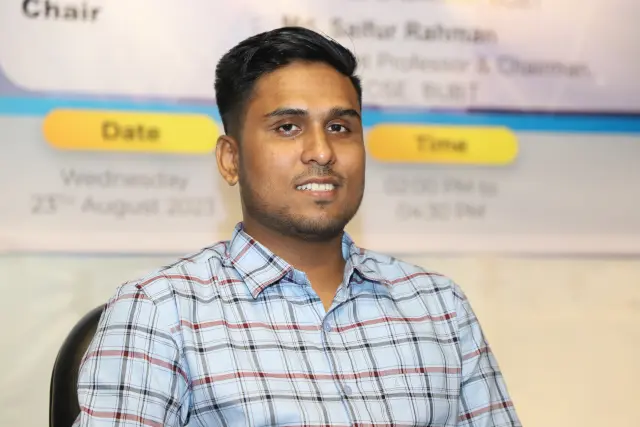
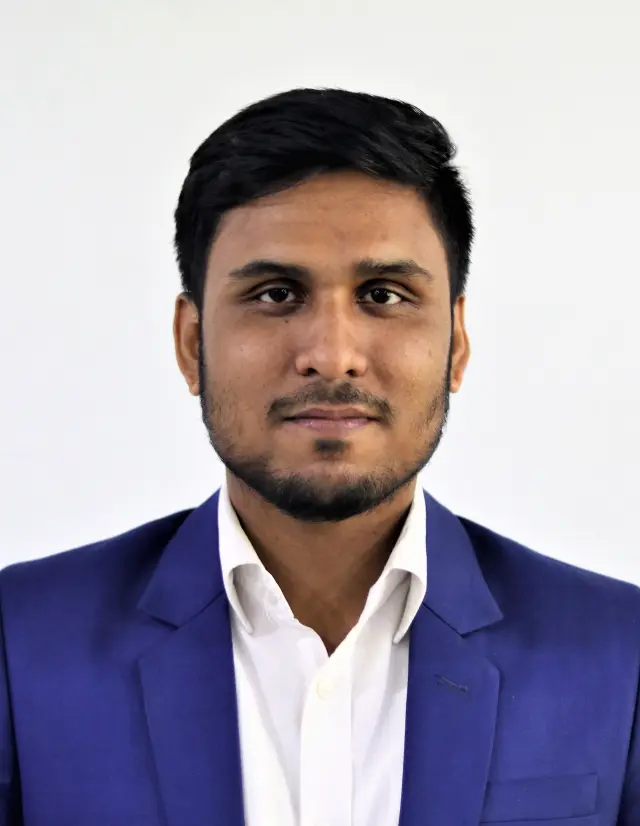
In our interview series featuring the new generation, this time we interviewed Muhammad Mohsin Kabir. He is currently working as a PhD researcher at Mälardalens University in Sweden, involved with Hitachi Energy’s HeatTrack project. Read his interview below:
First, please tell us a little about yourself:
In 2024, I completed the Erasmus Mundus Joint Master’s in Intelligent Field Robotic Systems from the University of Girona in Spain and Eötvös Loránd University in Hungary. Previously, I was a lecturer in the Department of Computer Science and Engineering at Bangladesh University of Business and Technology (BUBT). In 2021, I obtained my Bachelor’s degree in Computer Science and Engineering from BUBT.
I have extensive experience in research. At BUBT, I worked as a research assistant as well as the lead researcher at the Advanced Machine Intelligence Research Lab. Additionally, I have made significant contributions to several leading research labs around the world, including the Database Systems Lab at the University of Aizu in Japan.
My research work has received international recognition, and I have published over 30 articles in high-impact journals, such as: Scientific Reports, Computers and Electrical Engineering, Informatics in Medicine Unlocked, Natural Language Processing Journal, Heliyon, Computers & Security, Healthcare Analytics, Journal of Agriculture and Food Research, IEEE Access, Sensors, PLOS ONE, Cognitive Computation and Systems, International Journal of Information Management Data Insights, and Mathematics. In addition, I have contributed to more than 12 conference papers and 3 book chapters on machine learning and artificial intelligence.
My research interests are broad, focusing on areas such as artificial intelligence, machine learning, deep learning, computer vision, Internet of Things (IoT), and robotics.
What is the topic of your research?
The primary subject of my research is the development of artificial intelligence (AI), machine learning (ML), deep learning, computer vision, and Internet of Things (IoT) and their applications across diverse fields. The goal of my research is to develop intelligent systems to solve human and technological problems. For example, I have developed effective technologies using machine learning and deep learning methods to address issues in healthcare, agriculture, and social media.
Simply put, I strive to develop technologies that can analyze large datasets and help solve everyday problems more quickly and efficiently.
How do your research projects benefit us?
My research work benefits society in various ways. For example, I have developed advanced technologies for remote monitoring and disease detection in the healthcare sector, which help detect diseases at an early stage and enable quicker treatment. Such technologies are especially crucial for rural and remote areas, where direct access to healthcare is often not possible.
My research also plays an important role in the agriculture sector. For instance, I have developed methods using machine learning to detect plant diseases and enhance crop quality, which helps farmers take better care of their crops and increase productivity.
Additionally, my research has led to the development of technology that automatically identifies abusive and harmful comments on social media, making these platforms safer and more enriching.
Overall, my research is helping to make our daily lives easier and more efficient through technological advancements.
Would you like to share any experience from your research work?
Recently, two teams of final-year students from BUBT published articles in very prestigious and high-impact journals—one in a Q1 and the other in a Q4 journal, both under IEEE and Wiley. They worked under my supervision and achieved remarkable success early in their research careers. As their supervisor, this was an extremely proud moment for me.
What qualities do you think a scientist should have?
In my opinion, there are several important qualities a scientist should possess. First, a curious mindset is essential, driving one to constantly seek new knowledge and answers to unknown questions. Second, perseverance or patience is necessary, as research comes with many challenges and failures that must be faced with determination.
Third, a scientist needs to have critical thinking skills, enabling deep analysis of data and information to make sound decisions. Creativity is also indispensable, as it helps in finding new and innovative solutions. Above all, a scientist should work with honesty and integrity, ensuring that their work is reliable and beneficial to society.
Do you have any message or advice for young Bangladeshi students interested in science?
My message to young Bangladeshi students is that curiosity, perseverance, and hard work will always take you forward in science. Science is a field that requires attention and patience in the pursuit of answers to every question. Failure here is normal, but it’s important to learn from those failures and move ahead.
You have tremendous opportunities ahead, especially with today’s easy access to technology and information. Always stay eager to acquire new knowledge in science and technology, develop your skills, and strive to become involved in research at the international level.
Most importantly, believe in your work and act with integrity, so that your success becomes a source of pride not just for you, but also for your country and society.
Your LinkedIn website address
https://www.linkedin.com/in/mohsinkabir-ai
Your website, research links, etc.
We wish scientist Muhammad Mohsin Kabir continued success.