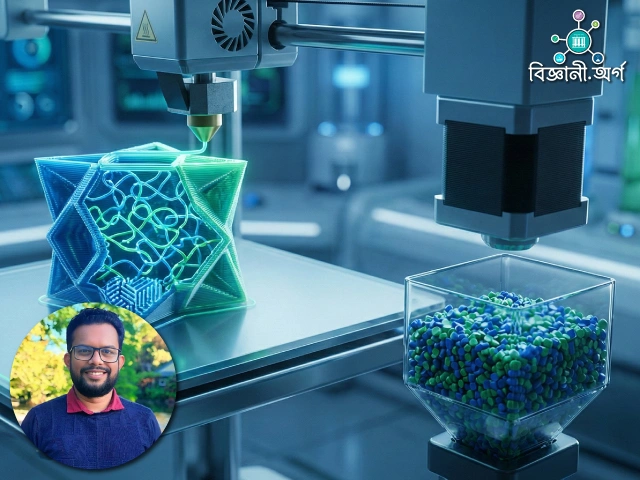
In a special interview organized recently by biggani.org, Bangladeshi researcher Dr. Mohammad Sagor Hossain, currently working in New Zealand, elaborated on a significant aspect of his research—how new materials are created through plastic recycling and 3D printing, and how the internal properties of these materials change in the process. In the interview, he not only discussed his own research, but also highlighted the scientific limitations and possibilities of plastic reuse.
The main focus of Dr. Sagor Hossain’s research was to understand the relationship between the internal structure of polymers or plastics and their external properties. In the interview, he explained that no matter how strong or transparent a material may appear from the outside, the real changes happen at the molecular and microstructural level inside. When plastic is first manufactured, its internal structure is set in a specific state. However, if that plastic is melted down and transformed into a new object through 3D printing, the structure is no longer the same as before.
He further explained in the interview that in the process of 3D printing, plastic is melted at a certain temperature and deposited layer by layer. During this reprocessing, the arrangement of molecules inside the plastic can change. As a result, objects made from recycled plastic might not be as strong or durable as before. Often, the desired properties of the material gradually decline. This is why his research sought to find out at which stage and how the internal structure of plastics changes the most—and how those changes affect the material’s properties.
Another important issue was raised in the biggani.org interview. We generally think that plastic recycling is an environmentally friendly solution. But Dr. Sagor Hossain shows that recycling alone does not fully solve the problem. If, during reprocessing, the internal structure of the material changes in a way that compromises its functionality, the product is no longer sustainable. In other words, for creating eco-friendly products, understanding the scientific aspects of reprocessing is just as important as reuse itself.
He also shared that the aim of his research was to identify these changes and understand—in which recycling processes do plastics retain their properties best. The temperature at which the plastic is melted, how quickly it is cooled—each of these steps affects the future usability of the material. Therefore, in order to develop sustainable materials, the process needs to be controlled and planned meticulously.
This interview reveals a profound reality about plastic recycling. At first glance, it may seem like used plastics are simply being transformed into new products—that in itself seems a great achievement. But unless we understand what’s happening at the molecular level inside, achieving the goals of sustainable development is difficult. The research of Dr. Mohammad Sagor Hossain and his remarks in the biggani.org interview remind us that for an environmentally friendly future, we must deeply understand not only the technology, but the science behind the technology.
To learn more about this discussion, readers can watch the full interview with Dr. Mohammad Sagor Hossain published on biggani.org: