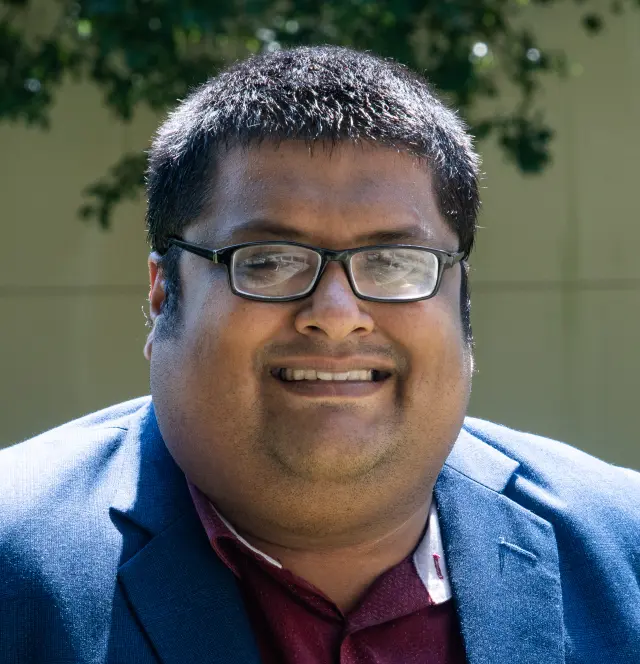
In this installment of our interview series with the younger generation, we interviewed Rajat Dasgupta. He is currently working as a Graduate Research Assistant in the Department of Epidemiology and Biostatistics at the Arnold School of Public Health, University of South Carolina, where he is also pursuing a PhD in Epidemiology. Epidemiology is the branch of science that investigates the spread, causes, and control of diseases; while Biostatistics is the application of statistical methods to analyze data in biology and healthcare. In addition, he serves as an adjunct faculty member at the BRAC James P. Grant School of Public Health, BRAC University, Bangladesh.
When the Scientist Org team checked his Google Scholar profile for the interview, they were astonished by the number of citations his research papers have received. A research paper’s citation count reflects how many times other researchers have referenced it. Simply put, a paper with a high citation count is considered significant within the scientific community. All his papers combined have around 58,000 citations. This figure illustrates the global impact a Bangladeshi researcher can have in the world of research. Read his interview below:
First, we’d like to know more about you
My name is Rajat Dasgupta, and by profession, I am a physician. I completed my MBBS from Dhaka Medical College in 2014. Afterwards, I did a one-year internship at Dhaka Medical College and Hospital in 2015.
Later, I joined BRAC James P. Grant School of Public Health (BRAC JPGSPH) at BRAC University as a Research Associate. In 2016, I enrolled in the MPH (Master of Public Health) program at the same institution. The MPH is a postgraduate degree focusing on public health. As a member of the first batch, I received the WHO TDR Postgraduate Training Scholarship, which fully funded my entire program. This scholarship is provided through the World Health Organization to support and promote health research in developing countries.
I graduated from the MPH program in 2017 with highest academic honors. During my time at BRAC University, I received several awards, including the Vice Chancellor’s Gold Medal, Highest Academic Honor, and the Allan Rosenfield Best Academic Performance Award, for achieving the highest CGPA in the 12th batch of the MPH program. CGPA, or Cumulative Grade Point Average, represents the average grades across all semesters for a student.
I also received the Sir Fazle Hasan Abed Leadership Award, granted in recognition of leadership qualities. Furthermore, I was honored with the Richard Cash Award for the best SLP group poster under the theme of “Human Resources for Health.” The SLP, or Strategic Learning Program, is a group-based project where students work to solve real-world problems.
After rejoining the BRAC James P. Grant School of Public Health, I worked at the Center of Excellence for the Science of Implementation and Scale-up. This center focuses on researching how to effectively implement and expand healthcare interventions.
In 2019, I went to the University of South Carolina, USA, to pursue a PhD in Epidemiology. Epidemiology is the study of the spread, causes, and control of diseases. During my time there, I have received several prestigious awards for my academic and research accomplishments.
These include the Doctoral Student Achievement Award (2024) from the Arnold School of Public Health, given for significant achievements by PhD students. I received the Outstanding Research Award (2023) from the Graduate School, which recognizes exceptional contributions to research. Additionally, I was honored with the Outstanding Graduate Student Award in Excellence in Diversity (2023) from the Graduate Student Association, in recognition of excellence in diversity and inclusion.
I also received the Graduate Student Award for Excellence in Diversity, Equity, and Inclusion in Research or Practice (2022) and the George M. Reeves Graduate Fellowship (2022) from the Arnold School of Public Health. The fellowship is awarded for advanced research and academic merit.
The Graduate Student Association recognized me as an Overall Doctoral Student Achiever (2022), and I received the Outstanding Graduate Student Researcher Award in both 2022 and 2021. For service, I was honored with the Exemplary Graduate Student Award (2021). In addition, I received the Gamecocks Stand Up Hero Award (2021) from the university’s Sexual Assault and Violence Intervention and Prevention Office, in recognition of contributions to preventing sexual harassment and violence.
I won first prize in the Fall 2019 Spirituality and Public Health Student Essay Contest (2020), where students write essays on spirituality and public health. I was also awarded the prestigious Presidential Fellowship (2019) from the University of South Carolina Graduate School, which is the highest fellowship offered to outstanding students.
What is the subject of your research?
The main focus of my research is public health and epidemiology, especially the epidemiology of non-communicable diseases (NCDs). Epidemiology is the science that explores the distribution, causes, and control of diseases within populations. Non-communicable diseases are those that do not spread directly from person to person, such as heart disease, cancer, diabetes, and nutrition-related disorders.
The goal of my work is to understand the distribution and causes of these diseases, relevant to both high-income countries like the United States and low- and middle-income countries such as Bangladesh, India, Nepal, Maldives, South Africa, and Timor-Leste. Using advanced epidemiological methods, I reassess uncertain risk factors, such as the role of body mass index (BMI) in lung cancer. BMI is the ratio of weight to height and helps determine a healthy weight range for the body.
I also research health system preparedness in low- and middle-income countries, where these nations face particular challenges in coping with the growing burden of non-communicable diseases.
Alongside my work on non-communicable diseases, I have made significant contributions to maternal and child health research in Bangladesh and to implementation science. Implementation science is a field focused on bridging the gap between research knowledge and practical application. As part of my current work at the Institute for Families in Society at the University of South Carolina, I am interested in the intersection of maternal and child health and the epidemiology of non-communicable diseases.
Notably, I conduct research using insurance claims data and other big data sources. Insurance claims data provides details of patients’ healthcare utilization. “Big data” refers to large and complex datasets that are challenging to analyze using conventional data processing techniques.
Through this, I can explore how chronic diseases affect maternal and child health outcomes and how healthcare systems can adapt to these evolving needs.
I am also an associate in the Global Burden of Disease (GBD) project, representing both Bangladesh and the United States. The GBD project is based at the Institute for Health Metrics and Evaluation (IHME) and funded by the Bill and Melinda Gates Foundation. This is a comprehensive global research initiative that assesses mortality and disability from major diseases, injuries, and risk factors worldwide.
My primary work, which I did during my Master of Public Health (MPH) thesis, was titled, “Increasing number of women in the medical profession in Bangladesh: Reasons and consequences for the health system.” This mixed-methods study explored the motivations for women entering the medical profession, their career choices, and the real-life challenges they face. Mixed-methods research means using both qualitative and quantitative approaches in a study.
Additionally, this research examined the impact of a predominantly female physician workforce on Bangladesh’s health system, helping to fill knowledge gaps about gender dynamics in healthcare.
During my career, I have published 120 papers in peer-reviewed journals and contributed chapters to two books. Peer-reviewed journals are academic publications in which subject-matter experts review and evaluate articles for quality and validity.
How does your research benefit our society?
1. My research contributes to public health by addressing critical challenges related to non-communicable diseases (NCDs) like heart disease, cancer, and diabetes, which exist in high-income countries such as the United States and low- and middle-income countries like Bangladesh, India, and Nepal. I study the distribution and determinants of these diseases and assess unclear risk factors. Through this, I help identify key areas for intervention and policy development, which ultimately lead to improved health outcomes.
2. Additionally, my work on health system preparedness in low- and middle-income countries provides vital insights into how these countries can improve their healthcare infrastructure to cope with the growing burden of non-communicable diseases. Especially, my research at the intersection of maternal and child health and non-communicable diseases, using insurance claims data and other big data, enhances our understanding of how chronic diseases affect maternal and child health outcomes.
- Insurance claims data refers to the information related to insurance claims, providing details of patients’ healthcare utilization.
- Big data refers to vast and complex datasets that are difficult to manage using conventional data analysis methods.
3. Furthermore, my participation in global initiatives like the Global Burden of Disease (GBD) project contributes to shaping global health policies and strategies. Such collaborative work supports the development of evidence-based interventions that can reduce mortality and disability rates worldwide.
- Global Burden of Disease (GBD) is a worldwide research initiative that evaluates mortality and disability from major diseases, injuries, and risk factors across the globe.
4. Along with my work on non-communicable diseases, my research into the feminization of the medical profession in Bangladesh plays an influential role in health policy development. By investigating the motivations for women entering the profession, career challenges, and impacts on the health system, this research clarifies the primary barriers and opportunities for female physicians.
- Feminization refers to an increase in the proportion of women in a particular profession.
- Career challenges may include work-life balance, opportunities for promotion, and gender bias.
This work can help develop policies that better support and empower women in healthcare, ensuring they have equal opportunities for career advancement and leadership. By addressing unique challenges female physicians face—like work-life balance, career progression, and gender biases—the healthcare system can become more inclusive and effective. Ultimately, this research will help build a stronger, more equitable healthcare system capable of meeting the needs of both patients and providers.
In your opinion, what qualities should a scientist possess?
A scientist should possess qualities like humility and modesty, as these traits keep them always open to learning new things. They should have a curious mind and be ready to accept failure while maintaining perseverance. The most important quality is the ability to face challenges with patience and never give up in the quest for knowledge.
What message would you like to share with young students in Bangladesh who want to work in science?
For young students in Bangladesh interested in pursuing science, especially medical science, here is my message:
Medical research is a vast and promising field that remains largely unexplored in Bangladesh even today.
Many MBBS and BDS graduates primarily focus on clinical practice or patient care. However, there are immense opportunities in research that can lead to groundbreaking discoveries and progress.
If you feel interested in this, listen to your heart or mind and dive into research—there is so much potential waiting to be discovered.
Your contact information:
rajat89.dasgupta@ gmail.com
Your LinkedIn site web address
https://www.linkedin.com/in/rajat-das-gupta-831b6b72
https://scholar.google.com/citations?user=EFPg54oAAAAJ&hl=en
We wish Rajat Dasgupta continued success. The interview was coordinated by Dr. Moshiur Rahman.