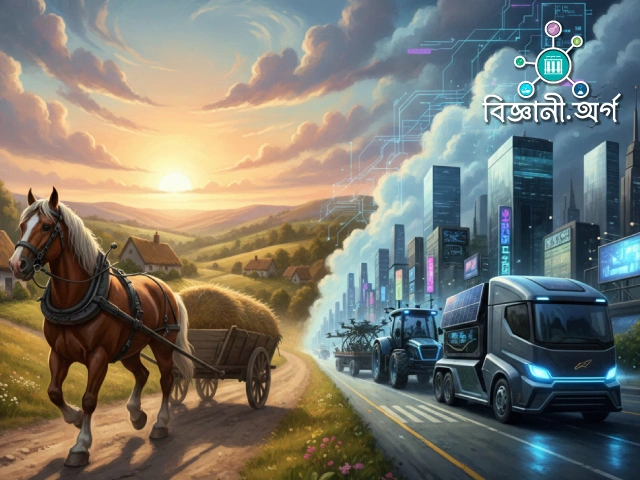
Every industrial revolution has begun with the unveiling of new technological horizons. The steam engine once transformed the process of production, and electricity opened the door to new levels of productivity. Today, we stand at a crossroads where artificial intelligence, robotics, and automation are collectively laying the foundation for Industry 4.0 and 5.0. This wave of change will not only accelerate industrialization, but also redefine the structures of the economy, employment, and national competitiveness. To outline this future, the BEAR Summit and National Semiconductor Symposium were held in Dhaka on July 16, 2025—bringing together the nation’s top tech experts for a high-level panel discussion on “Robotics for Resilience, Labor, and Industry Revolution 4.0 & 5.0.”
Present at the panel were experienced faculty and researchers from Bangladesh University of Engineering and Technology, Military Institute of Science and Technology, American International University-Bangladesh, and North South University. The discussion was moderated by Dr. Shahnewaz Siddiqui—a rising leader in robotics research and industry. Their insights went beyond policy reviews; they analyzed core practical issues and discussed what kinds of policies, initiatives, and industry-research collaborations are needed to tackle these challenges.
The foremost and biggest challenge highlighted was the complexity and high costs associated with importing robotics components. Sensors, actuators, or embedded systems that meet international standards face two to three times higher tariffs, which often becomes unbearable for young innovators and startups. The country still lacks a sufficient skilled engineering workforce for high-tech hardware production. As a result, many initiatives fail to progress beyond the prototype stage—a major barrier to industrialization.
This is compounded by another longstanding issue—the weak link between universities and industry. Research often does not cross the walls of laboratories to reach the market, and the needs of industry are rarely integrated into the scope of research. This disconnect leaves Bangladesh’s robotics sector full of promise, yet incomplete. Shortcomings in government policy and private investment make this reality even more challenging.
However, the panel discussion outlined not just problems but also solutions. The proposal was made for a national strategic task force—which would ensure planning and implementation at every stage of research, design, fabrication, software development, and assembly, all while maintaining international standards. This task force would guide not only the development of skilled human resources but also the application of research to real-world needs.
Additionally, the establishment of an advanced manufacturing hub was proposed, one that could produce vital components such as sensors and embedded systems domestically. While full self-sufficiency might not be immediately possible, local production of some crucial components would reduce reliance on imports and bring the dream of “Made in Bangladesh” robots closer to reality. If policy were to mandate at least 50% local contribution, it would become a strong message of national pride and global recognition.
This industrial revolution requires not just technology, but skilled people. The panel suggested that allowing universities to offer doctoral-level professional degrees would deepen and enhance the quality of research. Along with this, setting up advanced laboratories and ensuring hands-on prototyping opportunities in industrial zones is essential. In such an integrated ecosystem, research, education, industry, and business would all empower each other.
Yet, simply creating skilled manpower is not enough; we must also find ways to retain them. Without attractive career opportunities and a stable work environment, young talent will migrate abroad—hurting not only robotics but the entire tech sector. At the same time, bureaucratic hurdles in robotics component imports must be reduced so that small initiatives and startups can easily acquire technological equipment.
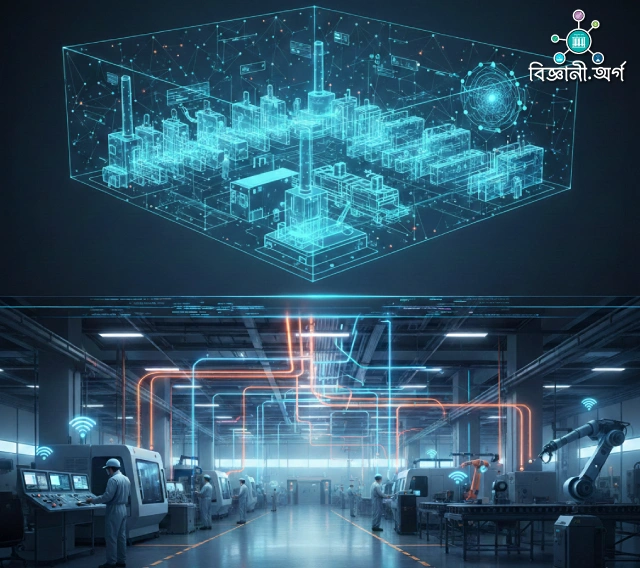
The panel also identified priority sectors where rapid success may be possible. For instance, industrial robots for smart factories could boost productivity in garments and electronics; AI-powered agricultural drones could automatically monitor crop health and apply fertilizer and seeds; rescue and relief robots could aid in disaster response; and smart delivery robots in healthcare could support the elderly. Applications for environmental protection are also imaginable—such as underwater robots for river cleanup or UAVs for air quality analysis.
In conclusion, the discussion reminds us that technology and industrial revolutions are not just about machines or code—they are the result of human decisions, courage, and collaboration. Government foresight, university research culture, industry investment, and the innovative power of the younger generation—if these four pillars stand together, Bangladesh can lead the way in robotics in South Asia. The road is not easy, but the potential is limitless. And right here is where our future story can begin—the story of an innovation-driven, self-reliant Bangladesh.