


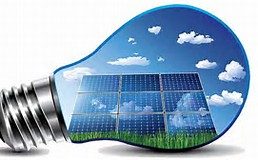
Solar power is an immensely promising sector in Bangladesh. To get relief from load shedding, we must emphasize the use of solar energy right now. Half of the country’s electricity demand could be met by harnessing solar power just along the Cox’s Bazar sea beach. As an alternative energy source, countries like the United States, France, Japan, Germany, England, China, and India are already using solar energy.
Germany has announced it will maximize the use of solar energy by 2040. In Nepal, 60 percent of the population lacks electricity access. Of the remaining 40 percent, half rely on fossil fuels while the others meet their needs with solar or hydropower. There, the government provides up to a 75 percent subsidy for solar energy use. In cities like Beijing and Shanghai in China, one can see rows of solar panels on rooftops. During winter, these panels are used as water heaters. China once declared it would subsidize 50 percent of the cost to install solar panels in 70 percent of its villages by 2011.
India has set a target to generate 22,000 megawatts of solar electricity by 2022. Through the Jawaharlal Nehru National Solar Mission, 37 companies have been commissioned to produce solar energy through auctions. By 2013, production was planned to reach 2,013 megawatts, with the goal of 10,000 megawatts by 2017. India is developing a national solar grid and will connect each state’s solar production centers to it. The Indian government is also providing support for solar energy production. The ministry has stated that 10 million solar bulbs a year could save about 500 million liters of kerosene and save the government 20 billion rupees in subsidies.
In the United States, solar panel systems are being installed in the White House residential area. These panels will heat water for President Obama’s family, and surplus electricity will be used elsewhere. President Barack Obama has guaranteed $2 billion in loans to two companies for setting up solar energy plants. Abengoa company has announced it will establish a solar power plant in Arizona, covering 1,900 acres and capable of supplying 70,000 homes with 280 megawatts of electricity.
Across the country, more than 300,000 customers are already using solar power, of which Grameen Shakti has installed 240,000 panels. In addition, 15 other organizations are working on solar panel installations. Under this initiative, more than 3 million people in over 40,000 rural villages and 16 island areas in about 465 upazilas are benefiting from solar energy. These panels generate 44 megawatts of electricity daily. At a rate of 130 watts per panel, the cost is 68,000 taka. By 2015, Grameen Shakti aimed to deliver solar power to half the country’s population. Alongside this, they set targets to install 50,000 biogas units and 10 million improved stoves.
Bangladesh Bank has advised installing solar panels in all banks and their branches. Several banks have already set up solar panels on the rooftops of their buildings and the central office of Bangladesh Bank has also installed them. Through a circular, Bangladesh Bank has informed all bank executives that loans in this sector may be provided through wholesaling to organizations besides NGOs. In Sandwip, Chattogram, the country’s largest solar microgrid power plant, with a capacity of 100 kilowatts, has begun supplying electricity. Initially, 400 families will gain access to electricity from this plant. The Japanese technology-built panels cost 55 million taka. According to installer Purabi Green Energy, the diesel generators previously used here cost 65 taka per unit, but now, with solar power, it is possible to supply electricity for 30 taka per unit. In a report by Colonel Mohammad Ali, Managing Director of Bangladesh Diesel Plant, it is mentioned that installing solar panels on the rooftops of Dhaka’s buildings could produce at least 700 megawatts of electricity. Building owners could invest 300,000 taka and earn 5,000 taka monthly for up to 25 years. There are 178,000 suitable buildings for installing panels, potentially generating a total of 1,465 megawatts of electricity.
During the Boro season, about 1.63 million irrigation pumps are used across 2 million acres of agricultural land nationwide. Of those, 1,080,000 electric pumps irrigate 1.6 million acres, while the remaining 1,158,000 pumps run on diesel. If all electric and diesel-powered irrigation pumps across the country could be brought under solar energy, 760 megawatts of electricity and 800 million liters of diesel could be saved annually. This would save the government a subsidy of 8.53 billion taka in diesel and electricity sectors. If the government passes a law making it mandatory for all billboards to have solar panels installed and fixes their operational time, a lot of electricity could be conserved.










This comment has been sanitized for the English site.
This comment has been sanitized for the English site.