


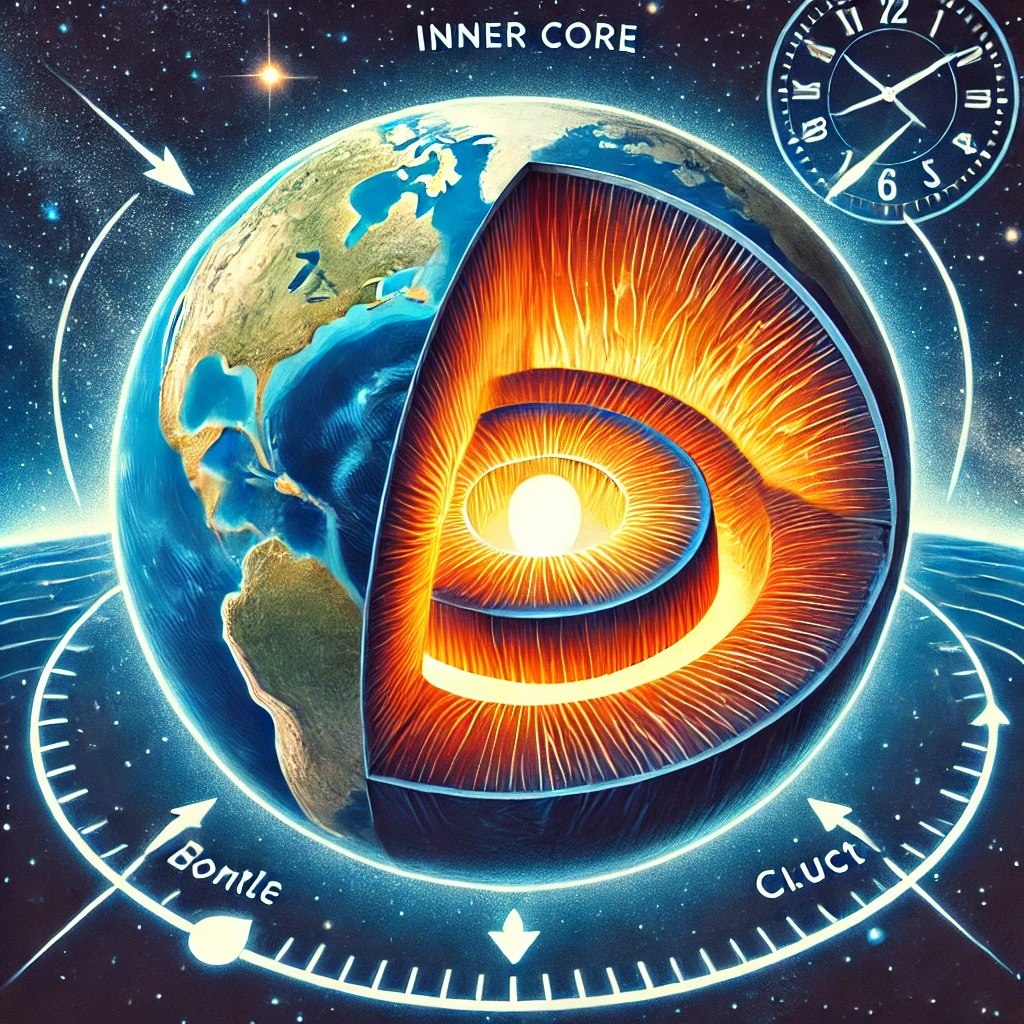
Among the wonders of nature, the rotation of the Earth’s inner core is a mysterious phenomenon. Recent studies show that the rotation of the Earth’s inner core is slowing down, sparking excitement in the scientific community. Let’s learn more about this special phenomenon in detail.
The Earth’s Inner Core: A Brief Introduction
The Earth’s core is mainly divided into two parts: the inner core and the outer core. The inner core is composed of solid iron and nickel, is roughly the same size as the Moon, and exists under extremely high temperature and pressure. The outer core is liquid, and its motion generates the Earth’s magnetic field.

Rotation of the Inner Core: A Slow Cycle
Recent studies have shown that the rotation of the Earth’s inner core is gradually decreasing. This cycle can last around 70 years. This means the rotation of the inner core slows down at one stage and then accelerates again. These changes can affect the Earth’s magnetic field and geological activity.
Scientific Research
Research on the rotation of the Earth’s inner core has been ongoing for a long time. Scientists determine the inner core’s motion by analyzing seismic waves. These seismic waves spread through the Earth during earthquakes and provide information about the structure and movement of the inner core. Recent studies have found that the motion of the inner core is slowing down, which differs from previous assumptions.
Impact of the Inner Core’s Rotation
The slowdown in the Earth’s inner core rotation can have various effects. It can impact the Earth’s magnetic field, which is significant in many aspects of our lives. For example, the magnetic field protects us from solar radiation and helps determine direction using a compass. In addition, changes in the inner core’s motion can alter the nature and intensity of earthquakes.
Looking to the Future
Research into the inner core’s slowdown is ongoing. Scientists are striving to learn more about the causes and effects of this change. In the future, this research will provide us with deeper knowledge about geological activity, the magnetic field, and the Earth’s internal structure.
Conclusion
The slowdown of the Earth’s inner core rotation is a mysterious and fascinating phenomenon. This research is giving us new perspectives on the Earth’s internal structure and geological activity. This topic is highly important for students, as it offers new concepts and research opportunities in geology and earth sciences. In the future, this research could also provide us with more detailed information about the Earth’s magnetic field and earthquake prediction.










Leave a comment