

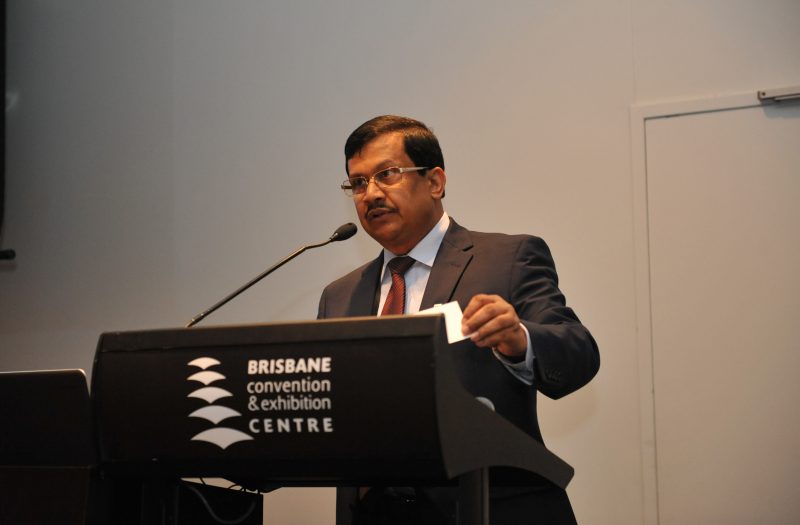
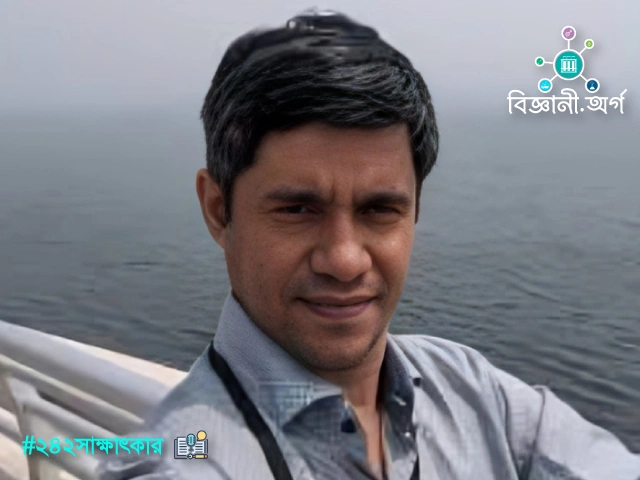
Dr. Tapan Kumar Saha is a researcher from Dhamrai upazila, Bangladesh. He completed his undergraduate degree in Electrical and Electronics Engineering from BUET. Later, he completed his Master’s at IIT Delhi and pursued his PhD with a scholarship from the Natural Science and Engineering Research Council of Canada. He is currently working as a researcher and professor at the University of Queensland, Australia.
Dr. Saha’s main research areas are power generation, transmission, and distribution, especially transformer efficiency and renewable energy such as solar and wind energy. He serves as Director of the Australasian Transformer Innovation Centre, where innovative research is conducted using machine learning and artificial intelligence for transformer monitoring and condition assessment.

💬 Q&A Session:
Question: Thank you for giving us this interview. First, please tell us a bit about yourself.
Answer: My childhood was spent in a village in Dhamrai upazila, 40 kilometers from Dhaka. I completed my SSC there. Afterwards, I completed my HSC in Narayanganj and obtained a B.Sc. in Engineering from BUET. There were very few opportunities to learn science in the village, but with personal determination and family support, I became interested in science. I got somewhat better opportunities in Narayanganj, and after enrolling in the engineering university, I was able to pursue my aspirations more effectively.
Question: What subject did you study at BUET?
Answer: At BUET, my subject was Electrical and Electronics Engineering.
Question: What did you work on for your final year thesis at BUET?
Answer: At BUET, there was not much scope to work independently on topics of personal interest for the final year project. At that time, four of us completed a thesis project as a team. Later, during my master’s at IIT, I realized that my field of interest was power generation, transmission, and distribution.
Question: From which institution did you complete your master’s?
Answer: I did my master’s at IIT Delhi with an Indian government scholarship.
Question: How did you find the difference between IIT and BUET?
Answer: IIT is far ahead in research. Their teachers are internationally recognized and work to solve industry-related problems. Even three decades ago, I observed their international engagement, which was truly advanced.
Question: What did you do after IIT?
Answer: After my master’s, I returned to Bangladesh and served as an assistant professor at an engineering university. In 1988, I went to Canada for my PhD, and later moved to Australia, completing my PhD at the University of Queensland. Afterwards, I taught at James Cook University in North Queensland, and since 1996 have been conducting research and teaching at the University of Queensland.
Question: What are you currently researching?
Answer: I have two main focuses. First, assessing the efficiency and stability of old power infrastructure. Second, solving the challenges of grid connection and distribution of renewable energy, especially solar and wind energy.
Question: How does geothermal power work?
Answer: There are hot rocks underground (about 200–300 degrees Celsius). This heat turns water into steam, which is then used to spin turbines and generate electricity. The main challenge is identifying the hot spots and transferring the power.
Question: How is solar power being used in Australia?
Answer: In Australia, solar grids are the most used, followed by wind power. Geothermal power generation is costly and technically complex, so it’s not very popular.
Question: How does rooftop solar power generation and selling to the grid work?
Answer: During the day, electricity generated on the rooftop can be sold to the grid, and at night, it can be purchased from the grid.
Question: What is your experience in China?
Answer: I am involved with universities in China and visit quite often. The quality of research in China is high, their budgets are substantial, and the researchers are hardworking.
Question: What are the areas of innovative research at the Australasian Transformer Innovation Centre?
Answer: Making electricity more accessible, reducing costs, and increasing safety. Monitoring transformer performance, live prediction, and condition monitoring. We analyze transformer data using machine learning and artificial intelligence.
Question: What advice do you have for young students?
Answer: After your undergraduate, pursue a master’s. Attain a good IELTS score and focus on research. Prepare for international competition, and create opportunities through scholarships for research.
🔗 Profile Link:
http://researchers.uq.edu.au/researcher/83
Dr. Tapan Kumar Saha’s research is making significant contributions to power generation, transmission, and renewable energy systems. The Biggani.org team wishes him continued perseverance and success for his dedication and innovative research. Hopefully, his work will inspire the youth of Bangladesh to steadfastly pursue scientific research at an international standard.
Perspectives on Renewable Energy and Transformer Research with Dr. Tapan Kumar Saha
Dr. Tapan Kumar Saha is a Bangladeshi researcher originally from Dhamrai, near Dhaka. He completed his B.Sc. in Electrical and Electronics Engineering from BUET (Bangladesh University of Engineering and Technology). He then pursued his Master’s degree at IIT Delhi under a government scholarship and later obtained a Ph.D. through the Canadian Natural Science and Engineering Research Council scholarship. He completed his Ph.D. in Australia at the University of Queensland.
Currently, Dr. Saha serves as a professor and researcher at the University of Queensland, Australia. He focuses on power generation, transmission, and distribution, with special expertise in transformer performance and renewable energy systems such as solar and wind. He is also the Director of the Australasian Transformer Innovation Centre, where his team applies machine learning and artificial intelligence for transformer condition assessment and predictive maintenance, collaborating closely with industry partners.
💬 Interview Q&A:
Question: Thank you for giving us this interview. Could you tell us a little about yourself?
Answer: I spent my childhood in a village in Dhamrai, about 40 km from Dhaka. I completed my SSC there, then moved to Narayanganj for HSC, and later completed my B.Sc. in Engineering at BUET. Opportunities to study science in my village were limited, but my determination and family support helped me pursue my interest in science. Moving to Narayanganj provided better opportunities, and at university, I could pursue my goals more freely.
Question: What did you study at BUET?
Answer: I studied Electrical and Electronics Engineering.
Question: What was your final-year thesis about at BUET?
Answer: At that time, we had limited opportunity to pursue individual interests. Our thesis project was done as a team of four. I later discovered my specific interests in electricity generation, transmission, and distribution during my Master’s at IIT.
Question: Where did you complete your Master’s degree?
Answer: I completed my Master’s at IIT Delhi on an Indian government scholarship.
Question: How did IIT Delhi compare to BUET?
Answer: IIT is very advanced in research. Their faculty have international recognition, and they work closely on solving industry problems. Three decades ago, their global presence was impressive.
Question: What did you do after IIT?
Answer: After completing my Master’s, I returned to Bangladesh to work as an Assistant Professor. In 1988, I went to Canada for a Ph.D., and later moved to Australia for immigration and completed my Ph.D. at the University of Queensland. I taught at James Cook University in North Queensland before joining the University of Queensland in 1996, where I have been teaching and researching ever since.
Question: What are you currently researching?
Answer: My research focuses on two areas. First, assessing the performance and lifespan of aging electricity infrastructure. Second, integrating renewable energy—especially solar and wind—into the grid and solving related distribution challenges.
Question: How does geothermal electricity work?
Answer: Deep underground, rocks are heated to 200–300°C. This heat converts water to steam, which drives turbines to generate electricity. The main challenge is locating the hot zones and transmitting the electricity efficiently.
Question: How is solar power used in Australia?
Answer: Solar grids are the most widely used, followed by wind energy. Geothermal electricity exists but is expensive and technically challenging, so it is less popular.
Question: Can households sell solar electricity to the national grid in Australia?
Answer: Yes, households can sell electricity generated during the day to the grid and purchase from the grid at night.
Question: What was your experience in China?
Answer: I am not directly teaching in China but frequently collaborate with two universities. Researchers and postdocs often come to work with us in Australia. China has well-funded, high-quality research and hardworking researchers.
Question: How has China’s research progressed?
Answer: China’s research quality is now very strong, and many universities are ranked internationally.
Question: What kind of research is done at the Australasian Transformer Innovation Centre?
Answer: We focus on making electricity more accessible, reducing costs, and improving safety. Transformers are crucial for power distribution. We develop diagnostic methods, live condition monitoring, and predictive maintenance using AI and machine learning, working closely with industry partners.
Question: How do you use AI in power distribution?
Answer: We collect data from transformers and analyze it using AI to assess their condition and identify potential issues.
Question: Any advice for young students who want to pursue science?
Answer: Students should complete a Master’s after their undergraduate studies, achieve a good IELTS score, and focus on research. They must be prepared to compete with talented students from China and India. With proper preparation and scholarships, they can work with academics like us internationally.
🔗 Profile Link:
http://researchers.uq.edu.au/researcher/83
Dr. Tapan Kumar Saha’s research significantly contributes to power generation, transmission, and renewable energy systems. The Biggani.org team appreciates his dedication and innovative work. His achievements are an inspiration for young Bangladeshi scientists to pursue international-quality research. We wish him continued success in his scientific endeavors.



Leave a comment