


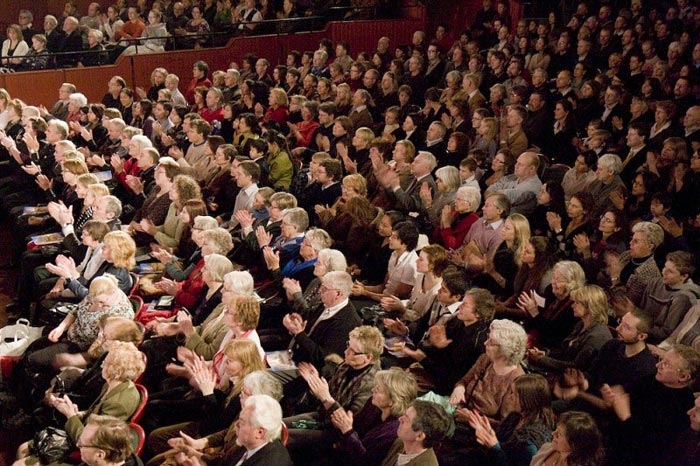
At cultural events, whether it’s a song or dance, audiences clap at the end of the performer’s presentation. If there isn’t much applause after the event, the performer feels disappointed, thinking perhaps the audience did not enjoy it much. On the other hand, when there is a lot of applause, both we and the performers understand that the event was well-liked. In newspapers we read, “The event was so good that the crowd burst into continuous applause.”
But does more applause always mean a better performance? Scientists are changing our natural assumptions about this. Richard Mann, a researcher from Uppsala University in Sweden, says that the amount of applause has little to do with the actual quality of the performance, but rather depends on whether the people around you are clapping. If everyone around you is applauding, it creates a social pressure, and you are likely to clap as well. If no one applauds—even if the event was great—you probably won’t clap either. Scientists say applause behaves much like an infectious disease: it spreads from person to person.

Read more:
- http://www.npr.org/templates/story/story.php?storyId=199362737&ft=1&f=1007
- http://www.popsci.com/science/article/2013-06/math-how-applause-spreads-audience
- http://www.bbc.co.uk/news/science-environment-22957099
- http://www.livescience.com/37535-social-contagion-applause-spreads.html
- http://news.sciencemag.org/brain-behavior/2013/06/dont-trust-applause
- http://www.abc.net.au/science/articles/2013/06/19/3784445.htm
- http://sg.news.yahoo.com/clap-clap-peer-pressure-drives-applause-095319884.html










Leave a comment