


Listen to the audio on SoundCloud. https://soundcloud.com/mashiur-rahman-4/jogojit
Audio script:
♥♪♥
Opening song: Lyrics: Shafiqul Islam Bahar, Music: Shafiqul Islam Bahar and Enamul Haque Mukul; Vocals: Enamul Haque Mukul.
Research, compilation and presentation: Shafiqul Islam Bahar.
Program planning, production & direction: Dr. Shafiul Islam, Biggani.org
… … ….
… … ….
Closing song: Lyrics: Shafiqul Islam Bahar, Music: Shafiqul Islam Bahar and Enamul Haque Mukul; Vocals: Enamul Haque Mukul.
Research, compilation and presentation: Shafiqul Islam Bahar.
Program planning, production & direction: Dr. Shafiul Islam, Biggani.org
♥♪♥
Video of the event:
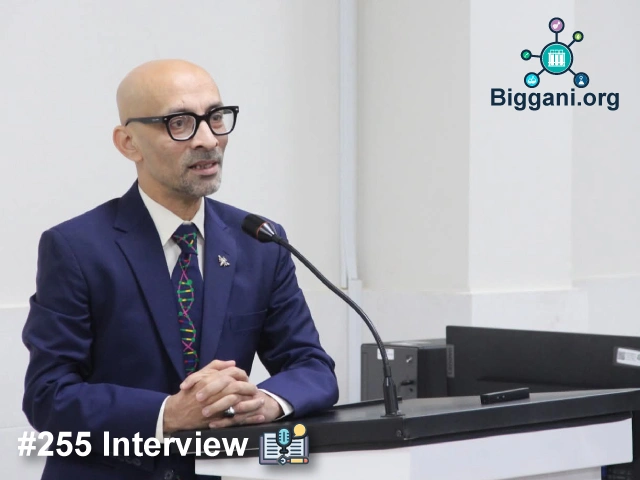
The video features an interview with Md. Jamir Khan (Researcher, Bose Institute), conducted by Shafiqul Islam Bahar (Bangladesh Betar), Shyamal Mitra (ASSL Textile, Dhaka, Bangladesh), Dr. Nargis Akhter Banu (VOB, Sydney, Australia).
♥♪♥
Video script:
Opening song: Lyrics: Shafiqul Islam Bahar, Music: Shafiqul Islam Bahar and Enamul Haque Mukul; Vocals: Enamul Haque Mukul.
Research, compilation and presentation: Shafiqul Islam Bahar.
Program planning, production & direction: Dr. Shafiul Islam, Biggani.org
Shafiqul Islam Bahar:
The contributions of scientist Sir Jagadish Chandra Bose played a vital role in the advancement of human civilization. He made significant achievements in both physics and botany, securing a place for himself not only in Bengali history, but also in the world’s history. Just outside Dhaka, in the village of Rarikhali, lies the ancestral home of Sir Jagadish Chandra Bose, where a museum named after him stands. Today, we are joined by a researcher who has worked extensively on Sir Jagadish Chandra Bose. He has also written a book about him, titled “Scientist Sir Jagadish Chandra Bose is a Universal Name.” Thank you very much for being with us.
Shafiqul Islam Bahar: To begin, could you please introduce yourself?
Md. Jamir Khan: My name is Md. Jamir Khan. I am a former student of Jagadish Chandra Bose School and currently an official at the same institution. I’ve been conducting research on him, and it was my wish to write a book about Sir Jagadish Chandra Bose to present him to the new generation.
Shafiqul Islam Bahar: What inspired this deep sense of devotion in you?
Md. Jamir Khan: When I was a student here, and even now that I work here, my desire is to introduce Sir Jagadish Chandra Bose widely to this new generation, hoping that future scientists will emerge from among them. That is my aspiration.
Shafiqul Islam Bahar: Could you tell us what visitors can learn and see at Sir Jagadish Chandra Bose Museum?
Md. Jamir Khan: Here, you will find some archaeological photographs and displays. There are paintings by various artists as well as some of my own artwork.
Shafiqul Islam Bahar: How did you personally become skilled at painting?
Md. Jamir Khan: Since childhood, I was inspired by the works of various artists I saw, and this inspired me to pursue painting myself.
Shafiqul Islam Bahar: What type of materials do you use for painting?
Md. Jamir Khan: I mainly use discarded or unused items, such as jute rope, rice, paddy, drawing on duck eggs, and painting on clay plates. I try to repurpose these unusable items for my art.
Shafiqul Islam Bahar: Briefly, what are the highlights of the things to see here?
Md. Jamir Khan: Jagadish Chandra Bose was born on November 30, 1858, and died on November 23, 1937; he was cremated on November 24. His father was a Deputy Magistrate at the time, and his mother was Bamasundari Devi. Here, you can see photographs of his parents.
Shafiqul Islam Bahar: Besides his ancestral home, what else is noteworthy to see here?
Md. Jamir Khan: Primarily, you can see Sir Jagadish Chandra Bose’s house, there are ponds, trees that have been here since ancient times, and the vast old landlord’s mansion from that era.
Shafiqul Islam Bahar: There’s a school and college named after Sir Jagadish Chandra Bose here—how many students are enrolled?
Md. Jamir Khan: There are about 1,100 students in the school and college altogether.
Shafiqul Islam Bahar: We’ve heard some complaints about the poor condition of the surrounding environment—are there any steps being taken to improve it?
Md. Jamir Khan: There’s a lot of talk and paperwork, but in reality, nothing much is being done.
Shafiqul Islam Bahar: What about the management committee—what are they doing?
Md. Jamir Khan: They only talk about it, but nothing has actually been done. It’s been years with just words, no action.
Shafiqul Islam Bahar: What are your future dreams?
Md. Jamir Khan: If I could get some support, whether governmental or private, I could do a lot. With the right inspiration, among our 140 million people, many could become scientists, could study science. Right now, at most, only about five percent study science. No country can progress without scientific pursuit. Why do we continue to struggle? We too can innovate and contribute to our country.
Shafiqul Islam Bahar: Besides what we know from books, do you have any additional knowledge about other discoveries by Jagadish Chandra Bose?
Md. Jamir Khan: It’s recorded that he wrote about 14 books in his lifetime, including one textbook in Bengali and English. If our children could read these books, they could achieve much more. Unlike other countries, we don’t cultivate enough scientists—not because of lack of ability, but because they aren’t inspired.
Shafiqul Islam Bahar: What are Sir Jagadish Chandra Bose’s major scientific discoveries?
Md. Jamir Khan: He discovered around 100 things: radar, mobile, solar—many more. The principles behind today’s lunar missions come from Sir Jagadish Chandra Bose. Taking pictures of the moon, visualizing the invisible—possible only through radar. Research into space exploration began from there. In my view, Sir Jagadish Chandra Bose is the source. The more we study him, the more scientists we will inspire among new generations.
Shafiqul Islam Bahar: Given Sir Jagadish Chandra Bose’s legacy here, could this not be a major tourist spot? Any such thoughts?
Md. Jamir Khan: Spending time amid nature away from the city isn’t a bad idea. There are 5/6 ponds where people can swim, fish, or even write scripts. Writers could come here for inspiration, or TV crews could shoot scenes here. In this mechanical era, where we feel so drained, visiting this place can be rejuvenating!
Shafiqul Islam Bahar: We’ve come to learn quite a lot about the lesser-known Jagadish Chandra Bose. There’s always more to explore, but we don’t intend to leave it at that. To dispel darkness, we must light another lamp. When the lamp in our heart spreads the light of science, we can become more modern and march in step with our times.
Since childhood, we’ve learned that Marconi invented the radio. But now we learn that it is proven that Sir Jagadish Chandra Bose invented the radio first. Is there any evidence in this museum to show that Sir Jagadish Chandra Bose was the first inventor of the radio?
Md. Jamir Khan: There is a picture in the museum with analysis, showing the diode inside a radio. When he traveled to England, British coolies had carried this device. In 1897, he demonstrated his experiment at the Royal Society, but, because the machine was made of glass, it stopped working when he took the stage. As he tried to repair it, three of Marconi’s assistants offered help and secretly stole his handwritten notes. Sir Jagadish Chandra Bose’s device was a long glass tube containing mercury and iron, whereas Marconi’s team made a U-shaped one—that was the only difference. This is called a “Crystal Lad.” The function of the crystal is to receive waves and sound, convert it to electricity, and then transform back into sound. For those who use mobile phone chargers, you’ll find the crystal lad inside the adapter.
Shafiqul Islam Bahar: How can you prove the validity of what you’ve just told us?
Md. Jamir Khan: It’s evident from Sir Jagadish Chandra Bose’s experiments, his writings, and his diagrams. In America, radio institutions have compared the differences between Marconi and Bose’s inventions. According to Royal Society records, Jagadish Chandra Bose was the first to invent radio.
Shafiqul Islam Bahar: After all these years, what message would you convey to others, driven by your love for Sir Jagadish Chandra Bose?
Md. Jamir Khan: I hope that both the young and the old find inspiration to help nurture more scientists like Jagadish Chandra Bose in our country. This will benefit both society and the nation, and that is my wish.
Shafiqul Islam Bahar: Can you share something about your research?
Md. Jamir Khan: My research is contained in the book I’ve written, titled, “Jagadish Chandra Bose: A Universal Name.” I’m working on a second edition, having gathered more information. I hope to inspire and nurture more scientists like Jagadish Chandra Bose. Many scientists have emerged around the world—why not in our country? If government and private sponsors came forward, it would make many things easier, but unfortunately, no one steps up. They just talk, but don’t act. I hope our country will see the rise of many more Jagadish Chandra Boses, and that poverty will be eliminated. I also wish that many Yunus-like figures, such as Dr. Yunus, come forth. If my fellow citizens help, I’ll be able to achieve more.
Shafiqul Islam Bahar: May all your wishes be fulfilled, and may the light of your dreams bring blessings to us all. May our country and nation flourish and prosper.
♥♪♥
Nargis Akhter Banu: How many years have you been involved with Sir Jagadish Chandra Bose Institute School and College?
Md. Jamir Khan: I was a student here around 1960, and after moving around different places, I joined the Institute in 1993.
Nargis Akhter Banu: Are you originally from this area?
Md. Jamir Khan: Yes, I am from Rarikhali Union.
Nargis Akhter Banu: Where does your family live?
Md. Jamir Khan: They all live in Bangladesh, and my sons work in various places around the country.
Nargis Akhter Banu: How did you get involved with this Institute?
Md. Jamir Khan: After completing my studies, I worked in different places, and eventually, I joined the Sir Jagadish Chandra Bose Institute here.
Nargis Akhter Banu: What drew your interest to this place?
Md. Jamir Khan: When I traveled for work, I often heard people saying Jagadish Chandra Bose was a great person. That made me interested in learning more. Since I was a student here as a child, I wanted to know what kind of person he was, what his contributions to humanity were, and how he impacted our daily lives.
Nargis Akhter Banu: Your love for Sir Jagadish Chandra Bose made all of this possible. Have you met any of his relatives?
Md. Jamir Khan: Yes, I have seen Sir Jagadish Chandra Bose’s relatives, including his nephew Hanabus and some of his grandchildren. That made me even more eager to learn. The more I learned, the more I wanted to teach others and share my knowledge.
Nargis Akhter Banu: With your deep interest in his legacy, what have you done as a result?
Md. Jamir Khan: I have conducted research, written books, painted pictures, and tried to present him through various means.
Nargis Akhter Banu: There is a small broken room in the institute that stands as an example of Sir Jagadish Chandra Bose’s ancestral assets. What collections are there in that little room?
Md. Jamir Khan: We collect and display large photographs from Kolkata, as well as some made by myself.
Nargis Akhter Banu: Where did you get the information for your book?
Md. Jamir Khan: About 90% of the information was collected from Kolkata. It was hard to find information in Bangladesh, so I gathered details from several libraries and locations.
Nargis Akhter Banu: Did you do all this on your own initiative?
Md. Jamir Khan: Yes, I collected all this information on my own.
Nargis Akhter Banu: Did you receive any financial support for your book?
Md. Jamir Khan: Financial support was minimal; in fact, I faced more criticism than help. People from outside, like you, provide more encouragement than locals. I’ve done all this thanks to your inspiration.
Nargis Akhter Banu: What do you mean by criticism?
Md. Jamir Khan: Criticism because many people question why I do this work, since it has no financial gain. I’ve faced many questions like this.
Nargis Akhter Banu: Sometimes it’s like sacrificing your own comfort for the greater good. But truthfully, you have followed your heart. Despite Sir Jagadish Chandra Bose being such a great scientist, people in Bangladesh and beyond still don’t know he invented radio first. Does this make you feel frustrated?
Md. Jamir Khan: Yes, definitely. In every other country, people support their own scientists. Why are our scientists not given proper recognition here? For example, we enjoy using a pen but don’t care to know how or where it was made. If, with our growing population, everyone could embrace science, our country would advance. Even under colonial rule, Bengalis struggled for liberation—so why can’t we now pursue science? That’s my question.
Nargis Akhter Banu: The institution that once was Sir Jagadish Chandra Bose’s ancestral house is now in ruins—couldn’t it be restored more beautifully?
Md. Jamir Khan: Yes, it could. With some financial support, we could accomplish a lot.
Nargis Akhter Banu: How would this benefit the nation?
Md. Jamir Khan: It would advance the country and the nation. We could proudly say that we are Bengalis, and that this Bengal is the birthplace of scientist Sir Jagadish Chandra Bose.
Nargis Akhter Banu: What do you think is the main reason we lag behind other countries?
Md. Jamir Khan: The main reason is our lack of focus on science. To pursue science, you must first know English, especially to speak it. But when English programs come on radio or TV, we change the channel—we don’t understand, so we don’t keep up with global scientific progress. Every country has science clubs, but not ours.
Nargis Akhter Banu: We hope you achieve all your dreams and continue your work for the nation. Through the pursuit of science, our country and nation can become advanced, and through this practice, may many more scientists like Sir Jagadish Chandra Bose be born on the soil of Bengal. Only then can people move from unscientific beliefs to scientific knowledge. Wishing you the very best.
Stay tuned … More to come …
The world-renowned Bengali scientist Sir Jagadish Chandra Bose (30 November 1858 – 23 November 1937) was honored for his creative works in this way— “Each of his discoveries deserves a monument of victory.” – Albert Einstein (14 March 1879 – 18 April 1955) [Collection: Shafiul Islam]
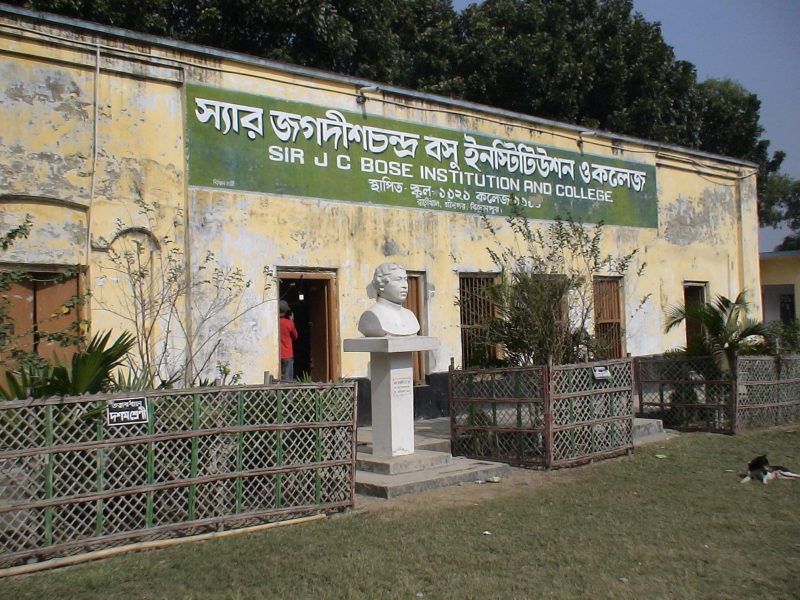
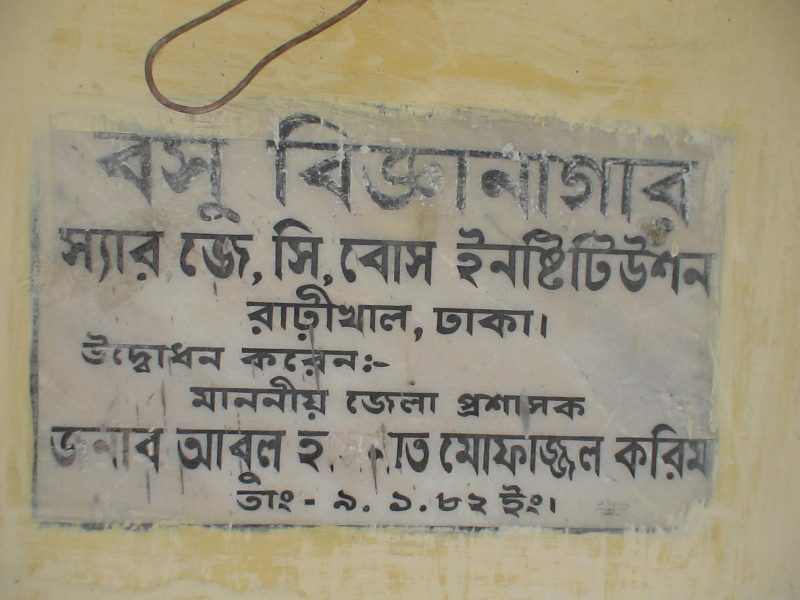
Sir J C Bose Science Museum, 2006, Srinagar, Bikrampur :: Photo by Shafiul Islam
Featured Insights:
Biganacharya Jagadish Chandra Bose
Prothom Alo – Let’s Talk about Jagadish Chandra Bose
Our Scientist Jagadish Chandra Bose – Prothom Alo Blog
History of Discovery: The Life of Plants
Jagadish Chandra Bose – Wikipedia
Author: Jagadish Chandra Bose – Wikisource
biggani.com – Scientist Sir Jagadish Chandra Bose
Science for Kids: Scientist Sir Jagadish Chandra Bose | Technology Today
Science Sir Jagadish Chandra Bose | Technology Today
Jagadish Chandra Bose
Our Scientist Jagadish Chandra Bose – Bhabasadhak’s Bengali Blog . bangla …
Scientist Sir Jagadish Chandra Bose | Techtunes
Jagadish Chandra Bose : Munshiganj News
In Golachipa Jagadish Chandra Bose and Satyen Bose Memorial Lecture Series – Prothom …
Khabar-Dar Blog: On the Devoted Path of Jagadish Chandra
Science for Kids: Scientist Sir Jagadish Chandra Bose – Blogging …
Jagadish Chandra Bose – The Daily Ittefaq – January 28, 2011
Jagadish Chandra Bose | Dhaka Division
Jagadish Bose was a very good man … – Kidz – bdnews24.com
Category: Jagadish Chandra Bose – Wikisource
Long Live Sir Jagadish Chandra Bose. Our heartfelt tribute to your memory and creation. …
Shafiul Islam
Email:
[email protected] :: Web: textek.weebly.com :: Canada :: www.linkedin.com/in/shafiul2009




This comment has been sanitized for the English site.
This comment has been sanitized for the English site.
This comment has been sanitized for the English site.