


Science is all about logic and research. And research means mystery, solving that mystery, and its thorough analysis. If we examine the various branches of science, it becomes clear that physics is the most mysterious of all. Many mysteries of physics remain unsolved to this day.
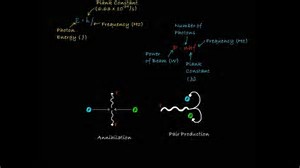
The subject of physics discussed here is matter (Particle) and antimatter (Anti-Particle). Physicist Paul Dirac, while applying quantum mechanics to the electron, used Einstein’s theory of relativity and, in 1931, first proposed the existence of the electron’s antiparticle. He named this antiparticle of the electron “positron.” The following year, in 1932, Carl Anderson discovered the positron and experimentally proved that Paul Dirac’s hypothesis was correct. When an electron and a positron come into contact, they instantly annihilate each other, and their mass is converted entirely into energy. And the amount of that energy is given by E=mc^2.
We know that everything in our visible world is made up of electrons, protons, and neutrons. Just as the electron has an antiparticle named the positron, protons and neutrons also have antiparticles called the antiproton and the antineutron, respectively. It is worth mentioning that while the electron is a fundamental particle, protons and neutrons are not. Through the event known as the Big Bang, which created the universe, 12 fundamental particles and their corresponding antiparticles were formed. These particles are divided into two groups: quarks and leptons. The electron belongs to the lepton family. The proton is made up of two up quarks and one down quark, while the neutron is made up of one up quark and two down quarks. So, our visible universe is built from three fundamental particles: the electron, up quark, and down quark.
But there remains a puzzle! If, at the time of the Big Bang, these 12 fundamental particles and their corresponding antiparticles were created equally, then electrons, up quarks, and down quarks must also have their respective antiparticles. And from their combinations, every substance on Earth should have an equivalent amount of antimatter. However, we know that matter and antimatter annihilate each other upon contact, turning into energy as per Einstein’s equation E=mc^2. Yet the Earth, as we see, still exists! So, could it be that the antimatter is somewhere where it cannot affect the matter? We only know about 4 percent of the entire universe—the visible part. The remaining 96 percent is unknown to us! This 96 percent belongs to an unseen realm outside our visible world. Perhaps antimatter is hiding somewhere in that unknown universe!
Even if we send antimatter off beyond the visible universe, there’s no reason to be at ease. In physics, any puzzle temporarily set aside never fully goes away. And even if you discard it, there’s no escape; sooner or later, you’ll have to pick it up again on your journey. Before the Big Bang, there was no matter—only energy. Eventually, as that energy condensed, the grand explosion known as the Big Bang occurred, creating equal amounts of matter and antimatter. Now, the question is: If equal amounts of matter and antimatter were created, shouldn’t they have immediately annihilated each other and turned back into energy? (Note here: the total amount of energy released by mutual annihilation of all matter and antimatter in the universe would equal the total energy present before the Big Bang!) But the universe has persisted for billions of years! So, was more matter than antimatter created? Did, after their mutual destruction, the surplus matter remain on Earth? Or did the antimatter vanish into some unknown world as soon as it was created? But why? And how?
In the end, the questions remain—why and how?








amar ai blog ta onnek valo lage
tnx, vaia..
This comment has been sanitized for the English site.
This comment has been sanitized for the English site.
This comment has been sanitized for the English site.