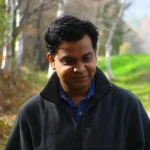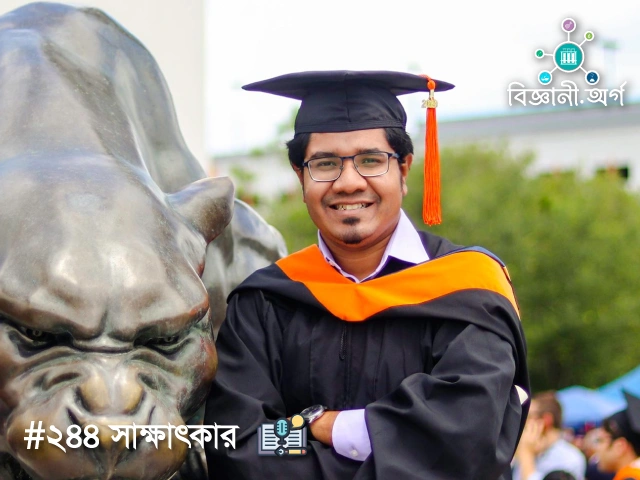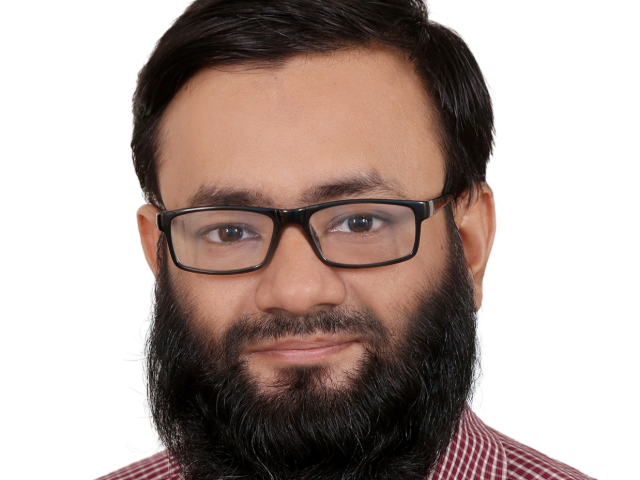
In our interview series with the new generation, this time we interviewed Mashrafi Bin Mobarak. He is currently working as a Scientific Officer at the Bangladesh Council of Scientific and Industrial Research. Read his interview:
First, we would like to know about you?
My ancestral home is in Kachua Upazila of Chandpur district. My father, Md. Mobarak Hossain, retired in 2017 from his position as an Accounts Officer at the Ministry of Primary and Mass Education. My mother, Shirin Akter, is currently on post-retirement leave, having served as the head teacher at MA Alim Government Primary School, Wari, Dhaka.
I completed my studies up to grade ten in Kachua Upazila. Afterwards, I finished my Secondary School Certificate (2011) from Dhaka Residential Model College, and completed my BSc (session 2011-12) and MSc (session 2016) in Applied Chemistry and Chemical Engineering from the University of Dhaka.
On May 21, 2019, I joined the Bangladesh Council of Scientific and Industrial Research as a Scientific Officer. Both my wife and I work as Scientific Officers at the same institution. We have one son (age 3).
What is your research field?
When talking about the research field of scientists or researchers, it’s important to mention the area of work first. I mainly work in the fields of “Materials Science,” “Biomaterials,” “Nanoscience and Nanotechnology,” “Drug Delivery,” and “Wastewater Treatment.”
To begin with, let’s focus on biomaterials. Here, the term “bio” refers to biological, meaning “biomaterials” are those materials that can remain compatible in a biological environment without causing toxicity. For example, “calcium phosphates,” the primary component of human bone, is an excellent biomaterial. Calcium phosphates are actually a family of compounds comprising various proportions of calcium and phosphorus. The main biomaterial I work with is known as calcium hydroxyapatite (10 calcium atoms, 6 phosphate units, and 2 hydroxyl groups).
The aim of my project is to prepare calcium hydroxyapatite from various waste sources, such as discarded eggshells, fish scales, or marine shells, using different methods, and to thoroughly determine their properties. I am also researching the delivery of certain antibiotics that destroy bacteria responsible for bone diseases, by loading them onto the synthesized calcium hydroxyapatite and implanting them at the affected site—studying the release profile over time.
Additionally, I have been able to use calcium hydroxyapatite to remove and degrade harmful and toxic textile dyes discharged from textile mills.
On the other hand, I have been able to produce copper oxide nanomaterials from discarded fish scales, which are highly effective at destroying bacteria. Using starfruit leaves, I have also produced copper oxide nanomaterials with antibacterial properties.
During the COVID-19 pandemic, the widespread use and disposal of face masks became a major environmental issue. I developed a composite material by combining these discarded face masks with polyester resin, which is stronger than the pure resin itself.
We have also converted discarded corn husks into “biochar,” a carbon-rich material, using a reactor built in our laboratory. This biochar can remove toxic heavy metals and textile dyes from waste streams.
How do your research works benefit us or may benefit us in the future?
Before deciding on any research topic, I always consider which subject is most important for my country.
Currently, excessive discharge of textile dye into rivers is causing serious environmental disasters. That’s why this issue always gets priority in my research. I am working tirelessly to position my developed biomaterials and biochar as solutions to this problem.
I hope that the biomaterials I have developed can open up new avenues for the treatment of patients suffering from bone-resorption-related diseases. Also, by using various waste materials to produce important nanomaterials, I have been able to reduce environmental pollution, at least to some extent.
Would you share any special experiences from your research work?
I would describe the copper oxide nanoparticles I made using fish scales as a serendipitous discovery. My original aim was to produce a different material. When that didn’t work out, I was quite frustrated. Even after repeated attempts, I couldn’t achieve my goal and almost gave up on the project. Finally, I thought: if I haven’t been able to make what I intended, then what have I actually produced?
That curiosity led to the discovery that I had synthesized copper oxide nanoparticles! Later, I conducted extensive research on this. Based on this research, I have filed a patent with the Department of Patents, Designs, and Trademarks. Therefore, my advice to anyone wanting to become a researcher is not to get discouraged too easily. If results are not as expected, instead of getting frustrated, one should investigate why things didn’t work—sometimes this leads to even better discoveries!
What qualities do you think are essential for a scientist?
I don’t believe that “you have to be extremely talented to become a scientist.” To be a successful scientist, one needs to be the most hardworking and persistent. One must constantly question oneself and keep searching for answers. There are no shortcuts to success here. One must work honestly and diligently. Every day, you must strive to be better than the day before.
Do you have any message for the young students in Bangladesh who want to work in science?
Research requires a great deal of dedication. If it doesn’t come from the heart, it’s better not to pursue this path. However, if someone is determined to become a researcher, my first advice would be to talk to someone who is already in this field, because everyone needs initial guidance.
There should be no shame or ego in learning. One must be mentally prepared to learn from everyone, regardless of their age or status. Research is teamwork, so the ability to adapt and work with others is vital. One must constantly acquire new skills and keep themselves updated.
Your email : [email protected]
Your LinkedIn : https://www.linkedin.com/in/mashrafi-bin-mobarak-5a6aa0138
Your website or research profile link : https://scholar.google.com/citations?user=IfO0R-8AAAAJ&hl=en&authuser=3
On behalf of Biggani Org, we wish Mashrafi Bin Mobarak continued success. He is a remarkable role model for our young researchers.