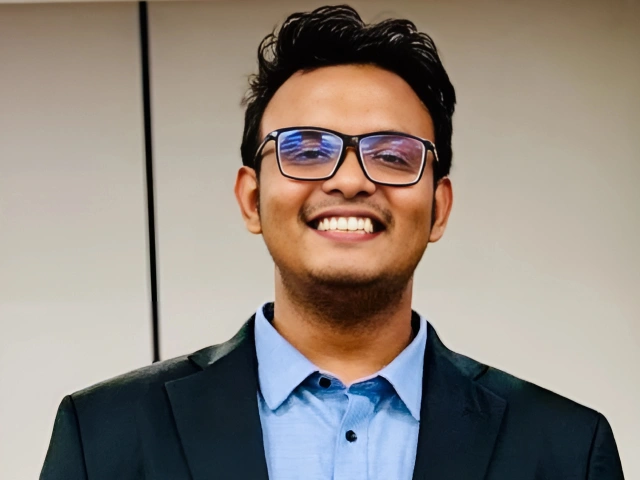
A Relentless Drive for Science, Research, and Discovery
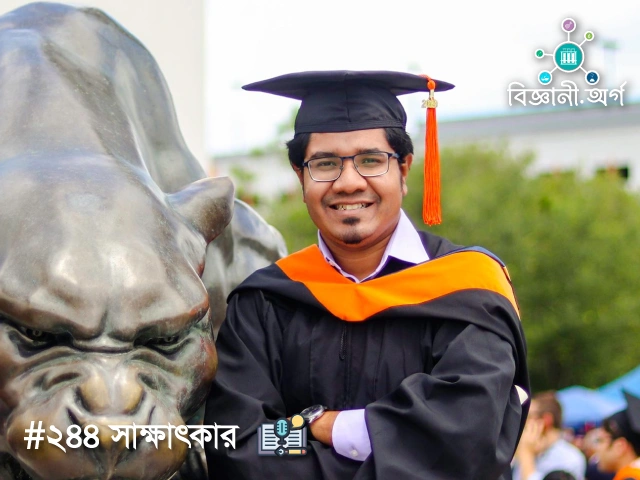
The world of technology is seeing constant innovation. Cutting-edge research is essential for tackling complex challenges like high-speed communications, satellite imaging, and the development of nanoscale optical devices. Rising to meet these challenges is Sudipta Biswas, who is currently working as a PhD researcher at Baylor University in the United States.
But his journey was far from easy. Opportunities for research in Bangladesh were limited, especially in experimental work. Yet, Sudipta never gave up. After completing his bachelor’s degree in Electrical and Electronic Engineering at North South University, he began research under the supervision of Dr. Mahadi Rahman Chowdhury. Inspired by his mentor, his interest in research only grew, and after more than two years of work, he came to the United States in 2022 with a fully-funded scholarship to pursue his PhD.
Research Focus: The Future of Optics and Nanoscale Technologies
Sudipta’s research is primarily centered on developing nanoscale optical devices, metasurfaces, and advancing satellite imaging technologies.
1. MOS-Based Tunable Metasurface Design
🔹 Metasurfaces are ultra-thin, artificially engineered three-dimensional structures that can control light.
🔹 They are crafted from nanoscale metallic or dielectric structures, allowing them to reflect, scatter, and focus light in diverse ways.
2. NASA-Funded Research: Advanced Satellite Imaging Technologies
🔹 Current satellite imaging technologies use mechanical filters, which are bulky and less efficient.
🔹 The main goal of his research is to develop electrically tunable lenses that can replace existing filters and perform multiple filtering functions simultaneously.
🔹 This has applications in satellite sensing, telecommunications, and environmental monitoring.
3. Advanced Optical Sensors and Devices
🔹 He has designed a tunable infrared optical filter ranging from 1.5 micrometers to 3.7 micrometers, suitable for sensing, telecommunications, and various optical applications.
Research Impact: How Will These Technologies Benefit Us?
Sudipta’s research could revolutionize telecommunications, space technology, and optical imaging.
📌 High-Speed Data Communication: Electrically controlled optical filters are vital for wireless networks and 6G technology.
📌 Satellite Sensing: These can be used for scientific research, military surveillance, remote planet observation, and climate change monitoring.
📌 Versatile Optical Devices: Compared to conventional lenses and filters, it will be possible to create more advanced, tunable, and energy-efficient optical metasurfaces.
An Inspirational Journey: From Theoretical to Experimental Research
Experimental facilities for research in Bangladesh are limited. At the beginning of his career, Sudipta’s work was primarily theoretical and simulation-based.
However, once he arrived in the United States and started conducting research in experimental laboratories, he faced new challenges.
🔹 Initially, he had to work hard to get familiar with new research equipment, lab management, and experimental methods.
🔹 But these challenges only made him more skilled and confident.
He says,
“You can never stay still in research. What was a limitation for me in Bangladesh turned into new opportunities when I came to the United States.”
This experience has made him more confident and helped him establish himself as a more capable researcher in the field.
What Qualities Does a Scientist Need?
According to Sudipta Biswas, a successful researcher must develop several key qualities:
✅ Curiosity: An unstoppable passion for learning new things.
✅ Perseverance: Research is never easy, but those who do not give up become successful scientists.
✅ Critical Thinking: Analyzing issues deeply rather than taking them at face value.
✅ Communication Skills: The ability to clearly present your research and ideas.
✅ Integrity & Ethics: Presenting correct information and maintaining honesty in research.
A Message for the Youth of Bangladesh
According to Sudipta, it is possible to become a world-class researcher from Bangladesh—if you truly love science.
🚀 Don’t lose your curiosity; learn to ask questions.
🚀 Learn from failure—science won’t always show you the easy path, but your desire to learn will take you forward.
🚀 Seek out research opportunities, find the right mentors, and try to learn practical skills.
He says,
“Science isn’t limited to the pages of a book; it’s a path to knowledge, discovery, and problem-solving. You are the ones who will shape the future of science and technology!” 🚀✨
Contact Information
📩 Email: [email protected]
🔗 LinkedIn: Sudipta Biswas
A Scientist’s Contribution to Shaping the Future of Technology
Sudipta Biswas’s research is opening new doors of possibilities in telecommunications, satellite sensing, and optical technology.
“A researcher’s work is not just confined to the laboratory, but shapes the future of technology through their discoveries.”
Sudipta is building that future—through patience, hard work, and a deep love for research.