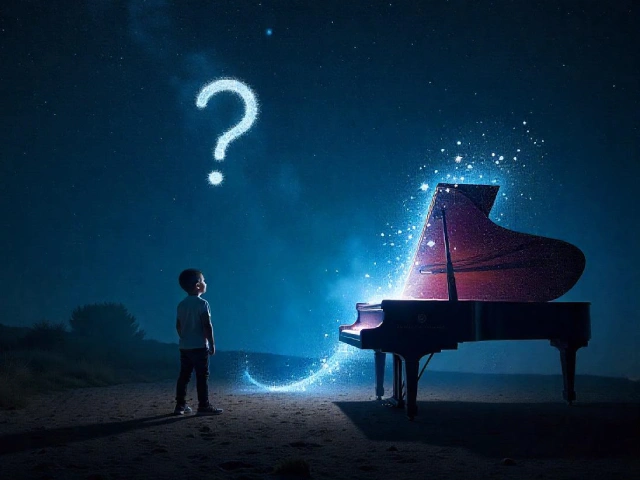
One day, a teenage boy named Gerard was standing in the playground gazing at the night sky. His eyes glimmered with a certain wonder—as if each star was a mysterious question mark. Suddenly, it occurred to him that perhaps hidden somewhere between these stars and the darkness was a rule that governs the entire universe. In that moment, he realized that searching for the answer to this mystery would become his life’s calling. Countless stars twinkled above as he pondered—what are the true laws behind this universe? Decades passed, and that boy became one of the most distinguished award-winning scientists on Earth—Gerard ’t Hooft.
His research has reshaped the landscape of modern physics. Nobel, Franklin, Wolf—he has collected many awards. But recently, he was honored with the ‘Special Breakthrough Prize in Fundamental Physics’. The prize comes with three million dollars, but more significant were his words after receiving the award—“We may be on the wrong track with quantum physics.”
“If Everyone Thinks the Same Way, Nothing Changes”
In an interview with journalist Lee Billings, ’t Hooft said, “Today’s scientists all think alike. That may be why no major breakthroughs are happening. We need to break out of conventional thinking.”
He further added, “In the 1970s, we discovered something new because we thought differently. The same is needed today. People now stand only on accepted facts and have lost the courage to question.”
Does That Mean Quantum Mechanics Is Wrong?
One of the most revolutionary scientific discoveries of the twentieth century is quantum mechanics. It showed us just how unpredictable the world of particles can be. But this is precisely where doubts arise. While many scientists regard it as an accurate reflection of reality, some view it as merely a statistical model. Nobel laureate physicist Gerard ’t Hooft belongs to the latter school of thought—he believes that true reality is more classical, more straightforward.
According to Gerard, quantum mechanics is actually a ‘statistical trick’—just a mathematical method, not reality itself. “To say that the cat is in a superposition of being alive and dead is nonsense,” he says, which is a direct challenge to Schrödinger’s famous thought experiment.
He claims that nature is actually ‘classical’—operating in a completely deterministic manner. We simply haven’t discovered those rules yet—and the problem is that we’re trying to find them using the quantum lens, which isn’t real.
“Particles Behave Like Pianos”—What Did He Mean?
He says, “Just as we can predict the motion when two grand pianos collide, particles too should behave predictably. But quantum theory says—no, it’s a game of probabilities.”
He is not satisfied with this. He wants scientists to ask—how exactly does this specific behavior occur? What underlying rules operate when two particles collide to produce certain outcomes?
“Non-locality Is a Science-destroying Idea”
In modern particle theory, the concept of “non-locality”—the influence of distant particles—is crucial. But Gerard says, “This idea is a disaster for scientific rules. The true laws must be local—that is, events must be determined right where they happen.”
Commenting on this, renowned science writer Dr. Amitabh Kar, who has written extensively on quantum physics and the philosophy of science and is a respected member of the Bangladesh Science Council, says, “Gerard ’t Hooft has boldly pointed out that perhaps we’ve become trapped in a snare. This is a great challenge for future scientists.”
So What Should We Do?
’t Hooft says, “Learn to ask questions. Challenge the ideas everyone assumes are true. That’s when new discoveries happen.” He thinks we have to go back to the beginning—just as Maxwell did with electricity and magnetism.
Alifa Rowshan, a physics student at the University of Dhaka, says, “When I first studied quantum mechanics, it felt very complex to me. In truth, the beauty of physics lies in continually asking questions in the quest for new discoveries. Such debates don’t just broaden our scope of thinking—they encourage us to challenge conventional wisdom. I believe this is crucial for the physicists of the future.” “This kind of debate expands our thinking. If we never challenge established theories, we will never discover anything new.”
Final Thought: The Need for Scientific Courage
Science is always based on questioning, experimentation, and the challenging of theories. Gerard ’t Hooft reminds us that to doubt is also a part of science. And it is from that skepticism that the greatest discoveries of the future will emerge.
“Even if quantum isn’t wrong, still ask questions. Because it is questions that move us forward.”—Gerard ’t Hooft