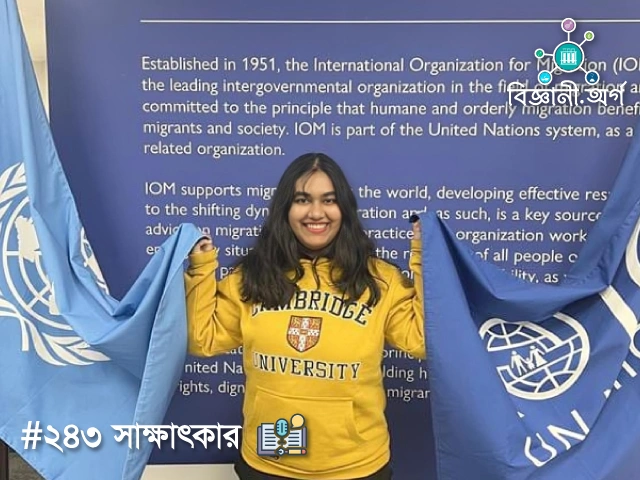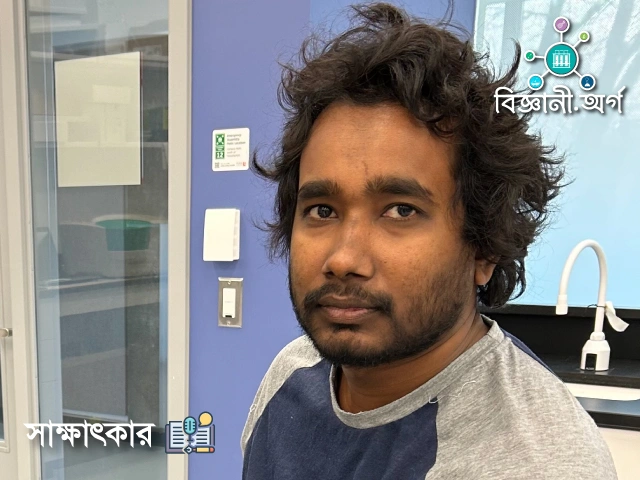
This time in the Scientist Org interview series, we have interviewed environmental engineer and researcher Dr. A. H. M. Enamul Kabir. He is currently working at Carleton University in Canada on the degradation of micro- and nanoplastics. After completing his Ph.D. at Yamaguchi University in Japan, he researched microplastic pollution and its environmental risks at UQAR–ISMER and York University in Canada. His work plays a vital role in protecting water and the environment, biodiversity, and human health. Read his detailed interview below.
Tell us about yourself
I am Dr. A. H. M. Enamul Kabir. I completed my Ph.D. in Environmental Engineering at Yamaguchi University, Japan. There I worked on microplastic pollution and its environmental risks in Japan’s rivers, seas, and wastewater treatment plants. Afterwards, as a postdoctoral researcher at the University of Quebec at Rimouski (UQAR–ISMER), I analyzed microplastic pollution in the sediments of the St. Lawrence River and the Arctic. At York University, I did research on the uptake, egestion, and bioaccumulation of microplastics in aquatic organisms. Currently, I am working at Carleton University on the fragmentation kinetics of nanoplastics.
Your current research focus
My research focuses on nanoplastic pollution. Sunlight’s ultraviolet rays chemically weaken plastics—known as UV-aging—which gradually breaks large plastic particles into micro or nano-sized fragments. On the other hand, water flow causes shear-driven fragmentation, where plastics are mechanically broken down to the nanoscale. In the laboratory, I observe the rate of fragmentation, size decay kinetics, and chemical-physical changes. Simultaneously, I analyze the types of biological or toxicological harm these particles can cause to biodiversity and human health.
Social benefits of this research
Micro- and nanoplastic particles can enter the human body through the food chain and may cause inflammation, oxidative stress, or hormonal disruption. My research helps measure these risks and contributes to the formulation of precautionary policies. This is directly connected to SDG-6 (Clean Water and Sanitation) and SDG-14 (Life Below Water) goals. Students and local communities can use this knowledge to monitor the environment through citizen science, increase awareness, and develop safe practices.
Any special research experience
While working in the coastal regions of Bangladesh, the realities of water salinity, scarcity, and waterborne diseases moved me deeply. That experience made me realize that research should not be just for publishing papers, but for improving people’s quality of life.
Essential qualities for a scientist
The aim of science is to generate knowledge for human welfare. A scientist needs to have curiosity, patience, integrity, analytical thinking, the ability to work in teams, and the skill to communicate research outcomes to society.
Message for the youth of Bangladesh
Curiosity is the first step of practicing science—it all starts with asking questions. Begin small, learn basic lab and field techniques, and don’t be afraid of failure. In fields like environmental science, interdisciplinary skills in chemistry, mathematics, data analysis, and modeling are essential. Regularly practice lab and fieldwork, data analytics, and scientific writing. Identify local problems and try to solve them on a small scale. Remember—“Think globally, act locally.”
Contact
- Email: [email protected]
- LinkedIn: linkedin.com/in/a-h-m-enamul-kabir-ph-d-1bb11297
- Google Scholar: scholar.google.com/citations?user=IP5o0SQAAAAJ
Dr. A. H. M. Enamul Kabir: A Pioneer Scientist in Nanoplastic Pollution Research
Tell us about yourself
I am Dr. A. H. M. Enamul Kabir. I completed my Ph.D. in Environmental Engineering at Yamaguchi University, Japan. There I worked on microplastic pollution and its environmental risks in rivers, seas, and wastewater treatment plants in Japan. Later, as a postdoctoral researcher at the University of Quebec at Rimouski (UQAR–ISMER), I analyzed microplastic pollution in the sediments of the St. Lawrence River and the Arctic. At York University, I studied the uptake, egestion, and bioaccumulation of microplastics in aquatic organisms. Currently, I am working at Carleton University on the fragmentation kinetics of nanoplastics.
Your current research focus
My research focuses on nanoplastic pollution. Sunlight’s ultraviolet radiation weakens plastics chemically—a process known as UV-aging—gradually breaking large particles down into micro- or nano-sized fragments. On the other hand, shear-driven fragmentation caused by water flow mechanically breaks plastics into nanoscale particles. In the lab, I study fragmentation rates, size decay kinetics, and associated chemical-physical transformations. I also examine the biological and toxicological effects of these particles on biodiversity and human health.
Social benefits of this research
Micro- and nanoplastic particles can enter the human body through the food chain, potentially causing inflammation, oxidative stress, or hormonal disruption. My research helps quantify these risks and informs conservation and policy-making. It directly contributes to SDG-6 (Clean Water and Sanitation) and SDG-14 (Life Below Water). Students and local communities can use this knowledge to engage in citizen science, raise awareness, and promote safe environmental practices.
A special research experience
During my work in the coastal areas of Bangladesh, I was deeply moved by the realities of water salinity, scarcity, and waterborne diseases. That experience taught me that research should not only aim at publishing papers but also at improving people’s quality of life.
Qualities necessary for a scientist
The ultimate goal of science is to generate knowledge for human welfare. A scientist must possess curiosity, patience, integrity, analytical thinking, teamwork ability, and the skill to communicate research outcomes effectively to society.
Message for the youth of Bangladesh
Curiosity is the first step in practicing science—it all begins with asking questions. Start small, learn basic lab and field techniques, and never fear failure. In environmental science, interdisciplinary skills in chemistry, mathematics, data analysis, and modeling are essential. Regular practice in lab work, fieldwork, data analytics, and scientific writing is crucial. Identify local problems and work toward small-scale solutions. Always remember—“Think globally, act locally.”
Contact
📧 Email: [email protected]
🔗 LinkedIn: linkedin.com/in/a-h-m-enamul-kabir-ph-d-1bb11297
📚 Google Scholar: scholar.google.com/citations?user=IP5o0SQAAAAJ