News Desk, Scientist Org |
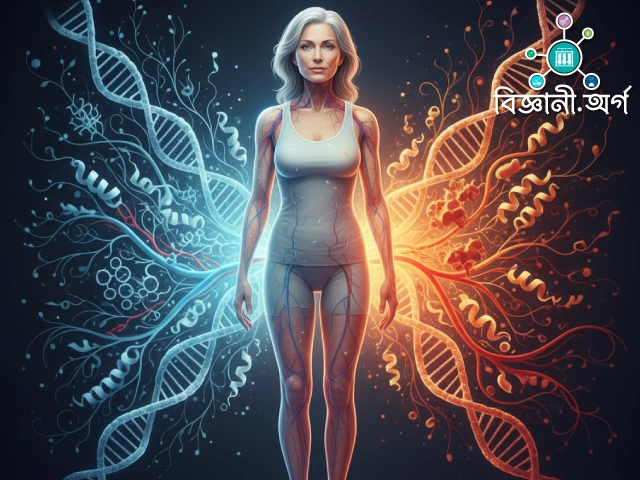
Aging is a natural process. However, we often imagine aging as a slow, steady, and continuous change. But recent research suggests that aging doesn’t happen this way. Rather, it is irregular and occurs in periodic waves. At certain ages, major changes take place in the body—which may deeply impact our health. In particular, the period between ages 45 and 55 is now being considered a turning point in the aging process.
Scientists have discovered this surprising information by analyzing samples collected from 76 Chinese individuals aged 14 to 68. These individuals died from accidental brain injury, allowing researchers to access their other organs in good condition for analysis. The researchers collected proteins from eight major organ systems—such as the heart, immune system, digestive system, and others. After analyzing the levels and structures of these proteins, it was observed that a significant change occurs in the body between ages 45 and 55.
Sudden Changes in Protein Levels
The most remarkable findings of the study came from the main artery of the body, the aorta. This vessel carries oxygenated blood from the heart to various parts of the body. Researchers observed that the largest and most dramatic changes in protein composition of this organ occur between ages 45 and 55.
During this stage, the levels of various proteins suddenly increase or decrease—not only in the aorta, but similar trends are seen in other organ systems as well. The research team suggests that the aorta and blood vessels may act as carriers not only of blood, but also of molecules that accelerate aging. So when a major change happens in the aorta, its effects spread throughout the entire body.
Does Aging Happen in Stages?
This study indicates that aging is not a straightforward linear process. Instead, it occurs in waves—at certain ages, rapid changes happen in the body, while during others, things stay stable.
A previous study by the lead research team had also found that waves of age-related changes occur in the body at ages 44 and 60. Even then, they had suggested that dramatic changes take place in the genetic data and protein structure during these ages.
This new study goes deeper into those findings and, through its protein-based analysis, demonstrates that there are certain key bends in the path of bodily aging—points where much begins to change.
Expert Opinions
Dr. Maja Olecka, an aging researcher at the Fritz Lipmann Institute in Germany, says, “We still don’t know how these changes begin. But there’s no doubt that this is a new and fascinating field of research.”
She continues, “We had suspected before that aging doesn’t proceed in a straight line, but now we have actual evidence. At different biological points in the human lifespan, major changes occur.”
Why Is This Important?
This kind of research gives us a new perspective on age and health. If we can understand what kinds of changes occur in the body at which ages, we can take more effective steps to prevent age-related diseases such as hypertension, heart disease, type-2 diabetes, osteoarthritis, and others.
For example, if it is identified that protein composition in the aorta or blood vessels starts to change before age 45, then healthy lifestyle, diet adjustments, medication, or other interventions could be used to slow down these changes.
This means we should improve our health screening practices and adopt strategies to reduce aging-related risks even before passing the age of 45.
Directions for Future Research
This research is currently seeking answers to an important question—how does the turning point or “turning point” of aging actually begin? Which proteins or molecules are responsible for these changes?
Another major question is whether these changes happen the same way for both men and women. Although this study was carried out in people of Chinese ancestry, it’s still unknown how similar the effects would be in other ethnic groups.
Researchers hope that with larger-scale studies, it will be possible to explain the causes and effects of these changes in even greater detail.
The Bangladesh Context
In countries like Bangladesh, where age-related illnesses are on the rise, this kind of research is also important for us. National health policy should include age-based risk screening, regular vascular health check-ups, and lifestyle modification recommendations.
Especially for those over age 40, implementing a nationwide screening program could allow effective identification and prevention of age-related risks.
Conclusion
This research presents in a completely new light the idea that age is more than just a number. It shows that at certain ages, our bodies undergo sudden transformations. By understanding these changes, we can not only aim for longevity but also a healthier and more productive life.
Although these studies are still in their early stages, their impact is expected to reach far. For developing countries like ours, this could be a new opportunity to understand aging and discover ways to manage it.
Source: The study was published in July 2025, and the research team has presented their findings in various international journals. Specifically, this research could form the foundation for studies on age and health in the coming decade.
Message for Readers Interested in Science: Age is not just about numbers—it’s the result of biological transformation. Let’s understand this complexity and make our lifestyles even healthier.