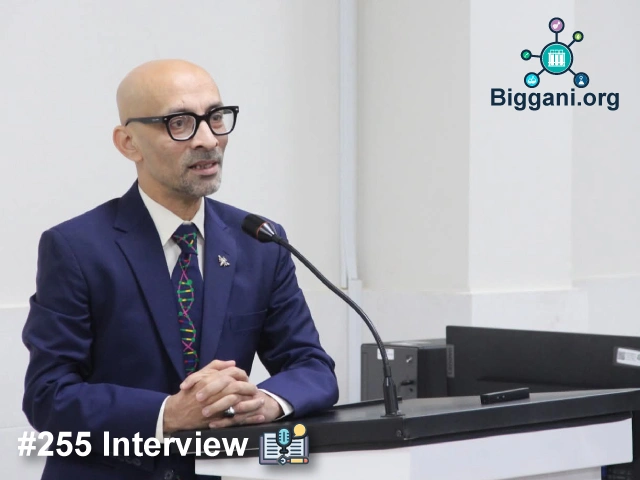
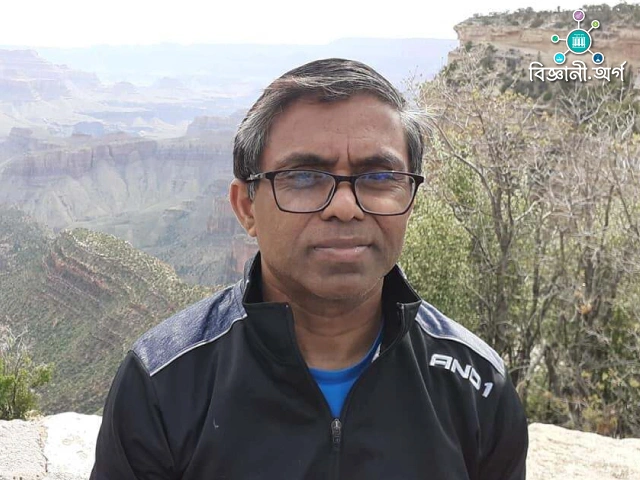
The stories of expatriate scientists are never just about personal achievement. Intertwined within them are a nation’s potential, its limitations, dreams, and the long shadow of failure. A recent in-depth conversation with Professor Dr. Jamal Uddin—director of the Center for Nanotechnology at Coppin State University, USA, and a proud son of Bangladesh—has reignited these discussions: the future of nanotechnology, the role of artificial intelligence, the talent of Bangladeshi youth, and the tough realities of a crumbling research infrastructure.
From Struggles in Childhood to Osaka University
Listening to the story of a boy growing up in the Hatirpool–Elephant Road–Dhanmondi area of Dhaka, it becomes clear that becoming a scientist isn’t about dramatic leaps, but rather a slow, steadfast journey over time. SSC from Tejgaon Polytechnic School, HSC from Dhaka College, followed by a BSc and MSc in Chemistry from the University of Dhaka—this was a “typical” path. His dream was to become a doctor, a dream that went unfulfilled; yet, within that incompleteness, another path unfolded—the path of scientific research.
The family background was very different. His father arrived in Dhaka empty-handed from a remote village in Chandpur and managed to lift the entire family through his sacrifices. Jamal Uddin cannot hide his emotions as he recalls his father’s immense struggles; holding his father’s hand on his deathbed and hearing, “You can do it”—this became a silent source of inspiration for his journey abroad. For many years before securing a scholarship, he wrote countless letters, poured over journals in libraries, and emailed potential supervisors—a picture of hard work that stands in stark contrast to today’s social-media-driven, agent-dependent era of “going abroad.”
In 1994, he won a government scholarship to start his PhD at Osaka University in Japan—a success his father did not live to see. Despite this personal void, he says, “I’m still learning, still working; there’s no end to learning.” This humility becomes the central theme of his reflection—not stories of his own success, but a sense of responsibility to nurture the next generation.
The Nano World: Why Gold Changes Color
When discussing nanotechnology, he begins with a simple question: why is gold jewelry always yellow-golden in color, but the same gold turns red, blue, or green at the nanoscale? The answer lies in the scale itself.
One nanometer is one ten-billionth of a meter, an unimaginably tiny unit. At this invisible scale, the behavior of matter changes. While large pieces of gold are always yellow, altering the size of gold nanoparticles changes their color—sometimes they are colorless, sometimes deep red. This interaction between light and electrons is called “surface plasmon resonance” in scientific terminology.
This concept of the nanoscale was popularized by Nobel laureate physicist Richard Feynman. In a 1959 Caltech lecture, he famously said, “There is plenty of room at the bottom”—suggesting infinite possibilities at the very bottom of matter. What sounded like a joke mixed with skepticism at the time, we now know, was the seed of the nanotechnology era.
Today, gold nanoparticles are used in cancer treatment; delivering heat or drugs specifically to cancer cells, gold nanoparticles play a critical role. In the case of COVID-19 vaccines, lipid nanoparticles (LNP) have been used to safely deliver mRNA to target cells in the body—which enabled effective vaccines to be developed in less than two years instead of ten or twelve.
In Jamal Uddin’s words, “There is hardly any field where nanotechnology is not used.” Water purification, energy conversion, nanofertilizers and nanoinsecticides in agriculture, cosmetics, water-repellent nano-coating on fabrics—nanotechnology has become a “common language” crossing the boundaries of physics, chemistry, biology, engineering, and agriculture.
AI and Nano: Unraveling Material Properties from Data
How practical is artificial intelligence in nanotechnology research? In answer, he draws directly from his lab’s experience. His team is working on several projects involving machine learning-based data analysis; a collaborative paper with undergraduate student Ajay Kumar and University of Maryland researcher Dr. Riyadul Islam is coming out soon. There, unsupervised algorithms uncover new patterns from experimental data on nanomaterials, revealing how material structures and properties can be determined more rapidly.
Here he repeatedly emphasizes one point—nano research is not a solo endeavor. Alongside a chemist, collaboration is needed with computer scientists, physicists, biologists, and engineers. Interdisciplinary teamwork will be key to unlocking the potential of AI in this field.
Nano Center: Big Dreams at a Small University
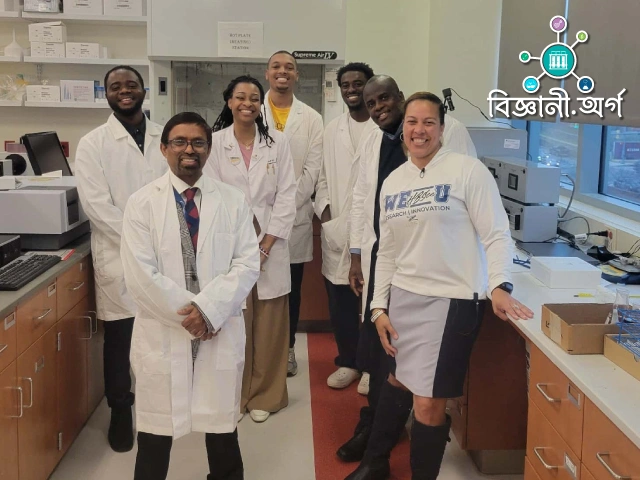
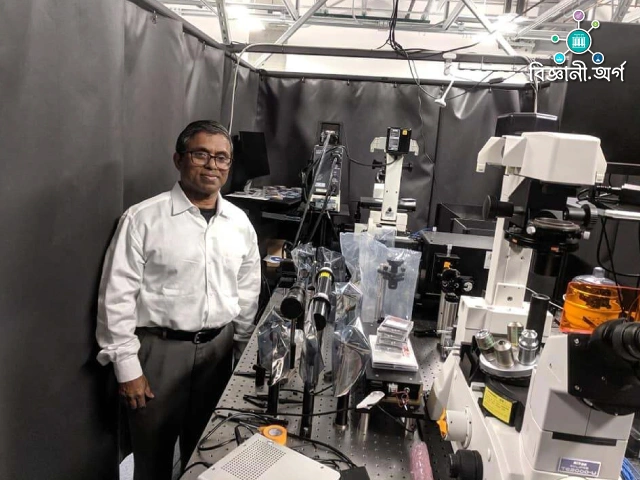
The Center for Nanotechnology that Professor Jamal Uddin leads is not at a large research university; rather, this laboratory network has flourished within a comparatively small, primarily teaching-focused institution. Yet despite limited infrastructure, their work has international reach. In collaboration with universities in Bangladesh, India, Malaysia, Japan, Korea, and the USA, they are working on more than a dozen research projects—covering energy, nanomedicine, water purification, biomedical sensors, and more.
One example is the nano-filtration project. Recent research by Canadian scientists has shown that when plastic bottles are left in the sun, nanoplastics and microplastics spread into the water—imperceptible to the naked eye but detectable in labs. Using IP-based special nano filters, Jamal Uddin’s team has been able to remove 98–99% of such particles and toxic substances from water. This work is now moving toward a patent.
In another project, using silver nanowires and nanocubes, they have developed a fabric that does not absorb water even when wet; instead, water rolls off in the rain rather than soaking in. Done jointly with a team from MIT, this research shows potential for smart clothing and protective gear of the future.
From the Labs of Chittagong to the Electron Microscope in Baltimore
On the topic of students, Professor Jamal Uddin’s voice rings with pride and a trace of sorrow. He describes how four students from the University of Chittagong produced a high-quality sample, but, lacking adequate lab equipment, couldn’t properly characterize it. After discussions over WhatsApp, he arranged to have their sample sent to the USA; using TEM, SEM, dynamic light scattering and other tests, the quality of data they received exceeded their own expectations. That data became the basis of Master’s defenses, and led to ongoing research publications.
He says there have been hundreds of such cases in the last ten to fifteen years. Editing SOPs for students from various universities inside and outside the country, writing “letters of support” for university applications, advising how to obtain full funding abroad—these have become part of his daily routine. In just one example from the University of Chittagong, he mentions that “over a hundred” students have gone overseas for higher education in recent years.
He also observes a marked change in the awareness of Bangladeshi students. Whereas previous generations relied on libraries and seniors to learn how to go abroad, today’s youth know the required GPA, TOEFL/IELTS scores, how to write an SOP—they are much better prepared.
Cuts in Research Funds, Blows to Dreams
But the story of this rise is shadowed by a somber economic reality. Highlighting recent US university funding cuts, he says, “We faculty, researchers, scientists—we are not doing so well right now.” His center used to get half a million dollars every five years from a grant under the Department of Education; when that grant suddenly stopped, he lost his postdoctoral researcher. Although partial support was later arranged within the university, research slowed significantly.
This contraction affects not just him, but also international students coming to the USA. At every step—F-1 visas, post-graduation Optional Practical Training (OPT), H-1B visas—uncertainty and financial pressure are increasing. He points out unethical practices where students are asked for up to $100,000 in exchange for job placements—a practice he bluntly calls “absurd.”
Meanwhile, even when Bangladeshi students secure fully funded admissions in the USA, some are being denied visas—deepening a sense of “risk” among young people.
Bangladesh: Labs Exist, Doors Are Closed; Equipment But No Collaboration
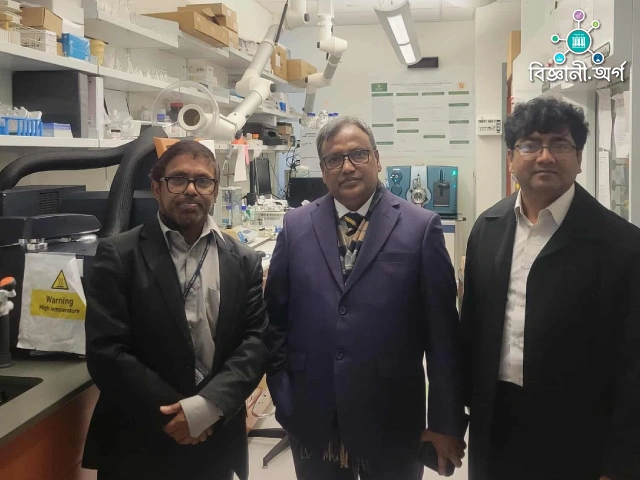
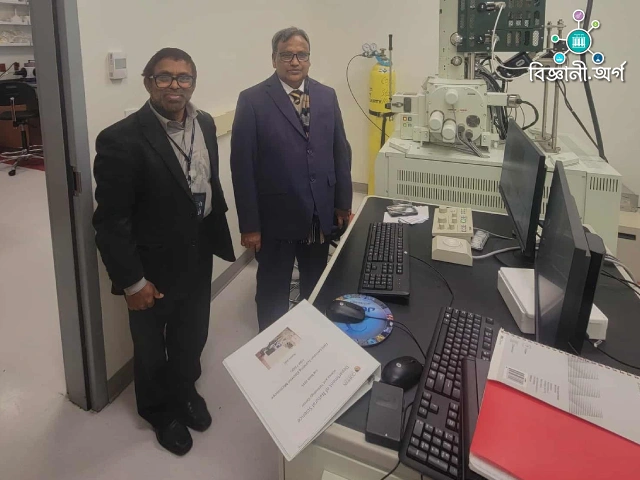
When depicting the state of nanotechnology research in Bangladeshi universities, Professor Jamal Uddin cites examples of new centers—Nano Center at Dhaka University founded by Professor Sushyam, the center at AIUB resulting from Mahbub Rabbani’s long struggle, and growing initiatives at Daffodil, North South, BRAC, Ahsanullah, AUST, KUET, and many more. Yet, he highlights persistent issues—lack of funding, insufficient supply of chemicals and consumables, and the most pressing of all: “lack of collaboration.”
He points out that expensive instruments often sit unused in many labs, while students at neighboring universities who produce good samples are unable to use them just because of lack of funds or “baseless rules.” He notes cases where others publish research papers under their own names using someone else’s data, leaving students uncredited. He directly calls out this culture of not giving recognition as unjust.
Against this backdrop, he calls for a new ethical standard—instruments should be accessible to all, based on collaboration; even if you analyze someone else’s sample as a volunteer, basic recognition is due.
Reverse Brain Drain: The Chinese Path, Our Dilemma
Towards the end of the discussion, the interviewer raises a valuable comparison—the Chinese “scientist hunter” program, where the government has systematically incentivized expatriate researchers to return. Asked why reverse brain drain hasn’t taken hold in Bangladesh, Professor Jamal Uddin answers simply and candidly.
Even those wanting to return with a foreign PhD often can’t secure permanent posts in suitable universities; some face informal barriers, invisible politics, or irregular recruitment practices—as he has heard from students. Others who return become disheartened by the lack of research opportunities.
Meanwhile, the respectable stipend students receive for a PhD or postdoc in the USA often supports family back home—they build houses in their villages, fund siblings’ education, pay for sisters’ weddings—this socio-economic responsibility makes the decision to return much harder.
Yet there are happy exceptions—like Atik and many others who, after finishing their PhDs abroad, return to positions at the Bangladesh Atomic Energy Center or government research organizations. He highlights these cases to make sure young people know—coming back is not impossible, but it takes supportive and transparent institutions.
The Road Ahead: Not a Story of Lone Heroes, but a Need for Collective Stages
At the very end of the conversation, Professor Jamal Uddin makes it clear—“This is not a one-man show.” Bangladeshi researchers scattered across the globe—Dr. Moshiur Rahman in Singapore, and hundreds more in Malaysia, Saudi Arabia, Korea, Japan, Canada and the USA—all have an invisible yet profoundly important responsibility. Beyond their own careers, they can build bridges for the youth of Bangladesh.
He also conveys a very clear message to policymakers at home—whatever government comes to power, unless research and higher education infrastructure is made a national priority, moving forward will not be possible. “Education is the backbone of a nation”—this oft-repeated slogan, he insists, must be translated into real policy, not just empty words.
Platforms like Scientist.org are also crucial in this context. By connecting nearly two hundred scientists and researchers, this network is a “model example,” he says, and he promises to continue supporting its growth.
Conclusion
It would be a mistake to read this long conversation with Professor Jamal Uddin as merely the memoir of an expatriate scientist. Embedded in it is recognition of the extraordinary talent of Bangladeshi youth, a diagnosis of our chronically ill research infrastructure, a roadmap of nanotechnology and AI’s future potential, and a simple, human call for ethical collaboration and gratitude.
When a journey that began in the alleyways of Hatirpool now stands at the stage of nanofilters, nanomedicine, and international conferences, the real question for us is this—should we see this as the story of just one person’s success, or should we recognize it as the beginning of a new foundation for scientific practice in Bangladesh?
If we wish to take the latter path, then our universities, research institutions, policymakers, expatriate researchers, and young students—all must come together to form a new kind of “Team Bangladesh.” Just as in the nanoscale itself, small initiatives and small acts of collaboration—the sum of these particles can build a powerful, vibrant science Bangladesh.
Watch the Full Interview on YouTube
Link: https://www.youtube.com/watch?v=p76_EqJEIro