Written by: Dr. Moshior Rahman
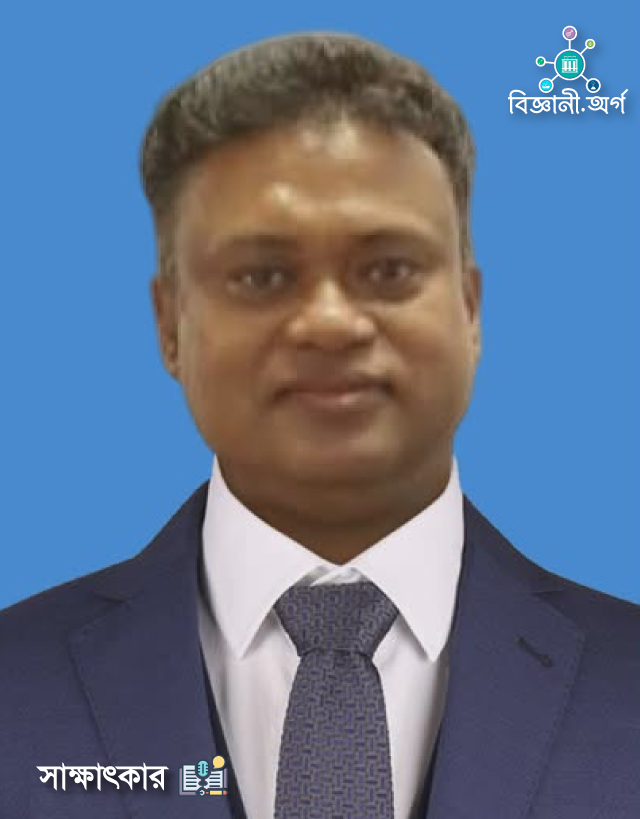
The interview project by Biggani Org (biggani.org) is a series of science-based initiatives that arrange in-depth conversations with scientists, researchers, and academicians working both in Bangladesh and abroad. The main aim of this project is to present the stories behind research—its inspirations, challenges, and future prospects—in an accessible and standard Bangla to the general readers and students. One of the chief objectives is to encourage Bangladeshi youth to pursue research and higher education and to show them the path to engage in scientific pursuits. In today’s edition of Biggani Org’s interview project, Bangladeshi scientist Dr. Md. Rezaur Rahman was the featured participant. Let us first learn about this remarkable scientist.
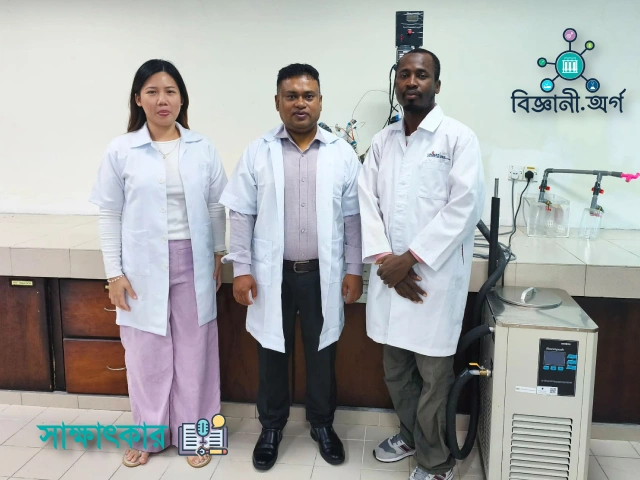
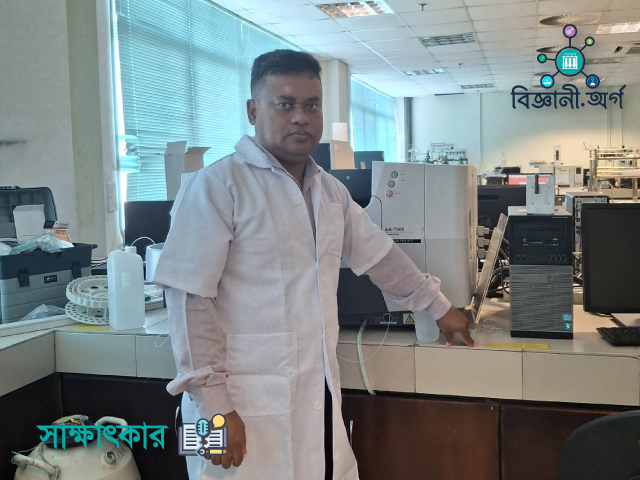
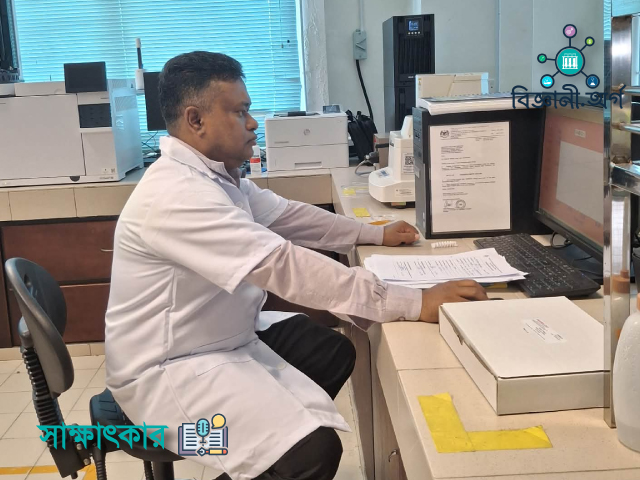
Dr. Md. Rezaur Rahman is a rising scientist originating from a rural background in Kushtia district, Bangladesh. He completed his SSC from Khoksa Janipur Pilot High School in Kushtia and his HSC from Government Titumir College in Dhaka. He then completed his Honors and Masters (third position in first class) in Chemistry at the University of Chittagong, followed by an MPhil from BUET. After his Masters, he went to Malaysia to obtain his PhD. Currently, he is an Associate Professor in the Department of Chemical Engineering and Energy Sustainability at Universiti Malaysia Sarawak and is also a Visiting Fellow at Tokushima University, Japan.
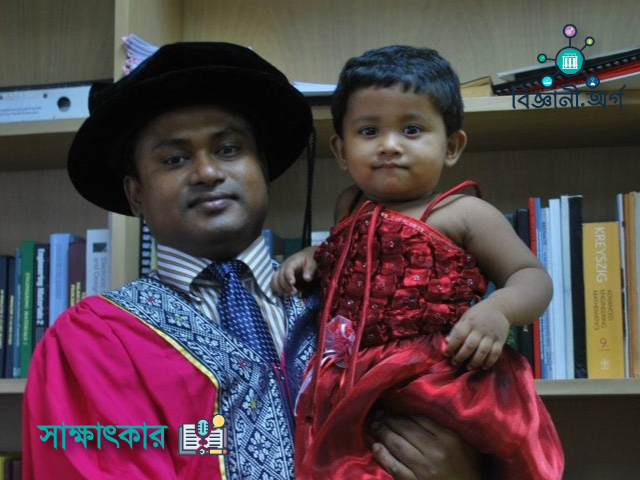
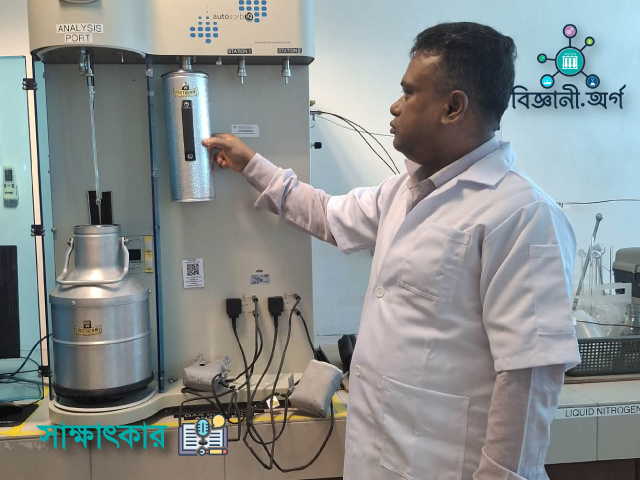
Dr. Rezaur Rahman’s research areas span smart biocomposites, green polymers, natural fibers, nanomaterials, graphene oxide, renewable fuel, and nano-fertilizers. To date, he has published over 200 international research articles and has edited more than twenty book chapters including seven books. He is listed among the world’s top 2% scientists, according to Stanford University citations. His extensive research experience includes higher studies and collaborative work not just in Bangladesh, but also in India, Australia, Malaysia, and other countries.
Below are some important excerpts from Dr. Md. Rezaur Rahman’s interview with Biggani Org:
Question & Answer Session
Question: What do you mean by smart biocomposite? How is it different from regular biocomposite?
Answer: Smart biocomposite refers to a biologically based compound that possesses its own sensing or self-responsive capabilities. Regular biocomposites are materials formed by mixing two or more different components, and compared to common plastics, they are more eco-friendly as they are biodegradable. The addition of the word ‘smart’ means that the composite has additional functionalities; for instance, it can expand or contract automatically with a change in temperature, meaning it has sensor or memory-like properties.
Question: Are smart biocomposites and their associated components beneficial for the environment? What is their environmental impact?
Answer: These biocomposites and related green polymers are completely environmentally friendly. If disposed of in soil or water, they decompose and turn into fertilizer within just two weeks. As a result, they can serve as alternatives to conventional petroleum-based plastics or high carbon-emitting cement, thus helping to prevent global warming. Compared to the amount of carbon dioxide released when burning fuel in kilns or producing plastics, smart biocomposites significantly reduce these emissions. For example, in our country, producing 1 ton of cement emits about 2 tons of carbon dioxide; green biocomposites help reduce that emission.
Question: Your research mentions the innovation of solar cells using graphene oxide. Please elaborate on this.
Answer: In our UNIMAS laboratory, based on Malaysia’s special forests and soils, we have selected a particular species of non-woven bamboo and are immediately producing graphene oxide from it. Using partially prepared graphene oxide (RGO), we are developing a new generation of solar cells. We hope its efficiency will surpass the current typical solar cell efficiency (about 22–25%), possibly reaching as high as 30–35%. After successful testing, we intend to finish development, patent it, and supply it at affordable prices to remote regions of Bangladesh. If this type of solar cell technology becomes widely available in the country, it could spark an ‘off-grid’ revolution in electricity supply.
Question: We’ve heard you are working on developing nano fertilizer. Could you say something about this?
Answer: We are in the final stages of designing and developing a nano-fertilizer for Bangladesh’s agriculture. We have already obtained highly positive results from experimental application on eggplant plants in gardens. We hope, InshaAllah, it will be successful, after which we will initiate plans to supply it in Bangladesh through patenting. We expect that the use of this nano-fertilizer will dramatically enhance crop productivity.
Question: What do you think are the main obstacles to implementing green energy (renewable energy) projects in Bangladesh?
Answer: Among the green energy options currently possible in Bangladesh, solar power is the most acceptable. To meet the energy crisis in Dhaka, the government is still dependent on coal and fossil fuels, and the efficiency of solar panels needs to be improved. Wind power is not very effective in Bangladesh due to the absence of favorable wind flow. Large-scale hydropower projects are also not feasible: the Padma and Jamuna rivers have dry flows, and only small-scale hydro is practiced. As a result, because of Bangladesh’s geographical and infrastructural limitations, a major transformation to green energy will take a long time.
Question: What advice do you have for students starting out in higher education and research? What would you suggest to young people regarding research publication?
Answer: I always say, wherever you study, focus on completing a quality research project and try to publish 1–2 international papers from it. For example, if your undergraduate research project is good and you can publish two international articles from it, then it becomes much easier to get opportunities for higher education or scholarships in the future. This requires adequate laboratory work and support from your supervisor. During the research, you should concentrate on turning your results into papers.
Question: What are your thoughts on the characteristics of Bangladesh’s research environment and system?
Answer: There are many social and administrative challenges in research in Bangladesh. In many cases, old institutions or corporations resist accepting new technologies, so innovative research faces syndicate-based obstacles. As a result, many talented researchers prefer to continue their research abroad. Furthermore, the culture of corruption and administrative complexity impedes progress in research. Dr. Rahman himself notes that, because of corruption and irregularities, many talented individuals end up working without brakes but do not achieve good results, so many are forced to leave the country to continue their work abroad.
- Link to Dr. Md. Rezaur Rahman’s research articles: https://scholar.google.com/citations?user=TWdZmNMAAAAJ
- Dr. Md. Rezaur Rahman’s LinkedIn link: https://www.linkedin.com/in/ts-dr-md-rezaur-rahman-5834b339
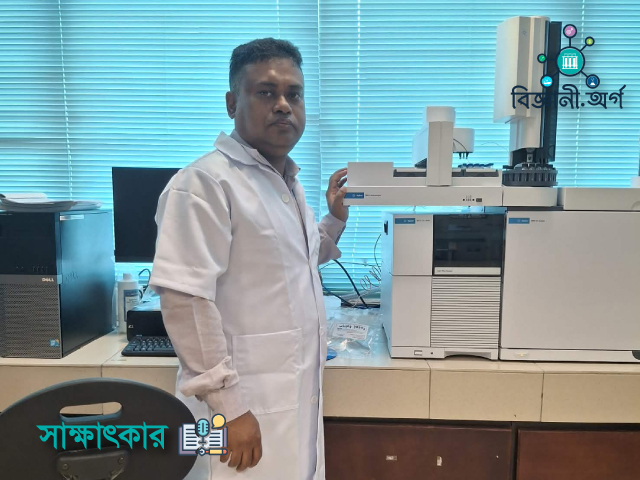
This interview with Dr. Md. Rezaur Rahman was held online on January 29, 2026. On behalf of Biggani Org, Tahsin Ahmed Supti conducted the interview. Present at the event were Dr. Moshior Rahman, the editor of Biggani Org, as well as volunteers and readers from Biggani Org.
Dr. Rezaur Rahman’s dedication and perseverance are an inspiration to the Bangladeshi scientific community. Even with limited opportunities, he has played a leading role in innovating renewable technologies from local natural resources. In particular, his research on smart biocomposites and solar technology proves that he is advancing the eco-friendly application of science. The biggani.org team acknowledges his tireless efforts and appreciates his contributions to the field of science and technology in Bangladesh. We hope that in the future Dr. Rezaur Rahman will achieve further great successes in research and innovation and continue to play a vital role in advancing the standards of science in the country.
Watch the video of Dr. Md. Rezaur Rahman’s interview on YouTube at the following link: 👇👇👇