How agriculture in Bangladesh is transforming in the age of science and technology—through the eyes of a scientist.
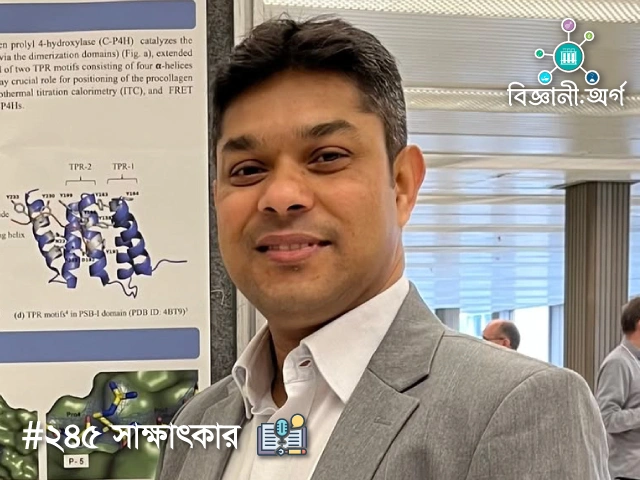
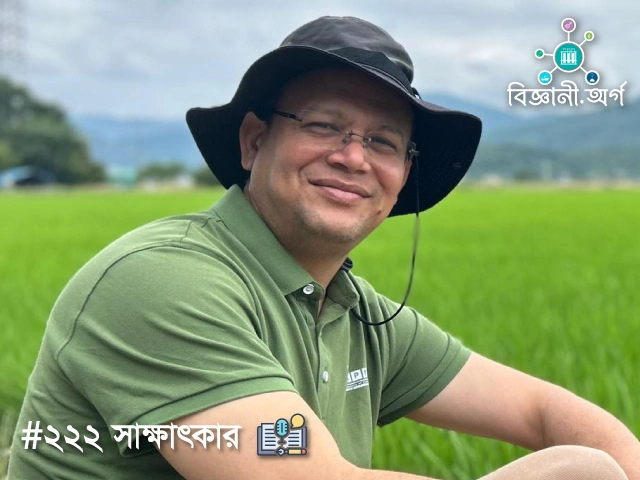
Across the world, agriculture is no longer just an ancient practice dependent on soil, water, and labor. Modern agriculture is gradually becoming more planned and science-driven, with the integration of information technology, sensors, robotics, and artificial intelligence. In this tide of change, young scientists from Bangladesh are making their mark in research labs abroad. One such researcher is Dr. Tofael Ahmed—whose work on agricultural robotics, precision agriculture, remote sensing, and decision-support technologies aims to make modern farming more effective. In a detailed interview with Biggani.org, he shares the real-life challenges of applying technology in Bangladeshi agriculture, his perspectives on research, and practical advice for young people.
Academic Life and the Path to Research
Dr. Tofael Ahmed grew up in an agriculture-based social environment in Bangladesh. From a young age, he was moved by nature, open fields, and the impact of agriculture on people’s lives. He witnessed up close the struggles of rural farmers, their dependency on weather conditions, and the limitations of production with minimal technology. These real-world experiences deeply influenced the focus of his later research. The idea of making agriculture more efficient, sustainable, and technology-driven gradually took root in his mind. He pursued higher education at Bangladesh Agricultural University. During his university studies, he realized that the future of agriculture would no longer rely solely on manual labor; instead, the importance of data, machines, sensors, and automated systems would increase. His academic journey, which began with teaching at Bangladesh Agricultural University, led him to top research institutions in Japan and the United States. He earned his PhD in Agricultural Engineering from the University of Tsukuba in Japan. Afterwards, he did postdoctoral research at the University of Illinois at Urbana–Champaign, USA, where his research outlook expanded further in the field of modern agricultural technology and engineering. The opportunities for higher study and research abroad broadened his vision. Access to advanced laboratories, state-of-the-art equipment, and interdisciplinary research environments drew him deeply into the domains of agricultural robotics and precision agriculture.
Fields of Research
The central themes of Dr. Tofael Ahmed’s research are precision agriculture, agricultural robotics, and decision support technologies. Simply put, he works with technologies that enable decisions on the use of fertilizers, water, or pesticides by understanding the unique needs of each part of a field. Where the soil is moister or drier—taking these variations into account, his research aims to make crop, orchard, and livestock management more efficient by using artificial intelligence and the Internet of Things (IoT). This not only increases production, but also reduces unnecessary pressure on the environment.
Another significant aspect of his research is decision support systems. In modern agriculture, farmers are faced with countless pieces of information—weather forecasts, soil properties, risks of crop diseases, and more. Dr. Tofael Ahmed’s work is particularly noteworthy in building structures for making the “intelligent decisions”—analyzing these data sets to determine which choice at which time leads to the best outcome. In essence, he seeks to create a kind of digital ‘assistant’ to stand by the farmer, making agriculture more sustainable and profitable through technology.
His contribution to research and publications is vast. He has published numerous papers in international journals such as Computers and Electronics in Agriculture, Biosystems Engineering, Transactions of ASABE, Sensors, and Remote Sensing. He has already published over a hundred scientific articles and served as lead author and editor of several books. His books on agricultural engineering and data-driven research are being used as teaching and research aids in various countries. In recognition of this extensive research activity, he has been honored twice with the ‘Best Faculty Member’ award at the University of Tsukuba.
Dr. Tofael Ahmed is not limited to research alone; he also takes on significant responsibilities in the world of scientific publication. As Associate Editor of the prestigious international journal Computers and Electronics in Agriculture, he plays a role in quality assurance and guiding new research. In addition, he is actively involved on the editorial boards of multiple scientific journals in Japan. As a member of the American Society of Agricultural and Biological Engineers (ASABE) and professional organizations in agricultural and information science in Japan, he is linked to a global research network.
His research projects have received support from Japanese government agencies like JST and JSPS, the Ministry of Agriculture (MAFF), as well as international research initiatives and industry. He has even been awarded grants from Amazon’s research initiatives—a testament to the real-world relevance of his work, not only in academia but also in practical technology and the industrial sector.
Research and Professional Life
Currently, Dr. Tofael Ahmed is actively engaged in research on agricultural robotics, precision agriculture, and remote sensing. The main goal of his research is to make agriculture more efficient, data-driven, and sustainable. At the core of his work are questions such as how to monitor crop conditions, boost yields, and make farmer decision-making easier—by integrating satellite imagery, ground sensors, GIS, and automated farming equipment.
He has also conducted research on the development and management of agricultural machinery, focusing on the practical usefulness, cost, and environmental impacts of machinery at the field level. A major part of his work involves transferring laboratory technologies to real-world farmers. For this reason, his research is not just theoretical; practical application is always a priority.
Interview on Biggani.org
Recently, he participated in an interview and discussion with new students on Biggani.org. In this discussion, he shared the story of his journey to becoming a scientist and provided detailed insights into his research. The key points of that conversation are summarized below:
Focus Areas of Research: Robotics, Precision Agriculture, and Data
A major component of Dr. Tofael Ahmed’s research is agricultural robotics. Agricultural robotics refers to automated machines or systems that can perform certain tasks in the field precisely—such as monitoring crop conditions or applying fertilizer to specific locations. This reduces labor pressures and increases accuracy.
Precision agriculture teaches us to move beyond the “one rule for one field” approach and make decisions based on the unique needs of each section. By analyzing data from sensors, drones, or satellites, we can identify areas of water shortage or nutrient deficiencies. It’s much like a doctor diagnosing a patient by pinpointing where the problem lies before prescribing treatment.
Data Scarcity and Climate Uncertainty
A major challenge in the Bangladeshi context is the lack of reliable data. In many areas, information on soil properties or micro-climate changes is not collected regularly. As a result, applying foreign models directly doesn’t yield the desired results. Uncertainty due to climate change exacerbates this problem—phenomena like heavy rainfall, droughts, or sudden floods repeatedly disrupt farmers’ plans. That’s why decision-support technologies need to be flexible enough to adapt to local realities.
Lack of Collaboration and Networking among Universities
According to Dr. Tofael Ahmed, there is a lack of planned cooperation and regular communication among universities in the country. As a result, knowledge generated in one institution does not reach others. Increasing opportunities for inter-university seminars, joint research, and open discussions would give students a multidimensional perspective and improve the quality of research.
Gap between Research and Farmers
A major problem is that research outcomes don’t reach the field. If research questions don’t originate from farmers’ real-life experiences, there is less motivation to adopt new technologies. Regular interaction among researchers, farmers, and agri-entrepreneurs builds trust in new technologies and makes field-level implementation easier.
Infrastructural Limitations: Technology Exists but Doesn’t Reach the Field
The lack of roads and logistical support is a major barrier to the use of large agricultural machinery. Due to narrow rural roads or weak bridges, advanced equipment often cannot be brought to the field. According to Dr. Tofael Ahmed, mechanization does not mean simply purchasing machines—the creation of an environment where those machines can be used is equally important.
Practical Advice for Young People Entering Research
Dr. Tofael Ahmed advises young people that when entering research, it is vital to clarify their own areas of interest. If someone chooses a subject just because it’s trendy, it is difficult to persevere in the long run. Research questions rooted in real national problems give greater purpose to the work. Patience is essential in research—failure is part of learning. He emphasizes the need to understand on-the-ground realities in addition to book knowledge and to build strong networks.
Read more about Dr. Tofael:
- https://sj.jst.go.jp/interviewsandopinions/2025/c0218-01c.html
- https://www.linkedin.com/in/tofael-ahamed-1b6a7040/
Conclusion: A Story of National Pride and Inspiration
Dr. Tofael Ahmed’s journey shows that sustainable change in agriculture is not possible without bridging technology, research, and reality. As a Bengali scientist, his path is a powerful inspiration for young researchers. His experience working in research environments in Bangladesh, Japan, and the United States has taught him that thriving in global science requires perseverance, interdisciplinary knowledge, and international collaboration. His work proves that agriculture is no longer just about working in fields; it has entered the age of data, artificial intelligence, and robotics. In this wave of transformation, scientists like Dr. Tofael Ahmed are lighting the way forward for the future of agriculture. His journey stands as an inspiration for Bangladeshi youth—showing that with curiosity for learning, patience, and a sense of responsibility towards the country, it is possible to transform global knowledge into local development. May this journey become a symbol of national pride—this is our hope.
The interview was conducted online on February 14, 2026. The interview was organized by Biggani.org and conducted by volunteers Jakiya Khatun Taki and Hasna Banu Mumu. Other participants included readers and volunteers from Biggani.org.
Written by:
Dr. Moshior Rahman
Watch the full interview of Dr. Tofael Ahmed on YouTube here: 👇👇👇