


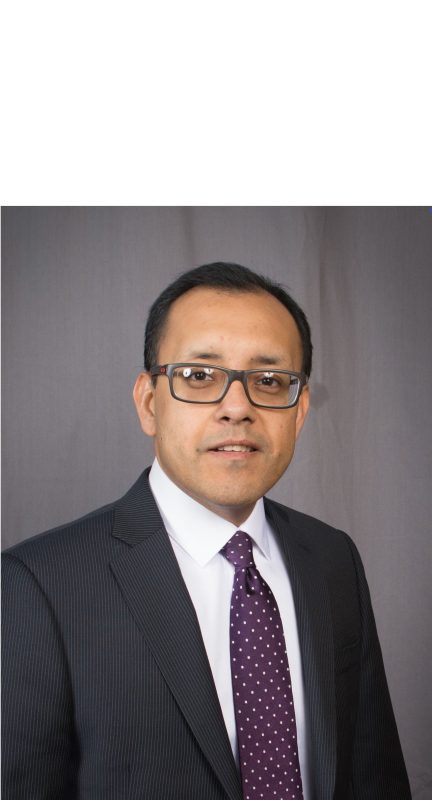
👨🔬 Researcher Profile:
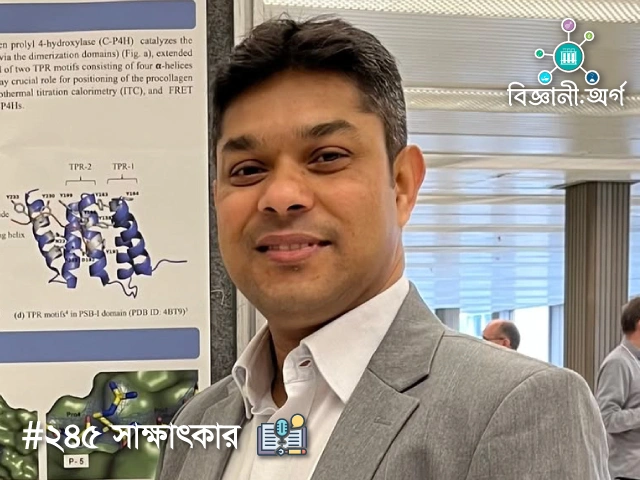
Dr. Navid Saleh is currently serving as an Associate Professor in the Department of Civil, Architectural, and Environmental Engineering at the University of Texas at Austin, USA. He earned his doctoral degree from Carnegie Mellon University in 2007 and later completed his postdoctoral training at Yale University. His main research objective is to purify water at low cost and with minimal energy consumption. Notably, he has developed methods to utilize the crystalline arrangement and electronic states of materials to remove contaminants from water.
At present, his laboratory is synthesizing and testing novel nanomaterials that can generate ions and radicals in water to deactivate harmful microorganisms. In addition, his research explores the removal of viruses and other pollutants using nanoscale technologies such as nanotubes, Peapods, and composite nanoparticles. He is also engaged in providing academic mentorship and training initiatives for young scientists globally, including from Bangladesh.
💬 Q&A Session:
Question: Please tell us a bit about yourself.
Answer: I am currently an Associate Professor in the Department of Civil, Architectural, and Environmental Engineering at the University of Texas at Austin. I have been engaged in teaching for the past decade. Before that, I completed postdoctoral training at Yale University and earned my PhD from Carnegie Mellon University in 2007. My research focuses on purifying water at a low cost and with minimal energy use. The novelty of my work lies in leveraging intrinsic material properties through atomic manipulation.
Question: What are you currently working on?
Answer: Our laboratory has recently synthesized a novel nanomaterial. We aim to utilize its electronic configuration to generate ions and radicals in water, which can deactivate waterborne pathogens. To activate the material, electromagnetic radiation is required. We are using microwave radiation, which is generally not suited for water purification. At the same time, we also assess the environmental impact of these nanomaterials.
Question: How does nanotechnology work in water purification?
Answer: Water contaminants exist at the nanoscale. The small size of nanomaterials allows them to be highly effective in removing these contaminants. At this scale, materials exhibit heightened chemical and biological properties, which enhances purification efficiency.
Question: Where is your research on viruses connected with nanotubes being applied?
Answer: Virus proteins self-assemble to create unique forces. Nanotubes can sense these forces. This can carry viruses long distances in the environment, but we are using this technology to remove viruses from water and air.
Question: What are Peapods and your research on them?
Answer: Peapods are composite nanoparticles in which spherical fullerenes are placed inside cylindrical nanotubes. This allows for the transfer of new properties. We synthesize these structures and use them for water purification.
Question: What research do you plan to do in the future?
Answer: The use of composite nanoparticles in environmental science is a recent development. My goal is to analyze their behavior and apply them in water purification.
Question: Your work with young people in Bangladesh?
Answer: I have personally helped and advised some young students and researchers. I have also observed and provided feedback to debate teams. In the future, I plan to teach scientific manuscript preparation techniques in Bangladesh.
Question: Any advice for young people?
Answer: Whatever you learn, learn it thoroughly. Master the skill of formulating scientific questions. Good questions are the key to good research. Avoid unnecessary questions—ask insightful and meaningful ones.
🔗 Profile Link:
ResearchGate Profile
Dr. Navid Saleh’s research highlights new breakthroughs in water safety and nanotechnology. His work can serve as a source of inspiration for both the scientific community and young Bangladeshi students. The Biggani.org team wishes Dr. Navid Saleh all the best with his research and hopes his work will play a key role in future scientific innovations.
Nanotechnology for Water Purification: An Insight from Dr. Navid Saleh
Dr. Navid Saleh is currently an Associate Professor in the Department of Civil, Architectural, and Environmental Engineering at the University of Texas at Austin, USA. He earned his doctoral degree from Carnegie Mellon University in 2007 and subsequently completed postdoctoral training at Yale University. His research focuses on low-cost and low-energy water purification techniques. Specifically, he explores the use of atomic-scale manipulation to exploit intrinsic material properties for removing contaminants from water.
Dr. Saleh’s laboratory develops and tests new nanomaterials that generate ions and radicals in water, which can neutralize harmful microorganisms. His research also covers the environmental effects of nanomaterials and their safe application in air, water, and soil. Additionally, he works with nanotechnology such as nanotubes, Peapods, and composite nanoparticles to remove viruses and other pollutants. Dr. Saleh also provides academic guidance and training to young researchers, including students from Bangladesh.
💬 Q&A Section:
Question: Please tell us a little about yourself.
Answer: I am currently an Associate Professor in the Department of Civil, Architectural, and Environmental Engineering at the University of Texas at Austin. I have been engaged in teaching for over a decade. Before this, I completed my postdoctoral training at Yale University. I earned my PhD from Carnegie Mellon University in 2007. My research aims to purify water using minimal energy and cost, exploiting materials’ atomic and electronic properties.
Question: What are you currently working on?
Answer: Our laboratory has recently synthesized a new nanomaterial. The goal is to use its electronic structure to produce ions and radicals in water that can deactivate waterborne pathogens. Activation requires electromagnetic radiation, and we are using microwave irradiation, which is typically unsuitable for water purification. We also study the environmental impact of these nanomaterials to ensure their safe and sustainable application.
Question: How does nanotechnology work in water purification?
Answer: Water contaminants exist at the same nanoscale as the nanomaterials—ranging from angstroms to nanometers. Nanomaterials at this scale have enhanced chemical and biological properties, making them highly effective in removing water contaminants.
Question: You are researching viruses attached to nanotubes. How will this be applied?
Answer: Viruses self-assemble protein structures that generate unique short-range forces. Nanotubes can sense these forces, allowing viruses to attach and travel long distances. While this can pose risks, the same mechanism can be leveraged to remove viruses from water and air.
Question: What are Peapods, and what research are you doing on them?
Answer: Peapods are next-generation composite nanoparticles in which spherical fullerenes are embedded inside cylindrical nanotubes, allowing the transfer of unique properties. We synthesize and study these composites for water purification applications.
Question: What are your future research plans?
Answer: Composite nanoparticles in environmental applications are a recent area of research. My goal over the next decade is to analyze their behavior and implement them for water purification.
Question: You also work with young researchers in Bangladesh. Can you share about that?
Answer: While large-scale initiatives have not yet been established, I have personally guided several young students and researchers academically. I also provide feedback on debate teams and intend to teach scientific writing and research skills in Bangladesh in the future.
Question: What advice do you have for young scientists?
Answer: Learn thoroughly and master the art of formulating scientific questions. Good questions lead to good research. Avoid irrelevant or trivial questions; focus on insightful questions that can generate meaningful projects or hypotheses.
🔗 Profile Link:
ResearchGate Profile
Dr. Navid Saleh’s research highlights the use of nanotechnology in water safety and environmental engineering. His work serves as inspiration for young Bangladeshi scientists and the global research community. The biggani.org team wishes Dr. Saleh continued success and hopes that his contributions will play a significant role in future scientific innovations.




This comment has been sanitized for the English site.