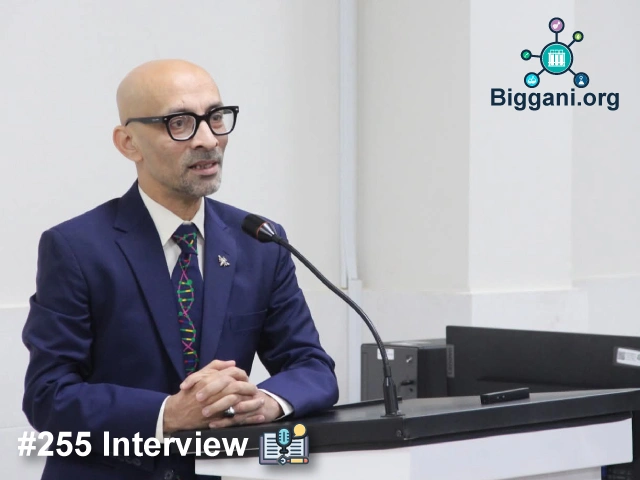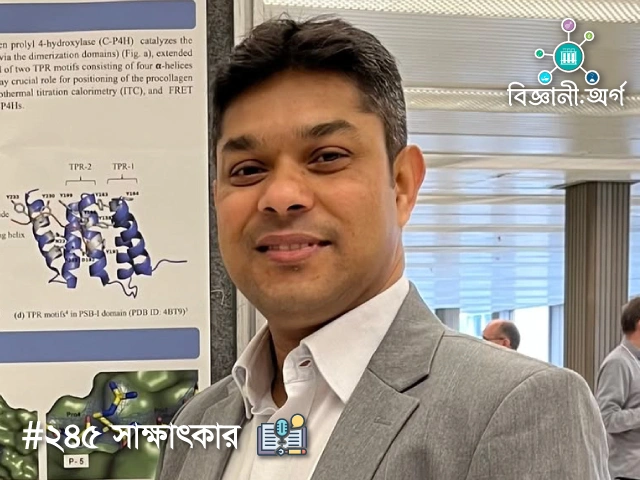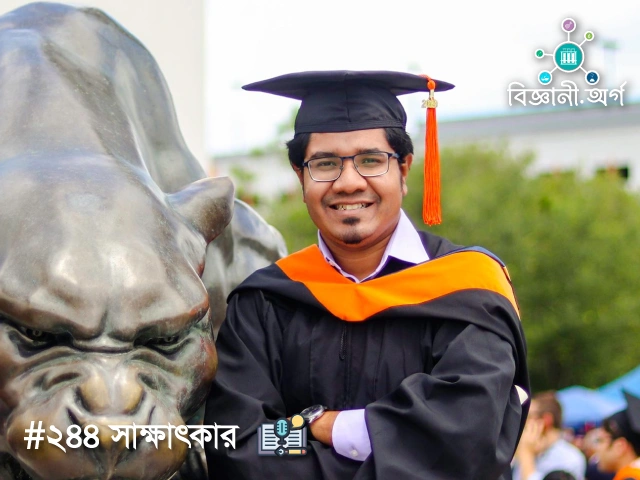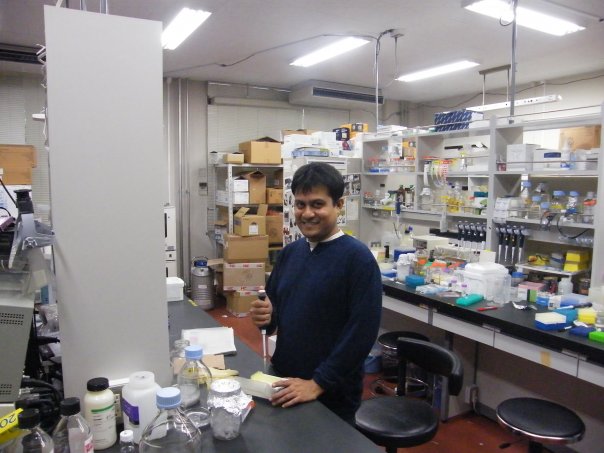
Dr. Sharif Moinul Hasan is a Bangladeshi scientist currently working as a researcher in the Research & Development (R&D) division of a healthcare organization based in Kyoto, Japan. He graduated in Biotechnology from Khulna University in 2002 and later completed a one-year diploma in Information Technology.
After gaining initial professional experience, he moved to Japan and completed his Master’s degree at the University of Tokyo, where he researched intranasal vaccine delivery, particularly focusing on vaccines for Japanese Encephalitis and Rabies viruses. In 2013, he earned his PhD from the same university, where he developed a highly sensitive disease detection method. His research areas include biomarker discovery, disease diagnostics, and AI-based drug research using RNA transcriptome datasets. Currently, he is working on the D-iOrgans Atlas, which analyzes RNA from 24 human organs to provide information on drug responses and side effects.
💬 Q&A Session:
Question: Could you briefly introduce yourself?
Answer: I am Sharif Moinul Hasan, a Bangladeshi scientist currently working as a researcher at a healthcare organization in Kyoto, Japan. My education began in Khulna, where I obtained my Bachelor’s degree in Biotechnology from Khulna University. I then completed my Master’s and PhD at the University of Tokyo in Japan, where I conducted research on nasal vaccines and disease diagnostics.
Question: What is your current research focus?
Answer: I work on analyzing the effects and side effects of drugs by studying the RNA transcriptomes of 24 human organs. Our D-iOrgans Atlas supports AI-based drug development and biomarker discovery.
Question: What is PCR and how was it used in your PhD?
Answer: PCR, or Polymerase Chain Reaction, is a method for amplifying DNA. In my PhD, I invented a method combining real-time PCR and Open-Sandwich Immunoassay, called “OPEN-Sandwich IMMUNO-PCR,” which can very sensitively detect Estradiol and Bone Gla Protein (Osteocalcin).
Question: How are biomarkers used in drug research?
Answer: Biomarkers are biological indicators of disease. They are used for disease diagnosis, monitoring progression, and determining the effectiveness of treatments. In drug research, biomarkers are important for dose determination, tracking treatment response, and understanding long-term effects.
Question: How did your research on hay fever and allergies go?
Answer: At Juntendo University in Japan, I researched hay fever or allergic rhinitis caused by cedar and Japanese cypress pollen. For the first time, I detected the Filaggrin protein in nasal epithelial cells, which is related to allergies and changes in cell structure.
Question: What do you think is the most challenging aspect of research?
Answer: The biggest challenge is adapting to technological changes and being involved in industry-based projects abroad.
Question: What is the research environment like in Japan?
Answer: In Japan, students can make decisions based on their interests from a young age. Research and education are well-organized, and both the government and society provide significant support for science and technology.
Question: What are your future plans?
Answer: I want to conduct academic research in Bangladesh, especially in biotechnology projects related to health, environment, and food, such as developing low-cost diagnostic methods, environmentally friendly enzymes, and antibodies.
Question: What advice do you have for young scientists?
Answer: Honesty, sincerity, self-confidence, and hard work are crucial in research. It’s important to understand subjects deeply and to read journals and communicate with other researchers.
Dr. Sharif Moinul Hasan’s research is opening new horizons in nasal vaccines, sensitive biomarker detection, and transcriptome data analysis. On behalf of biggani.org, we wish him continued success in his future research and hope his innovative work will serve as an inspiration to young Bangladeshi scientists.
Advancing Healthcare Through AI and Transcriptomics – Interview with Dr. Sharif Moinul Hasan
Dr. Sharif Moinul Hasan is a Bangladeshi scientist currently working as a researcher in the R&D department of a healthcare company in Kyoto, Japan. He holds a Bachelor’s degree in Biotechnology from Khulna University (2002) and a Diploma in Information Technology. After gaining initial professional experience in pharmaceutical and diagnostic companies in Bangladesh, he moved to Japan to pursue advanced studies.
Dr. Hasan completed his Master’s degree at the University of Tokyo, focusing on nasal delivery of vaccines against Japanese Encephalitis and Rabies viruses in animal models. He subsequently earned his PhD from the University of Tokyo (2013), developing highly sensitive disease detection techniques combining real-time PCR and open-sandwich immunoassays. His research includes biomarker discovery, disease diagnostics, and drug response analysis using transcriptome datasets. Currently, he contributes to the D-iOrgans Atlas, a large-scale resource mapping RNA expression across 24 human organs, supporting AI-based drug development and biomarker research.
💬 Q&A Session:
Q: Could you briefly introduce yourself and your background?
A: I am Sharif Moinul Hasan, a Bangladeshi scientist currently working in a healthcare company in Kyoto, Japan. I grew up in Khulna and studied at local schools and Khulna University, where I earned my Bachelor’s degree in Biotechnology in 2002. I completed a diploma in Information Technology and worked in the pharmaceutical sector in Dhaka. My research interest in disease spread and immunity led me to pursue a Master’s at the University of Tokyo, focusing on nasal vaccine delivery against Japanese Encephalitis and Rabies viruses. I completed my PhD in 2013, followed by academic and industrial postdoctoral research in Japan.
Q: What is your current research focus?
A: I work in R&D to study drug effects and side effects across 24 human organs using RNA transcriptome datasets. Our D-iOrgans Atlas supports AI-based analysis of drug efficacy and biomarker discovery for diseases such as diabetes, high cholesterol, neurological disorders, and bone diseases. A recent paper on this research was published in an open-access journal by Cell Press.
Q: What is PCR, and how was it involved in your PhD?
A: PCR, or Polymerase Chain Reaction, is a method to amplify DNA for analysis. It’s widely used to detect pathogens, cancer markers, and other molecules. My PhD combined sensitive real-time PCR with open-sandwich immunoassays to create a novel method called “OPEN-Sandwich IMMUNO-PCR,” allowing highly sensitive detection of biomarkers like estradiol and bone Gla protein (osteocalcin). This research was published in two international journals. I also used PCR to study recombinant antibodies for influenza virus detection and in industrial enzyme development projects.
Q: How are biomarkers used in drug discovery?
A: Biomarkers are measurable indicators of biological states or diseases. They help doctors assess disease severity, monitor progression, and guide drug choice. In drug discovery, biomarkers assist in dose optimization, evaluating treatment response, and identifying effective therapeutic strategies. Molecular biomarkers are increasingly important in both preclinical and clinical research.
Q: Can you describe your research on hay fever?
A: During my postdoctoral research at Juntendo University, Tokyo, I studied allergic rhinitis caused by cedar and Japanese cypress pollen. I identified a structural protein called Filaggrin in nasal epithelial cells. Mutations in this protein can alter cell structure, allowing allergens to penetrate and trigger allergic reactions. Understanding such mechanisms is key to developing precise treatments for hay fever.
Q: What challenges do you face in your research?
A: The main challenge is keeping up with rapidly evolving technology and adapting to project-based industrial research. Research jobs are often short-term, and integrating into foreign research environments requires flexibility.
Q: How is the research environment in Japan?
A: Japan has a highly structured research environment. Students receive early guidance to focus on their interests, and government and societal support for science is strong. The language advantage allows deep understanding of complex concepts. Japanese culture emphasizes discipline, hard work, and patriotism, making it an ideal place for research.
Q: What are your future research plans?
A: I hope to work in academia in Bangladesh, focusing on low-cost disease and toxin detection, environmentally friendly enzymes, and antibody development. These areas are vital for public health, environmental safety, and agricultural biotechnology.
Q: What advice would you give to young scientists?
A: Integrity, purpose, hard work, confidence, and honesty are essential for researchers. Understanding topics deeply is more important than rote learning. Reading scientific literature, networking, and using online tools like ResearchGate, LinkedIn, and YouTube can be very helpful. Language proficiency also supports opportunities abroad.
Dr. Sharif Moinul Hasan’s work exemplifies the intersection of molecular biology, biotechnology, and AI-driven drug research. His studies on nasal vaccines, sensitive biomarker detection, and transcriptome-based drug analysis contribute to both scientific knowledge and public health applications. The biggani.org team extends its best wishes to Dr. Hasan for continued success, hoping his innovative research inspires young scientists in Bangladesh and globally.