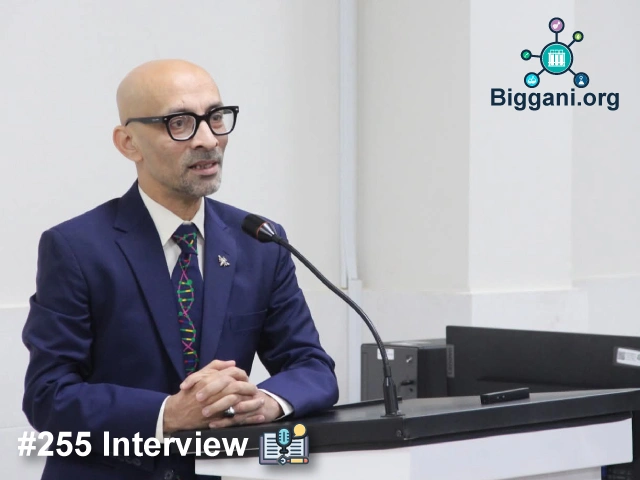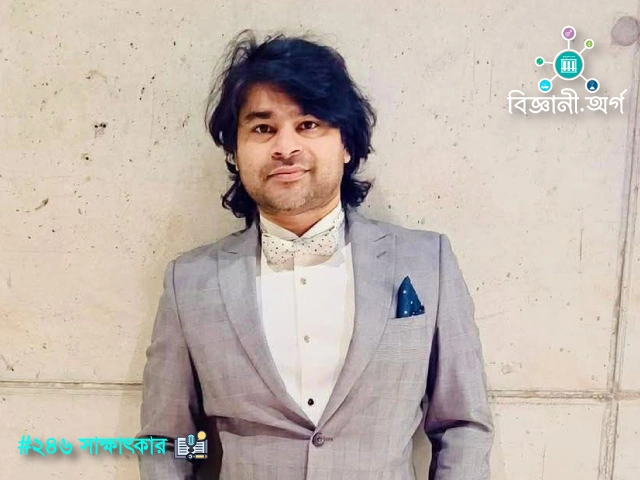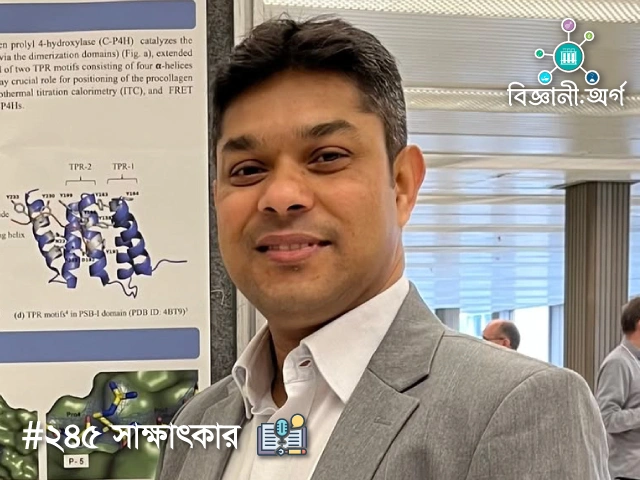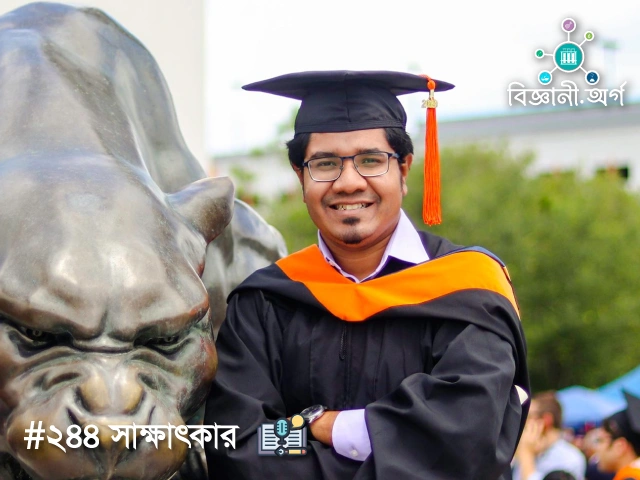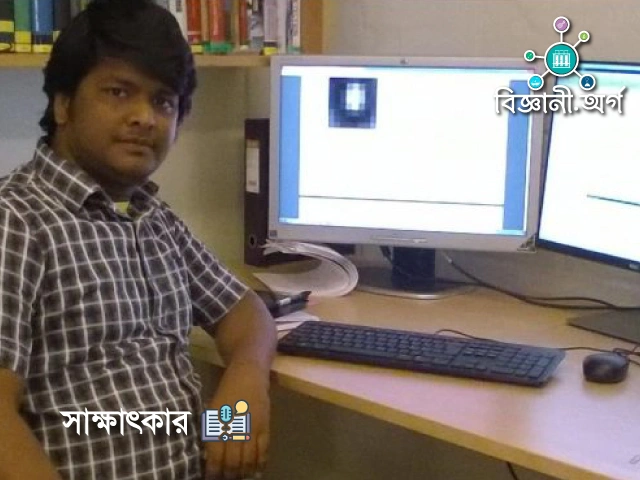
Kabir Hossain was born and raised in Keraniganj, Dhaka. He completed his SSC from a school in Keraniganj and his HSC from Government Shaheed Suhrawardy College in Old Dhaka. Later, his interest in computer engineering led him to participate in the Korean Government Scholarship Program (KGSP), through which he earned his undergraduate degree from a South Korean university in 2011. At the bachelor’s level, he worked at the “Intelligent Image Media and Interfacing” lab, where his main research focused on image processing and human object tracking.
In 2013, he completed his master’s degree at the same institution and later joined the software division of Samsung Bangladesh as a Senior Software Engineer. Two years later, in 2015, he started his PhD research at the Technical University of Denmark (DTU). His research fields mainly cover video quality estimation, drone video analysis, infrared imaging, and machine learning-based video processing technology. He currently lives in Denmark with his family and, alongside research, works on innovative technology-based solutions.
💬 Interview Section:
Question: Greetings from biggani.org. To start, could you tell us a bit about yourself?
Answer: Thank you. My home is in Keraniganj, Dhaka, where I grew up. Currently, I am pursuing my PhD at the Technical University of Denmark (DTU). I did my SSC at a school in Keraniganj and my HSC at Shaheed Suhrawardy College in Old Dhaka. After that, I completed my bachelor’s degree in South Korea under the Korean Government Scholarship (KGSP) in 2011, working there on image processing and human tracking, and later finished my master’s in 2013. Afterwards, I worked as a Senior Software Engineer at Samsung Bangladesh, and in 2015, I came to Denmark for my PhD.
Question: You are currently working on drone video quality. Could you elaborate on this?
Answer: Nowadays, drone technology is being used in various fields—filmmaking, security surveillance, wildlife tracking, solar panel fault detection, and even identifying leaks in underground gas pipelines. Doing these tasks through conventional methods is expensive and time-consuming. Using drone technology allows these tasks to be completed quickly, cost-effectively, and accurately, which is why there’s so much research in this area.
Question: Why is the quality of drone video important, and how are you working to improve it?
Answer: In almost every drone application, video is the main component. If the video quality is not good, subsequent analyses do not work effectively. In our research, we are trying to detect cracks in gas pipelines using infrared cameras. Infrared video can detect temperature variations, which helps indicate cracks.
My responsibility is to determine the quality of the video. Drones have limited computational power, so it’s not always possible to transmit top-quality video. I am developing a machine learning–based algorithm that analyzes video quality in real time and informs the operator about its status. This way, the operator can adjust the settings as needed.
Question: What is meant by video coding? What technologies are currently used in this field?
Answer: Video coding is the process of reducing data size while preserving nearly the same visual quality. A video consists of numerous frames or images. Each frame has a huge number of pixels, and the number of bits for all this is enormous. So, storing or transmitting raw video data is nearly impossible. For this, video coding technologies are used—like JPEG, MPEG-4, H.264, H.265, etc. These technologies compress video so it requires less bandwidth while minimizing quality loss.
Question: What is machine learning and how is it being used?
Answer: Simply put, machine learning is a method by which a system is taught to learn patterns in data to make predictions for unknown, future data. It’s now used in almost every field—from pattern recognition and disease diagnosis to object detection and even creating artificial intelligence.
Question: What do you want to work on in the future?
Answer: Since I am working on video coding, machine learning, and quality estimation, I want to continue researching new challenges in these areas in the future.
Question: What are your hobbies outside of research?
Answer: I enjoy reading books, traveling, and spending time with my family. Especially, I love spending time with my little son the most.
Question: What advice do you have for young students who want to pursue science?
Answer: I don’t want to give advice, but I believe—if you dedicate yourself to something you love, any goal can be achieved.
Kabir Hossain’s research in drone video analysis and quality estimation will make future technology more reliable and practical. His work proves that innovative thinking can solve scientific problems even with limited resources.
The biggani.org team wishes Kabir Hossain continued success in his research. We hope his achievements become a source of inspiration for young scientists in Bangladesh.
Enhancing Drone Video Quality — An Interview with Kabir Hossain
Kabir Hossain was born and raised in Keraniganj, Dhaka. He completed his SSC from a local school in Keraniganj and HSC from Government Shaheed Suhrawardy College in Old Dhaka. His interest in computer engineering led him to pursue his undergraduate degree under the Korean Government Scholarship Program (KGSP) in South Korea, where he graduated in 2011. During his bachelor’s studies, he worked at the Intelligent Image Media and Interfacing Laboratory, focusing on image processing and human object tracking.
He completed his master’s degree in 2013 and later joined Samsung Bangladesh as a Senior Software Engineer. In 2015, he began his PhD at the Technical University of Denmark (DTU). His research primarily focuses on video quality estimation, drone video analysis, infrared imaging, and machine learning-based video processing. He currently lives in Denmark with his family and continues his work in computational imaging and intelligent vision systems.
💬 Interview Section:
Question: Welcome from biggani.org, and thank you for joining us. Could you tell us a bit about yourself first?
Answer: Thank you. I’m from Keraniganj, Dhaka, where I grew up. Currently, I’m pursuing my PhD at the Technical University of Denmark (DTU). I completed my SSC in Keraniganj, my HSC at Shaheed Suhrawardy College, and later received the Korean Government Scholarship (KGSP) for undergraduate study in South Korea. I graduated in 2011, worked on image processing and human tracking, completed my master’s in 2013, worked for Samsung Bangladesh, and finally came to Denmark in 2015 for my PhD.
Question: You are working on improving drone video quality. Can you tell us more about this research?
Answer: Drone technology has become very popular because of its wide applications — from movie shooting, security monitoring, wildlife tracking, and detecting solar panel defects to identifying underground gas pipeline leaks. Doing these tasks manually or by helicopter is costly and time-consuming. Drones make them faster, cheaper, and more efficient, which is why research in this area is expanding rapidly.
Question: Why is video quality so important for drones, and how are you working to improve it?
Answer: Every drone application depends heavily on video. If the video quality is poor, subsequent processing — such as defect detection or object tracking — becomes unreliable. In our project, we use infrared cameras mounted on drones to detect gas leaks underground. The infrared video captures temperature variations, which help us locate cracks.
My specific responsibility is to analyze and estimate the video quality. Since drones have limited computational power, it’s not always possible to transmit high-quality video. I am developing a machine learning–based algorithm that can evaluate the quality of a drone’s video in real time and inform the operator. This allows the operator to adjust drone settings immediately if the quality drops.
Question: What exactly is video coding, and which technologies are used today?
Answer: Before explaining what video coding is, let me explain why it’s important. A video consists of many image frames — usually 25 per second — and each image contains millions of pixels, each represented by multiple bits. So, one second of raw video requires enormous storage and bandwidth. That’s why we use video coding, which compresses the data while maintaining visual quality.
Common coding standards include JPEG, MPEG-4, H.264, and H.265. JPEG is used for images, MP3 for audio, and MPEG or H.264 for video formats like MP4. Without these compression technologies, streaming platforms like YouTube or Facebook would be impossible to run efficiently.
Question: Machine learning is a buzzword today. Could you explain it briefly and its applications?
Answer: In simple terms, machine learning is about teaching a system to learn data patterns so that it can make predictions or classifications on new, unseen data. It’s used in almost every field — from pattern recognition and object detection to medical diagnostics and artificial intelligence development.
Question: What do you plan to work on in the future?
Answer: Since my research lies in video coding, machine learning, and quality estimation, I intend to continue exploring new and challenging problems within these domains.
Question: What are your hobbies outside of research?
Answer: I enjoy reading books, traveling, and spending quality time with my family. I especially love playing with my young son whenever I have free time.
Question: What advice would you give to young students who want to pursue science?
Answer: I wouldn’t call it advice, but I truly believe that if you love what you do and stay passionate about it, you can achieve any goal you set.
Kabir Hossain’s work on drone video analysis and quality estimation reflects how innovative research can make technology more practical and efficient. His dedication to solving real-world problems with machine learning and computer vision sets an inspiring example for young scientists.
The biggani.org team wishes him continued success and hopes his research journey inspires the next generation of Bangladeshi scientists.