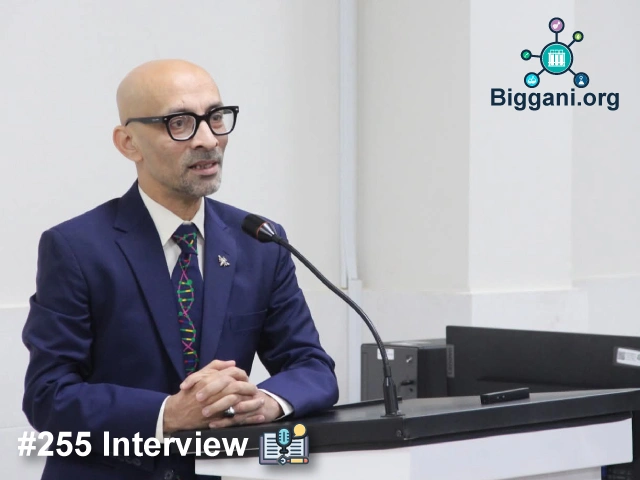
Dr. Maruf Mortuza is the name of an engineer and a teacher whose tireless efforts and steadfast determination have led him to success. Currently residing in the United Arab Emirates, this accomplished Bangladeshi completed his undergraduate studies in Civil Engineering at Bangladesh University of Engineering and Technology. He went on to earn his Master’s degree in the same discipline from Dalhousie University, and later completed his PhD there as well. After that, he embarked on his research career, spending two years as a Visiting Research Fellow and seven months as a Research Associate at the National Research Council of Canada / Conseil national de recherches Canada. For 13 years, he has been teaching at the American University of Sharjah. After joining this renowned Middle Eastern institution in 2008 as an Assistant Professor, he was promoted to Associate Professor and is currently a Professor. As a researcher and educator, he has achieved success and remains a shining example of dedication—truly a dreamer and achiever among Bengalis.
Dr. Maruf Mortuza gave an interview to Dr. Mashiur Rahman at Biggani.org. Listen to the full conversation for more details.
Dr. Maruf Mortuza is a distinguished scientist and researcher. Currently, he is engaged in teaching and scientific research at the American University of Sharjah. Previously, he spent about two and a half years in Canada, working at the National Research Council of Canada, the country’s government research agency. Before that, he completed his PhD at Dalhousie University in Halifax, Canada—where he also obtained his Master’s in Water Resource Engineering and a PhD in Environmental Engineering. Today, we share our conversation with him.
Biggani.org: Where are you now and what are you doing?
Dr. Maruf Mortuza: I am currently working in the Civil Engineering Department at the American University of Sharjah, located in the United Arab Emirates. I’ve been here for about eleven years, and most of my academic experience and education was gained here. Before that, I spent about two and a half years in Canada, working at the National Research Council of Canada, the country’s government research agency. Before that, I completed my PhD from Dalhousie University in Halifax, Canada. I also did my Master’s in Water Resource Engineering and my PhD in Environmental Engineering there.
Biggani.org: Environmental Engineering is a relatively new subject—what kind of subject is it?
Dr. Maruf Mortuza: Environmental engineering is a fascinating field. There’s a lot of work happening worldwide in this area. Simply put, it has two aspects. One is the environment—as in, all the various aspects of our surroundings: air, water, soil, etc. Addressing and solving all kinds of environmental problems is the main goal of environmental engineering. Previously, it was common for countries to focus intensely on economic development, competing with each other to move forward economically. While many countries advanced economically, a significant downside was rampant environmental pollution, which was not given much thought at the time. Now, we’re seeing that air, water, and soil everywhere are polluted. Our entire livelihood depends on the environment, and if the environment is not in good condition, nothing else matters—we won’t even be able to survive. We can’t live without air and water. If these are polluted, it becomes very difficult for us to survive. In some cases, pollution has immediate effects on the human body—what we call acute effects—where people fall sick right away. Sometimes, pollution doesn’t cause immediate sickness; instead, people are exposed to it for many years, which can eventually lead to death. There are many such problems that we can’t directly see with our eyes. Sometimes we think we’re fine, but actually the situation isn’t that simple. We go to doctors seeking solutions for ailments, but even they often can’t help. We’re now hearing about cancer cases much more than before, and environmental pollution is a major cause. Since these issues weren’t prioritized in the past, it’s now essential to take them seriously. Otherwise, a time will come when our future generations won’t be able to survive. That’s why the subject of Environmental Engineering has become so crucial. The existing problems require environmental engineers for solutions—it can’t be done without them.
Biggani.org: We hear the terms Environmental Science or Environmental Scientist, but why is the word “engineering” used? What is the relationship between engineers and the environment?
Dr. Maruf Mortuza: In fact, engineers are the ones who solve problems. Scientists, at best, can explain the issue, but in most cases they don’t solve it. That’s not to say scientists don’t contribute to solutions—they do research, such as studying water purification, and explain scientifically how certain technologies work. But often, their contribution stops there. Engineers go a step further. Not only do they develop technology, but they are also crucial in applying it practically, far more than scientists. Many technologies are created that are not feasible in practice, and it’s not always possible for scientists alone to address this. The main task of engineers is to create practical, applicable technologies. That’s why, in the Western world, most consulting companies dealing with water purification or air pollution are operated by environmental engineers.
Biggani.org: Environmental Engineering is a vast field—what kind of research are you conducting? Could you elaborate?
Dr. Maruf Mortuza: My PhD research was on wastewater treatment, specifically nutrient or phosphorus removal from wastewater. That was my PhD topic: removing phosphorus from polluted water. Broadly speaking, there are two types of water purification: one is for drinking water, and the other is for contaminated water generated from households and various industries. My PhD focused on purifying such polluted water, exploring methods for phosphorus removal—this technology I developed was quite unique at the time, using waste materials for the purification process. As a master’s student, I worked on water resources and hydraulics, studying different water treatment processes. Recently, my main focus has been on drinking water purification, because our lives and livelihoods depend heavily on clean water. Water treatment plants play a vital role, but we often overlook them. Although these plants produce high-quality water, a problem arises when it comes to delivering that water to homes. By the time the treated water reaches people’s taps—sometimes taking a day, sometimes two, or even a week in some cities—it may become contaminated again. That’s why, for instance, many people in Dhaka complain about murky or black tap water. This is not unique to Dhaka—it’s a common problem worldwide. Even if good water is produced using excellent technology, it can become contaminated during transportation through pipelines. Historically, scientific committees and organizations haven’t given enough attention to this aspect, resulting in significant gaps that haven’t been adequately addressed. Therefore, much of my recent research has focused on water pipelines. For example, a journal paper of mine was just accepted last week by the “Clean Soil, Water, Air” journal, where we analyzed the pipeline network in Sharjah city—about three thousand kilometers in total. We studied the condition of both the water and the pipelines, using technologies such as Geographic Information Systems (GIS), which is known in Bangladesh as well. GIS helped us infer the condition of pipelines based on water quality, as most are underground and can’t be inspected directly. This unique approach yielded significant benefits, and we hope it will have a major impact. That’s a major part of my work. Another area I focus on is plastic pollution. If you’ve followed news or articles, you’ve probably seen coverage on this by BBC News, Sky News, and even the United Nations (UN), which is planning major interventions for plastic pollution control by about 2050. It’s a massive problem. My experience so far is mainly in water purification, and water quality is a crucial factor. Lately, I’m also investigating the role of plastics within water systems and the potential risks they pose to human health. For example, my master’s student is working on microplastics—tiny plastic particles that may be entering water from plastic pipelines. We’re trying to determine whether these plastic pipelines are contributing microplastics to the water, which can be very dangerous for our health. A study last year found plastic particles in human excreta. The big problem with plastics is that bacteria can’t decompose them, so the particles remain. We’ve seen reports of fish filled with plastic; however, we still don’t know how this might affect humans, partly because scientific research on humans in this context is restricted. This is why water is considered a major risk area. Therefore, we’re trying to understand the role of plastic particles in water supply systems—it’s a field that, to date, has seen almost no research or publications. Almost every pipeline in use now is a plastic pipeline, which poses a huge risk, a problem that has gone largely unnoticed in the past. Previously, pipelines were mainly iron, resulting in corrosion issues. Eventually, we replaced iron with plastic to avoid corrosion, leading to widespread adoption of plastic pipes globally, including in Bangladesh, where most domestic pipelines and even water tanks are made of plastic. People used to worry about iron rusting, but now by solving one problem, we’ve unwittingly created another. First, we need to understand and quantify the problem before seeking solutions. My current work is in this initial phase of understanding. In one project, we’re studying how plastic particles may enter water from pipelines. Another project—currently underway in my lab—deals with plastic waste. Huge volumes of plastic waste are dumped in landfills, where plastics persist for years since bacteria can’t break them down. Over time, polluted water containing plastic particles from these wastes contaminates the groundwater below. So we’re also investigating these particles at the nano-level to assess how much is being generated and its spread. Such research is critical, as plastic contamination can severely impact drinking water, and plastics are not easily solvable global problems. We can’t simply replace every pipe in the world overnight. Therefore, understanding the scope of the problem is the first step. Given the emphasis on this issue by major news outlets and the scientific community, work in this area is considered highly significant. Plastic pollution is a global problem and particularly acute in Bangladesh. Plastics are ubiquitous, present not only in water but also in most products we use daily. But water is directly linked to our survival, making this problem even more important. I hope my work can have a major positive impact for future generations.
Biggani.org: We’ve heard that you previously did some work on water treatment in Bangladesh. What kind of work did you do, and could you share any successes or failures?
Dr. Maruf Mortuza: I did some work with water in Bangladesh, first trying to address the water quality in the Export Processing Zone (EPZ) in Dhaka, which is an industrial area with a lot of wastewater pollution. The regulations in Bangladesh have improved over time, but they used to be poor, and when I visited the EPZ area, nearby waters were heavily polluted in various colors due to textile industries dumping dye-laden waste. My work focused on analyzing water quality, and I published a paper on it at a conference, later included in an edited volume on the environment. About 14 or 15 people have cited that paper since, and it drew significant attention at the time because this type of research was rare in Bangladesh then. Later, while doing my PhD, I tried to address phosphorus pollution—a major problem in Bangladesh because heavy use of fertilizers in agriculture leads to excessive phosphorus contamination in waters. This has seriously reduced the extent and quality of our rivers and waterbodies, to the point where you can hardly find truly clean water anywhere in the country anymore. The abundance of phosphorus promotes algae (algae blooms), which reduces oxygen in water, making it impossible for fish and other aquatic life to thrive. This not only affects water quality but also our food security. Although I always wanted to do more for Bangladesh’s environment, being overseas made it challenging. During my visits home, I discussed research ideas with BUET professors and even tried starting a consulting firm with my father—who was an electrical engineer—to focus on water purification. We registered with the Department of Environment, but ultimately, the project didn’t progress due to a lack of manpower. In Bangladesh, it’s hard for such initiatives to succeed without someone on the ground.
Biggani.org: What are your future plans? What lines of research would you like to pursue?
Dr. Maruf Mortuza: I want to deepen my work on plastics, as there are still many aspects to explore, especially in collaboration with BUET professors. My aim is to adapt my research here to Bangladesh’s context, though it is difficult to obtain necessary data from government agencies there. Another ongoing project is about the resilience of water systems—how these systems can continue functioning during natural disasters such as floods, which are common in Bangladesh, or even earthquakes. Resilience is crucial because, although people may not notice system vulnerabilities in normal conditions, when disaster strikes, failures in water supply can have devastating effects. While some resilience assessment work exists in Bangladesh, research specifically on water system resilience is still limited, despite the country’s abundance of water resources. The key is not just having water, but having good-quality, safe water supply that endures during crises. There’s also a mistaken assumption that plentiful water means there’s no problem, but if quality is lacking, water itself can pose health risks. Previously, organized water supply systems didn’t exist outside major cities like Dhaka, but even with new systems, issues around quality and resilience persist, and are often overlooked. If not addressed, a major disaster could bring catastrophic results, which none of us want. I’ve done resilience research in collaboration with Florida International University and plan to continue and expand this work, especially on water system sustainability—another major global topic that’s gaining attention and that I intend to focus on in the future.
Biggani.org: You have extensive experience conducting research in America, the Middle East, and Bangladesh. What advice would you give to Bangladeshi children and youth who aspire to be scientists or researchers?
Dr. Maruf Mortuza: For those who want to become scientists or researchers like me, I’d say that formal education is important for gaining knowledge in different subjects—if you study diligently, you’ll gradually learn. But one essential quality for researchers or scientists is curiosity. In Bangladesh, our social system often suppresses curiosity as children grow up. Little kids will ask questions, but if parents can’t answer, they sometimes silence them instead; teachers may do the same, discouraging questions they can’t answer. After repeated experiences, children eventually stop asking questions. My first piece of advice: never give up the habit of questioning. Always keep those questions in your mind; you may find the answers someday, even if not immediately. Not everyone will always have the answers, and not all answers are found in books—some questions may not have been answered by anyone yet. Curiosity is what drives science and research. You must not suppress it, even if it takes 10 or 15 years to find the answer to your question. Also, this principle applies to all professions, not just science. If you don’t enjoy your work and aren’t passionate about it, you can’t succeed. Pursue what genuinely interests you—if it’s computers, stay with that. Sometimes, other things like jobs or social expectations distract us, causing us to forget our true interests. But to become a good researcher or scientist, you must remain committed to your passion. Perseverance leads to success, even if it doesn’t come right away.