


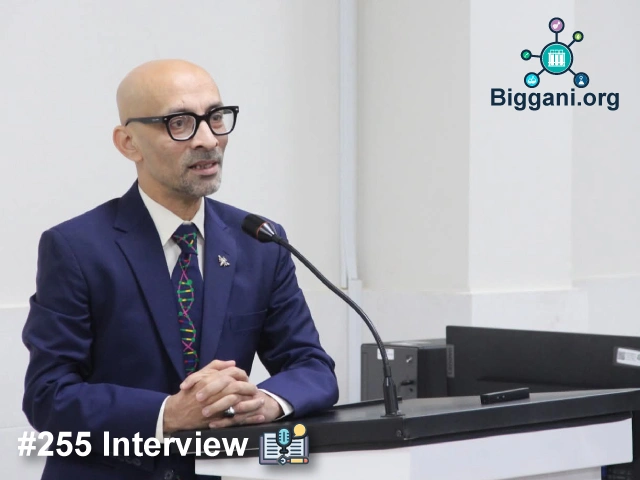
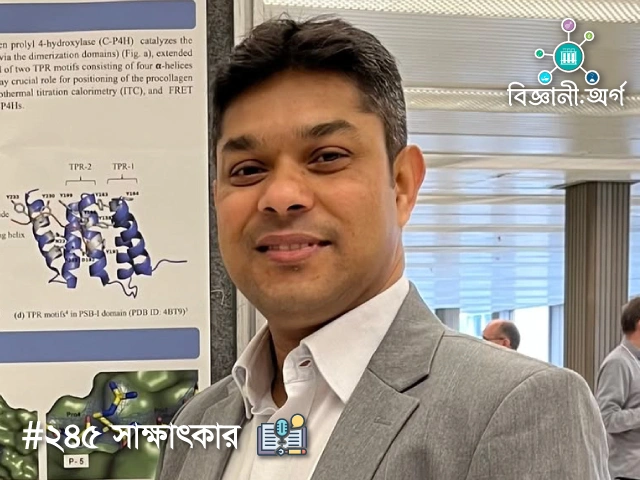
Md. Atikur Rahman Ahad, Professor – University of Dhaka and specially appointed Associate Professor – Osaka University (Japan). He completed his bachelor’s in Computer Science from the University of Dhaka and his master’s from UNSW (Sydney), and earned his PhD from Kyushu Institute of Technology. He began his career as a lecturer at the University of Dhaka, then progressed through promotions to Assistant Professor, Associate Professor, and finally Professor. Currently, he is on leave from his teaching position at the University of Dhaka and working as a specially appointed Associate Professor at Osaka University (Japan). He has three years of teaching experience at Osaka University and 18 years at Dhaka University—making a total of 21 years teaching in Computer Science. In addition, he serves as an Editorial Board Member at Scientific Reports, Nature Pub.
He spoke live with Biggani.org and Learntime on how to conduct research and how to solve its various challenges.
Links:
Research-Based Bangladesh: One Teacher’s Dream, Our Shared Responsibility
Sitting in a laboratory at Osaka University in Japan, he is still primarily working with the youth of Dhaka. A teacher at the University of Dhaka, now in “lien” (leave) and based in Japan. No salary from the university, employment service not counted—yet the question constantly on his mind: Will Bangladesh one day become a research-based country?
Despite personal financial and emotional strains, distance from family, and various career uncertainties, he keeps running after this one dream. Because he is firmly convinced—no nation can achieve sustainable progress without strong education and research.
Lien, Study Leave, and University Structures
For public university teachers in Bangladesh, ‘lien’ is essentially an “uninterrupted leave”—no salary, no service counted, but it gives time. A teacher can take advantage of this for up to five years during their career. In this time, they can go abroad to conduct research, take on a different job, or even stay at home if they wish.
There is also study leave—for master’s, PhD, or postdoc research. Additionally, if the government desires, the same teacher may be sent on deputation to positions such as Vice-Chancellor, Pro-Vice-Chancellor, or Treasurer. All in all, many involved in higher education get an opportunity at some point in life to go abroad and learn.
This teacher residing in Japan is one such example. He has been working at Osaka University for three years, but most of his research papers are still with students and colleagues from his former department—the University of Dhaka. From afar, he coordinates meetings on online platforms, Zoom sessions, code reviews, and research guidance, essentially serving as a “remote supervisor.” In his words,
“Teaching means being prepared for students for a lifetime. I try to set aside as much time for them as I can.”
Chalk-Duster Classroom vs. Thought-Centric Education
Speaking about Bangladesh’s education system, he openly admits—we have yet to break away from “chalk-duster” based teaching. Board, chalk, and one-way lectures—this structure prioritizes rote learning above all.
He himself was a good student—first in honors, second in masters. But when he went to Australia for his master’s, he barely passed the first semester. Brilliant students from BUET and University of Dhaka initially also failed or only just managed to pass. The reason is, while at home “typical questions–typical answers” are enough to pass exams, in the developed world, exams are designed around critical thinking and evaluation.
Open book exams—even if you bring four or five books from the library, the questions are such that you cannot answer them by just looking up material; you have to use your mind first. Concepts, analysis, comparison, criticism—these are all parts of the “syllabus” there.
Japan provides an even more distinct example. From Class 1 to Class 9 there are no pass-fail grades, no written exams. Still, even the student considered “slow” graduates up to Class 9. In these nine years, discipline, teamwork, sense of responsibility, and learning capabilities are ingrained. Behind Japan’s rebirth from the ruins of war—the strongest foundation was this solid educational backbone.
The difference becomes even more pronounced at university. In Japan, the fourth year is dedicated full-time to research. Courses are completed in the first three years, and in the fourth year, it’s lab work from morning till evening. In the following two-year master’s, most of the time is spent on research—coursework is relatively light, but research workload is heavy. As a result, even before graduation, they become proficient in problem analysis and solving.
In Bangladesh, people often say—“Am I to do research or study?” But this teacher reminds us:
Research is actually a mature form of study—an exercise in thinking systematically about problems.
Research: Not Just for PhDs—But for Future Leadership Too
In our country, many still see research as “merely an academic luxury.” But reality is different. An administrative cadre, banker, policy-maker, or corporate leader—at higher levels, all must confront new problems regularly.
A research-oriented person knows how to break down a problem into smaller sub-issues, how to collect and analyze data, and how to reach a rational decision. These skills provide a valuable edge in any profession.
That’s why this teacher repeatedly tells his students—
“Never underestimate research. A PhD is just a license to research. The real journey begins after earning the degree, not before.”
Globally, not all of the nearly 17,000 universities are research-oriented—many only offer undergraduate education and focus on producing informed citizens. Likewise, not all of Bangladesh’s approximately 150 universities should or can be research-centered. But a few—old or new—need to be made “research targeted”—this is his proposal.
And he gladly observes that especially in computer science, engineering, and ICT domains, youth in Bangladesh are now publishing far more research papers and participating in many more international conferences over the last 10–15 years than before. Even if he finds his own contribution to this progress small, he views it not as “personal credit,” but as the beginning of a collective awakening.
Foreign Universities, Agents, and the Trap of Weak Degrees
He also brings to light a tough reality about global higher education. In Australia, Europe, and parts of Asia, there are universities that primarily attract foreign students by offering lower-quality undergraduate programs. Many go there mainly in search of “a degree” or “citizenship.”
Our youth often get admitted to such universities via agents and brokers, where research is poor, and the academic environment is weak. After spending years and a lot of money, many return with little more than a nominal degree.
In contrast, he believes some private universities in Bangladesh are already doing very good work and trying to build a quality academic and research environment. So, “foreign means better” and “local means worse”—these two myths must be broken. One must decide where to study only after careful evaluation of quality and personal goals.
Research or CGPA—What Does the World Look At?
An important question—when you email a foreign professor, what do they look for? CGPA, or research?
This teacher states directly, a good CGPA is certainly a positive point; if you have 3.50–3.60, that’s already a “good point.” There’s no reason to think your future is hopeless unless you have a 3.90—as long as you can provide solid evidence of research work.
But “any paper counts as proof”—that’s not correct either. A paper published in a low-quality journal or conference often does more harm; professors can judge the quality of the work. So even with fewer papers, the aim should be publication in high-standard journals and conferences.
Still, he does not diminish the value of CGPA. Rather, he repeatedly reminds us—
“CGPA works as a ticket to get through a gate; but what really opens up your future is your thinking, your work, and the quality of your research.”
If Teachers Don’t Code or Study—The Nation Will Fall Behind
Speaking about the role of university teachers in Bangladesh, he offers tough yet necessary criticism.
In many labs in Japan and other developed countries, associate professors themselves write code, develop algorithms, conduct hands-on research. By working side by side with students, the quality of research improves rapidly.
But in Bangladesh, in many cases, teachers see research only as “supervision”—
students do the work, teachers offer occasional advice, and get their names on conference proceedings. Consequently, the habit of learning about new tools and concepts to keep pace globally is lost.
Speaking from his own experience, he recalls how he brought in new tools (like D-planning, Extensor, etc.), introduced them to his lab, learned at conferences, then returned to Bangladesh and tried to open new domains with students.
In his words,
“If a teacher stops learning themselves, stops seeking new knowledge, within a few years they will fall behind their students. Then, students may respect them, but they won’t follow them.”
Conference Culture: From Ministerial Openings to Academic Platforms
His experience with the conference culture in Bangladesh is bitter but instructive.
When he used to organize international standard ICT conferences in Dhaka, he deliberately avoided inviting politicians and celebrity guests. Because if, at a computer vision conference, a minister comes and gives a political speech about “Vision 21,” no one actually benefits; instead, it takes away time from the main discussion and tires the audience.
Instead, he wanted conferences to be gatherings of researchers—platforms for new ideas, competition of works, and an academic stage for the youth.
Now in Bangladesh, Olympiads are held in electronics, mathematics, physics, robotics, environment, and more. Many teachers devote almost their entire lives to these; in the long run, these initiatives strengthen the nation’s intellectual foundation. He believes, true progress will come only when these events can continue regularly within constructive structures—not merely relying on personal sacrifices.
Message to Discouraged Youth: No “Edge”? Learn to Cut by Weight
Despair in society is rising, and news of student suicides from universities is frequent. In this context, he speaks from very personal experience.
He doesn’t think of himself as “sharp”—in fact, he hints that friends considered him quite an ordinary, even “dull” student. Yet today he is an international researcher and expatriate professor. What’s the key to this change?
He gives a remarkable analogy—
a sharp knife cuts “by edge”; but even a blunt knife, if rubbed persistently or hung by a rope, can eventually “cut by weight.” So, one who lacks an edge can cut through by weight—through relentless effort.
This is the message he wants to leave for young people—
- If you start working on yourself now, even if you don’t have an “edge,” you’ll eventually develop one.
- Stop the negative self-talk like “I’m dumb” or “I can’t do it”; instead, work little by little every day.
- Step away from political chaos, a Facebook-centered life, and rote-memorizing BCS guides. First, make yourself stable based on knowledge and skills; then think about the country, society, and family.
Patriotism doesn’t just mean flying the flag or chanting slogans; it’s about not burdening your country with your own illness, incompetence, and laziness, but growing yourself in a way that both you and your country benefit.
Dream: A Research-Oriented Bangladesh
Far from Dhaka, sitting in a Japanese lab, this teacher himself went through tremendous mental turmoil over the past year—personal losses, distance from family, restlessness—all combined. But a single dream kept him going:
“When I retire, I want to be able to say—Bangladesh has at least come close to being a research-based country in the ICT domain.”
This dream is not his alone—it belongs to all of us. He has seen, over the last decade, that the number of conferences has increased, young people are publishing more research papers, and Bangladeshis are excelling repeatedly in international competitions. While these may not yet be major global achievements, they are visible progress.
What’s needed now is—
- Practical investment in research from policymakers,
- Creating a student-friendly environment within universities by reducing political unrest,
- Developing a lifelong learning culture among professors,
- And nurturing knowledge-based confidence among youth instead of letting despair take root.
He logically argues—the government will invest large amounts in research only when it sees concrete proof that existing opportunities are being utilized to produce real change. Just as a parent spends on their child’s music lessons only after seeing genuine talent and effort in their child’s voice.
Conclusion: Learning from History, Working for the Future
He concludes his remarks by looking back at history. The purpose of studying history is not just to memorize who defeated whom and when; rather, it’s to learn from mistakes and strive not to repeat them.
Bangladesh’s history is full of stories of failure and plenty of reasons for despair. But that same history has countless stories of people’s hard work, self-sacrifice, and building blocks of small achievements.
This teacher thus leaves us with a very clear outline—
- See negativity, but don’t get stuck in it;
learn from mistakes and lean towards positive action. - Never belittle your own subject; strive to give your best wherever you are.
- Don’t see research merely as a way to earn a degree—see it as an exercise in changing your mode of thought.
- If you lack a sharp edge, learn to “cut by weight”—in other words, make regular, smart, and methodical hard work a habit.
A single teacher, one generation, a couple of conferences, or a handful of good papers alone won’t turn Bangladesh into a research-centered country. But if everyone moves forward step by step from their own positions, in five or ten years those small steps will build the ladder for great change.
Maybe then this teacher, having retired, can look back and say—
“No, we didn’t do it in a single day; but we did lay the foundation for a research-based Bangladesh.”





So inspiring story. I wanna go to japan for study too.