



The practice of regular meditation has a significant impact on our brain. To truly understand how regular meditation affects the human brain, we need to explore what actually happens in the brain during meditation and answer some fundamental questions about brain science, such as: What is “perception”? What are brain waves? How does a person remember information? How does the human brain generate new thoughts? What are the neuroscience-based definitions of the thoughts we call “consciousness” and “imagination”?
What are Perception and Brain Waves?
The human brain is composed of countless nerve cells or “neurons” and several supporting cells called “glial cells.”
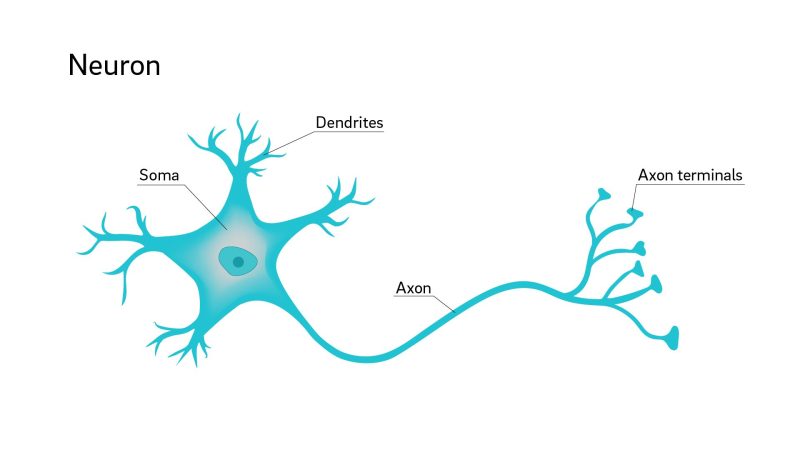
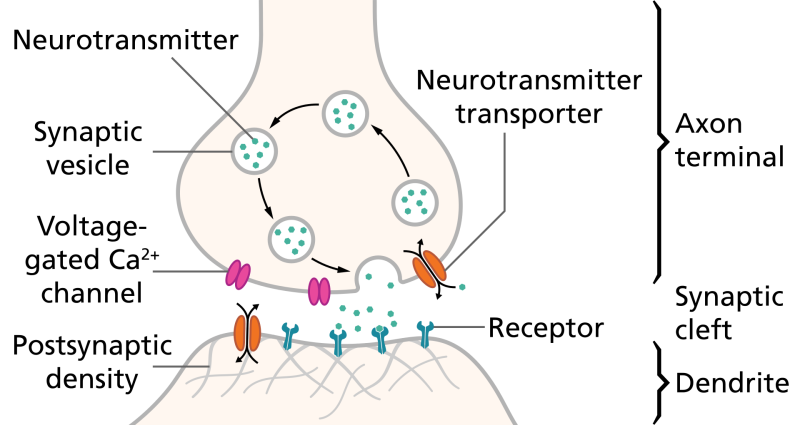
When specific neurons in the brain are stimulated by external or internal factors, the increase in static electrical potential across the plasma membrane of the neuron activates the adjacent synapse (the junction where the axon terminal of one neuron meets the dendrite terminal of another cell, known as a “synapse”) and causes the release of certain chemicals called “neurotransmitters.” The neurons adjacent to that synapse receive these neurotransmitters through “neurotransmitter receptors” on their dendrites, which in turn increases their membrane potential—meaning that they are also stimulated.
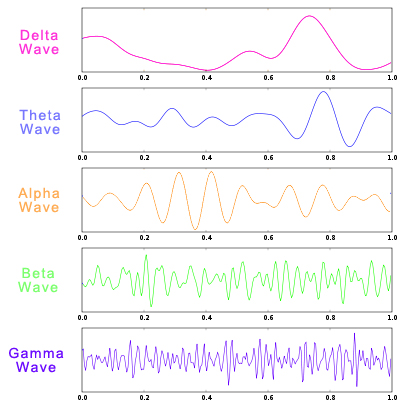
This sequence in which several neurons are stimulated together or successively is the physiological process behind “perception” (i.e., experiencing through senses, remembering something, thinking something new through logic, intuition, or imagination). Think of how a musician’s agile fingers play rhythmically on the keys of a harmonium—similarly, certain neurons in the brain can sometimes be excited in rhythmic patterns. In such cases, each neuron is stimulated repeatedly after certain intervals—the rhythm of this neural firing is called a “brain wave,” which can be of different types based on frequency.
Remembering, Thinking New Thoughts, Intuition, and Imagination:
The cerebral cortex of our brain is divided into several regions: the “frontal lobe,” “parietal lobe,” “occipital lobe,” and “temporal lobe.”
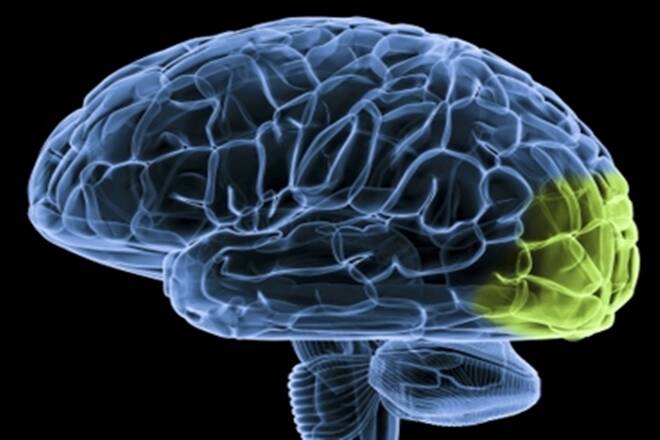
Close to the “visual cortex” located in the occipital lobe, there is a neural loop (a group of neurons connected in series to carry out a specific task by transmitting impulses from one part of the brain to another) that is used to process visual information as “short-term memory.” There is also a phonological neural loop, which works together with the “Broca’s area” in the frontal lobe to process auditory and language information as short-term memory. To clarify, let me explain what “short-term memory” is. To understand the meaning of this sentence as you read it, your brain needs to remember the start of the sentence even as you reach the end—the short-term memory in your brain accomplishes this by holding onto a small amount of information for a short time (10 to 15 seconds, or sometimes up to a minute).
The brain collects visual information through the eyes and stores it in “visual short-term memory,” which it then analyzes into two components: “spatial visual information” and “temporal visual information.” Similarly, the brain receives auditory and language information through the ears and stores it in “auditory short-term memory,” analyzing it into “spatial auditory information” and “temporal auditory information.” But how does the brain distinguish and analyze this information into spatial and temporal components? This process is enabled by a special kind of brain wave called the “gamma wave.” As mentioned earlier, among all the brain waves discovered so far, gamma waves have the highest frequency (40–100 Hz) and are present in our brain not only during dreaming and waking states but also alongside other brain waves during meditation!
Our various states—being awake, falling asleep, dreaming, waking up, or being in a meditative state—and the processing of information gathered by our five senses are managed primarily by the “cerebral cortex,” the “midbrain,” and the “thalamus,” which communicate with each other through several neural loops.
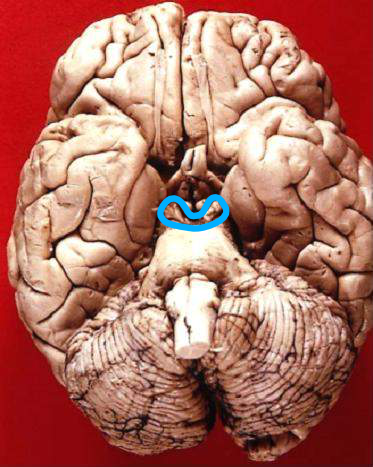
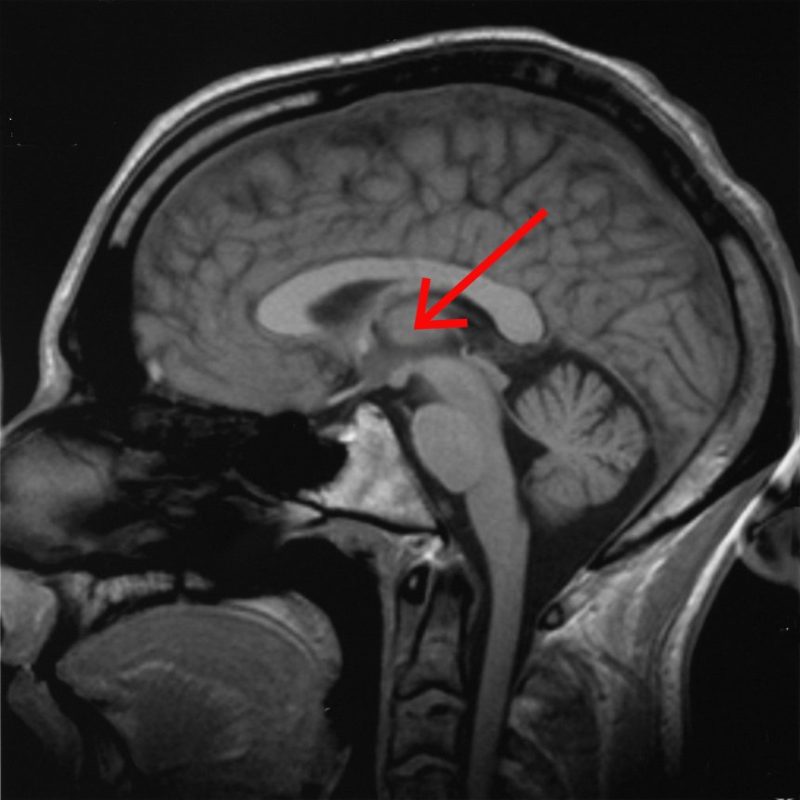
The neural loops connecting the cerebral cortex and the thalamus carry gamma waves that are responsible for creating spatial perceptions of collected visual, auditory, and language information. Gamma wave-carrying neural loops that link the cerebral cortex and midbrain, on the other hand, give rise to the experience of the temporal component of the information.
After analyzing the collected visual, auditory, and language information into spatial and temporal components, the spatial visual information is encoded in the brain’s “ventral intraparietal area” and “lateral intraparietal area,” and then sent to the central executive part of the “prefrontal cortex,” located at the front of the cerebral cortex’s frontal lobe. Similarly, the spatial auditory information is encoded in the “primary auditory cortex” and the “caudal auditory belt and parabelt,” before being sent to the same part of the prefrontal cortex. This central executive part uses all the encoded visual, auditory, and language information as search criteria to retrieve and decode relevant experiences (events, facts, or concepts) stored in “declarative long-term memory.” This process in the brain is called “remembering.” If, after retrieving and decoding this information, the central executive part of the prefrontal cortex re-encrypts it, the process is known as “thinking something new based on logic” (i.e., any new thought in the brain is essentially an encrypted form of one of its memories).
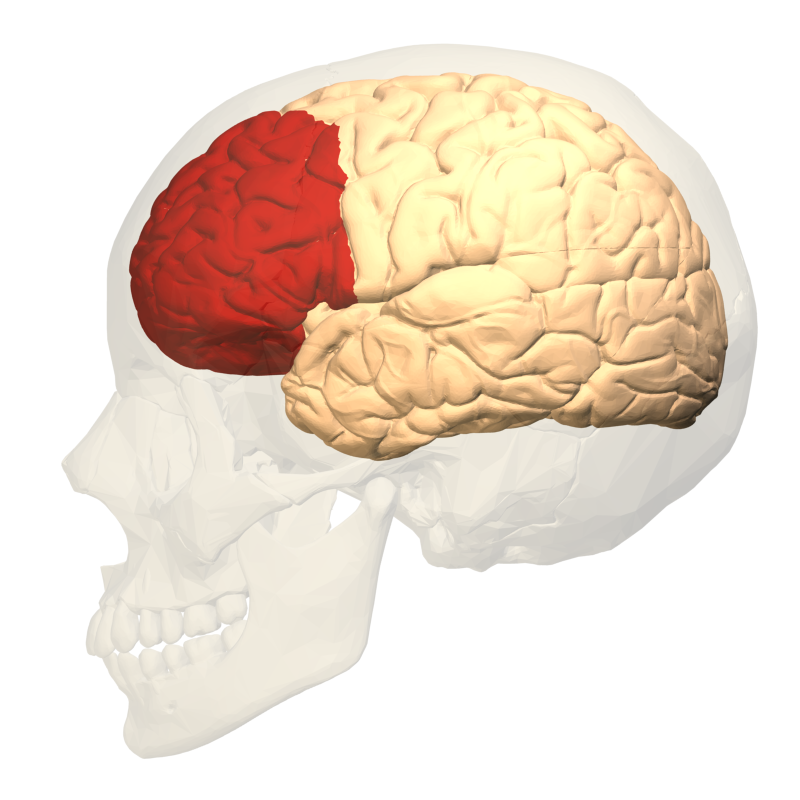
For the temporal component of auditory and language information, encoding first occurs in the “superior temporal sulcus” (based on time) and then in the “associative auditory cortex” (based on frequency), before arriving at the “visual cortex.” The polysensory part of the superior temporal sulcus also encodes the temporal components of visual information and sends them to the visual cortex. The visual cortex uses this encoded information as search criteria to retrieve and decode relevant skills or tasks stored as encoded information in the procedural long-term memory—this capacity of the brain is known as “intuition.” When the visual cortex re-encrypts this retrieved and decoded information for practical use, the process is called “imagination.”
The Brain’s Meditative State and the Benefits of Meditation:
No matter how many times a memory is recalled from declarative long-term memory, only specific active neurons are stimulated, and similarly, when decisions are made based on intuition, only certain active neurons are excited—because in these cases, only the decoding process takes place in the brain. However, when recalling short-term memories, imagining, or forming new ideas through logic, encryption occurs after every decoding event. Thus, in addition to the excitation of some active neurons, some inactive neurons are also activated. Therefore, it’s important for the brain to always have a pool of inactive neurons. During sleep, brain waves such as the 12 Hz “sigma wave” and the 0.5–2 Hz “delta wave” remove neurotransmitter receptors from less commonly used active neurons, making them inactive. However, this process sometimes causes less commonly used information in declarative long-term memory to be lost or for intuition to be impaired!
If we maintain a calm, relaxed mind and focus our attention on a specific object (such as an object, repeated words or sounds, our own breathing, the movement of our own limbs, the pace of our slow walk, or the imagery of a scene), less commonly used active neurons in the anterior, mid, and posterior parts of the brain begin to fire rhythmically at very low frequencies [in the anterior and mid-brain, this rhythmic firing is known as the “cortical theta brain wave” (about 3.5 or 4 Hz), while in the posterior part, it is known as the “alpha brain wave” (frequency 8–12 Hz)]. At the same time, gamma brain waves running through neural loops connecting the cerebral cortex and the thalamus create our perception of “space” or “distance,” while gamma brain waves in loops connecting the cerebral cortex and the midbrain create our sense of “time.” Collectively, these effects cause various ideas, emotions, and sensations to emerge and pass away in the mind one by one—this state of the brain is generally known as the meditative state. If, during meditation, these emerging ideas, emotions, or sensations are analyzed rather than simply observed, the cortical theta and alpha waves stop being produced and higher-frequency “beta waves” (12.5–39 Hz) begin to emerge, bringing the meditative state to an end!
Because less commonly used neurons are stimulated during meditation, practicing meditation regularly over a long period ensures that these neurons never become completely inactive. As a result, all information in the brain’s declarative long-term memory remains permanent and intuition is preserved. In this state, the brain generates new inactive neurons as needed to perform tasks such as recalling short-term memories, logical thinking, and imagination—a process known as “neurogenesis.” The coexistence of permanent long-term memories and an abundance of available inactive neurons capable of being recruited for new tasks grants the brain extraordinary memory, creativity, intuition, and logical creativity.
Deeper Meditative States:
A person who leads a disciplined life and practices regular meditation for many years can enter deeper meditative states, in which gamma waves, instead of being limited to previously mentioned neural loops, begin to dominate multiple regions of the brain, such as the “thalamus” and the “visual cortex,” suppressing the influence of cortical theta and alpha waves. If this state is maintained for a prolonged period and the thalamus even slightly damaged by these high-frequency gamma waves, the flow of gamma waves in the brain ceases permanently. As mentioned earlier, the flow of gamma waves is what creates the concepts of “space” and “time” in the brain. In fact, gamma waves create the “space-time continuum” in the brain by resonating between neural loops connecting the cerebral cortex and the thalamus and those connecting the cerebral cortex and the midbrain. Therefore, if gamma wave flow is permanently cut off, the brain’s concept of the “space-time continuum” also fades forever. In effect, the meditator’s brain enters a permanent “coma!”











This comment has been sanitized for the English site.
This comment has been sanitized for the English site.