


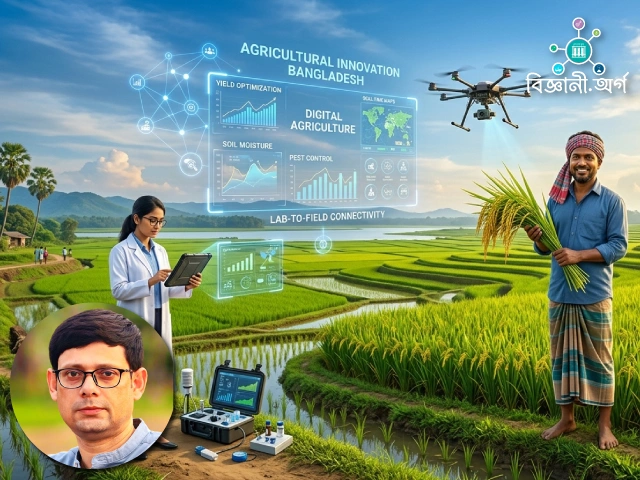
Science is not just in books—its power is only realized when it reaches the farmer’s hands, transforming food security and the future
Today, Bangladesh stands among the world’s top rice-producing countries and also holds a significant position in global vegetable production. According to the Food and Agriculture Organization (FAO) of the United Nations, Bangladesh is currently one of the leading producers of rice worldwide. Behind this success lies decades of tireless research and innovation by the country’s agricultural scientists. Once, ensuring food for around 75 million people was a major challenge; now, Bangladesh’s land feeds over 170 million people (BBS, 2023).
But the question remains—are these lab successes truly reaching farmers at the field level? This bridge between science and technology is now one of the key drivers of Bangladesh’s food security.
Numbers of Success & the Journey of Innovation
The wealth of agricultural research in Bangladesh is now acclaimed on the international stage. The Bangladesh Rice Research Institute (BRRI) has developed over 120 high-yielding rice varieties, many of which play a vital role in tackling the challenges of climate change (BRRI Annual Report, 2022).
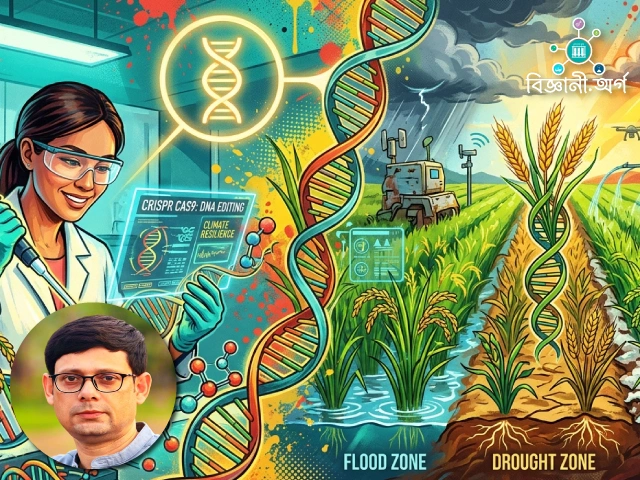
Combating Salinity & Drought: The invention of salt-tolerant rice varieties has opened new possibilities for agriculture in coastal areas. For example, BRRI dhan47, BRRI dhan61, BRRI dhan63, BRRI dhan97, BRRI dhan99, and BRRI dhan112 can yield about 4–5 tons per hectare even under saline conditions.
On the other hand, in the drought-prone northern regions, BRRI dhan43, BRRI dhan55, BRRI dhan56, BRRI dhan57, BRRI dhan66, BRRI dhan71, BRRI dhan83, and BINA dhan-17 have brought smiles to farmers’ faces.
Meanwhile, flood-tolerant varieties such as BRRI dhan51, BRRI dhan52, BRRI dhan79, BRRI dhan109, and BRRI dhan110 have provided vital alternatives for farmers.
Genome Sequencing: Bangladeshi scientists have made waves internationally by unlocking the complete genome sequence of tossa jute. This research will play a significant role in improving the quality of jute fiber and enhancing disease resistance in the future (Islam et al., Nature Communications, 2017).
Smart Agriculture: The adoption of digital technologies is also creating new possibilities in agriculture. Trials using drone technology for crop disease diagnosis and precise fertilizer application have already been successful. Additionally, IoT-based smart irrigation technology can automatically supply water by measuring soil moisture, potentially reducing irrigation costs by up to 30 percent.
The Real Challenge: Where Innovation Stalls
Despite these achievements, certain structural and social barriers prevent the full benefits of innovation from reaching farmers’ doorsteps. It is necessary to analyze these challenges:
1. Slow Pace of Technology Transfer (Extension Gap): On average, it takes 5–7 years for a new variety developed in the laboratory to reach the fields of ordinary farmers. According to the Department of Agricultural Extension (DAE), one Sub-Assistant Agriculture Officer serves an average of 800–1,000 farmers, making rapid dissemination of new technology difficult.
2. High Investment & Lack of Mechanization: Many modern agricultural machines are still beyond the reach of small farmers. The price of a combine harvester or rice transplanter can run into several lakhs of taka. Even with government subsidies of 50–70%, many machines cannot be fully utilized due to a shortage of skilled operators and lack of maintenance.
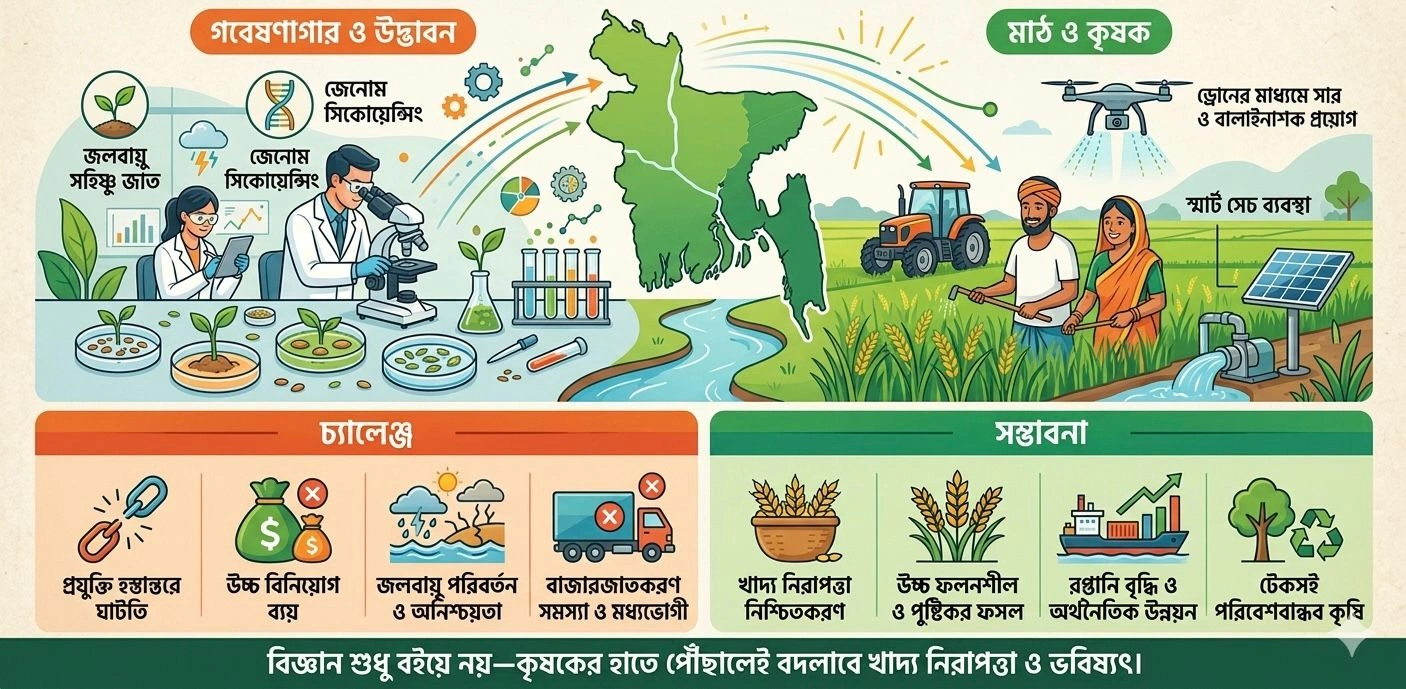
3. Reluctance to Embrace ICT: The average age of Bangladeshi farmers and their limited technological knowledge pose significant obstacles. Often, complex scientific terms or the interface of smart apps intimidate ordinary farmers. As a result, they feel more comfortable relying on traditional ‘trial and error’ methods than on modern techniques.
4. Market Distortions and Syndicates: According to a study by the Bangladesh Institute of Development Studies (BIDS), agricultural products have to pass through 3 to 4 steps to reach the consumer’s table. The dominance of middlemen deprives farmers of fair prices, discouraging them from investing in new technology.
The Way Forward: Taking Science to the Soil
To bridge this gap between laboratory and farmland, we must bring about a revolutionary change in the ‘Lab-to-Land’ model:
Big Data & Artificial Intelligence (AI): The smartphone in a farmer’s hand needs to be transformed into a mobile laboratory. For instance, a farmer could take a picture of a leaf with their smartphone and instantly diagnose plant diseases and get recommended actions. AI-based apps should enable farmers to receive instant solutions by photographing crop diseases.
Tech-driven Agripreneurs: Educated youth need to be encouraged to create agri-startups. The younger generation can play the most effective role in popularizing drone operation and smart farming concepts at the field level.
Public-Private Partnerships (PPP): Coordination between government research and private seed companies and tech firms is essential. This will facilitate easier commercialization of developed seeds and reduce costs.
Conclusion
The real impact of science is not in neatly stacked thesis papers or prestigious journal articles, but in the satisfied smiles of farmers. The ‘magic’ Bangladesh’s agricultural scientists are creating for the country’s soil must now reach every corner. To tackle the challenges of climate change and build a hunger-free, prosperous Bangladesh, science and the plough must advance hand in hand.
If effective connections can be established among laboratories, policymakers, and farmers, Bangladesh can become a global example of agricultural innovation.
Author:
Dr. Ripon Sikder,
Deputy Program Director (Seed), Partner Project, BADC, Dhaka






This comment has been sanitized for the English site.