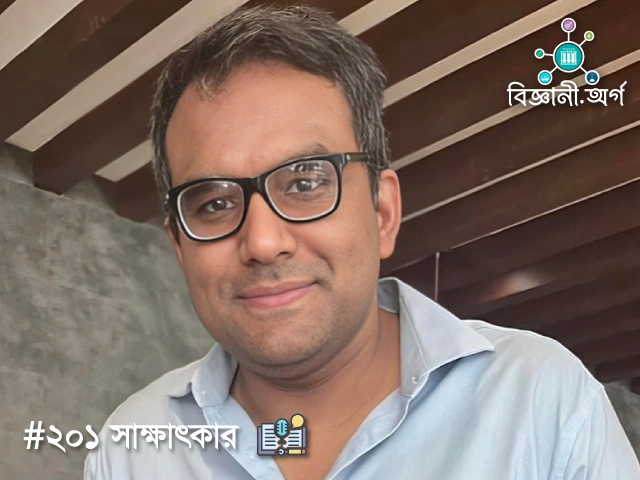
The world of technology is changing rapidly. The ability to think or make decisions like humans—these were once the stuff of science fiction. Today, however, scientists are developing technologies where machines not only analyze information but can also recognize objects from images—identifying people, roads, trees, buildings, and more. Researchers across the globe are working behind these achievements. Among them is Bangladeshi researcher Dr. Alimur Reza, who currently serves as an assistant professor at Drake University in Iowa, USA.
The main goal of Dr. Alimur Reza’s research can be summed up as teaching machines to “see” like humans. While this may sound strange, a large part of modern artificial intelligence research is currently centered around this very aim.
From Bangladesh to U.S. Research Labs
Dr. Alimur Reza began his academic and research journey in Bangladesh. He completed his undergraduate degree in Computer Science and Engineering at Bangladesh University of Engineering and Technology (BUET). Following that, he traveled to the United States for higher studies.
In the U.S., he first completed his master’s degree at Drexel University. Later, in 2018, he earned a PhD from George Mason University, Virginia. After finishing his PhD, he continued with three years of postdoctoral research at Indiana University Bloomington.
He then began his teaching career. Currently, he is a tenure-track assistant professor at Drake University, USA, where he teaches artificial intelligence and machine learning.
An interesting aspect of his research life is that, during his studies, he also held research internships at the U.S. Army Research Lab and at the multinational tech company 3M.
Artificial Intelligence: A Vast World
The primary field of Dr. Alimur Reza’s research is Artificial Intelligence (AI). But AI is a very broad area. It contains many subfields—such as machine learning, computer vision, robotics, and more. Dr. Reza works in a specialized branch known as Computer Vision. In simple terms, computer vision is a technology that teaches computers to understand the real world by analyzing images or video.
Let’s take a simple example. When we look at a picture, we can easily tell—there’s a person standing here, a tree beside him, and a house in the background. But for a computer, an image is just a collection of millions of pixels. Teaching the computer to recognize “person,” “tree,” or “house” from those pixels is the task of computer vision.
This technology is closely intertwined with machine learning and robotics. In Dr. Reza’s research, these three areas—
- Computer Vision
- Machine Learning
- Robotics
—work together.
Enabling Robots to Understand Their Surroundings
Dr. Reza’s PhD research focused on “Scene Understanding for Robotic Application”. Here, “scene” refers to the surrounding environment—in other words, how a robot perceives what’s around it. Imagine a future robot designed to work inside a home—cleaning rooms, bringing items, and so forth. The question is, how will the robot know where the table is, where people are, where the walls are? The solution involves a technology called Semantic Segmentation.
Simply put, this means breaking an image into smaller parts and assigning a separate identity to each part. For example—
- This part is a person
- This part is the floor
- This part is the wall
- This part is the table
When robots can analyze images in this way, they can operate much more effectively in real environments.
AI Underwater
Dr. Reza’s research is not limited to home or street environments. Recently, he has been working on the use of computer vision in Underwater Environments. Technology that operates underwater faces major challenges—lower light, different colors and shapes of objects, and a constantly shifting environment. To tackle these, his research team has developed a system that can identify various objects beneath the water’s surface.
There are many possible applications:
- Monitoring fish health
- Analyzing the behavior of marine animals
- Monitoring fish farming or aquaculture
- Ocean research
For instance, Nordic countries have large-scale fish farming industries. There, AI can be used to monitor fish health or behavior.
Building a 3D World from Images
Another important research field for Dr. Reza is 3D Reconstruction. This is a technology that allows the creation of three-dimensional models from regular photographs. Imagine you take a picture of a monument or a building. Using advanced algorithms, it’s possible to generate a complete 3D model of that building from the photos.
This technology is valuable in many areas:
- Virtual Reality
- Gaming
- Archaeology
- Architectural Planning
- Robot Navigation
In the future, we may reach a point where simply taking a few photos with a smartphone will allow anyone to create a complete 3D model of a place.
AI, Machine Learning & Deep Learning: What’s the Difference?
These three terms are frequently heard today, but for many people, the distinctions are unclear. Dr. Reza explains it simply as follows:
Artificial Intelligence (AI) is the overarching umbrella. Its goal is to develop intelligent technologies that behave like humans. A key part of AI is Machine Learning, where computers are taught to learn from data rather than being given hard rules. Deep Learning is an even more advanced area of machine learning, utilizing neural networks—structures inspired by the human brain. The history of this field began in 1958 with a simple neural model called the Perceptron. Over time, more complex networks were developed, such as:
- Convolutional Neural Network (CNN)
- Recurrent Neural Network (RNN)
- Transformer
Many of today’s cutting-edge AI technologies rely on these deep learning methods.
AI Careers: What Should You Learn?
For those interested in a career in AI or robotics, Dr. Reza’s advice is straightforward—first, build a strong foundation in STEM (Science, Technology, Engineering, Mathematics). After that, focus on three things:
1. Understanding Theory: Grasp the mathematical basis and algorithms of machine learning.
2. Practical Application: Don’t stop at theory; work with real-world datasets.
3. Programming Skills: Today, the most important language for AI research is Python.
Some key libraries are: Scikit-learn, PyTorch, TensorFlow. If you want to learn robotics, it’s not a problem if you don’t have a real robot. You can use various simulators—like Gazebo or Habitat.
Dhaka’s Traffic Jam: Can AI Be a Solution?
On the subject of Dhaka traffic congestion, Dr. Reza offers a realistic perspective. In his view, it’s not just a technological issue—it’s a demographic problem. That is, the city’s population exceeds its capacity. However, technology can help in some aspects. For example: tracking vehicles with cameras, automated toll collection, and monitoring enforcement of traffic rules. Many cities worldwide already use computer vision for such systems.
AI: Opportunity or Threat?
The misuse of artificial intelligence is now a topic of global discussion. Dr. Reza believes that AI is somewhat like a “Pandora’s Box”—once opened, it’s impossible to fully close. Therefore, the solution is not to stop technological progress, but to use it responsibly. He mentions the cautionary notes of Nobel laureate Geoffrey Hinton, who warns that future machine intelligence may spread knowledge faster than humans—because digital systems can easily copy knowledge from one machine to another. On the other hand, AI researcher Yann LeCun believes that if used correctly, AI will bring tremendous benefits to humanity.
Not Just a Degree, but a Passion for Learning
Speaking about higher education in Bangladesh, Dr. Reza raises an important point. In his view, going to university solely for certificates or degrees is meaningless. The purpose of higher education should be knowledge acquisition, research, and developing problem-solving skills. If one collects only degrees, neither the individual nor society benefits.
Future Research
Dr. Alimur Reza’s research focus will continue in three main areas:
- Semantic Segmentation
- Computer Vision
- 3D Reconstruction
These technologies will play a crucial role in the future of robotics, autonomous vehicles, virtual reality, and smart city development.
Inspiration for Young People
The journey of Dr. Alimur Reza from a student at a Bangladeshi university to a professor in an American research lab is not just a story of personal achievement. It demonstrates that with knowledge, perseverance, and curiosity, young researchers can contribute to world-class scientific endeavors. For today’s Bangladeshi youth, his story provides an important lesson—
The future of technology is not built only in laboratories of advanced countries; with the right preparation, Bangladeshi youth can also play a vital role in shaping that future.
Contact Information
📧 Email: [email protected]
🔗 Profile Links
🎓 Google Scholar: https://scholar.google.com/citations?user=RXcEJocAAAAJ&hl=en
💼 LinkedIn: https://www.linkedin.com/in/alimoor-reza/
🌐 Website: https://analytics.drake.edu/~reza/
The interview was conducted on October 25, 2024. The interviewer was Jamil Reza.
Watch Dr. Alimur Reza’s interview video on YouTube at the link below: 👇👇👇