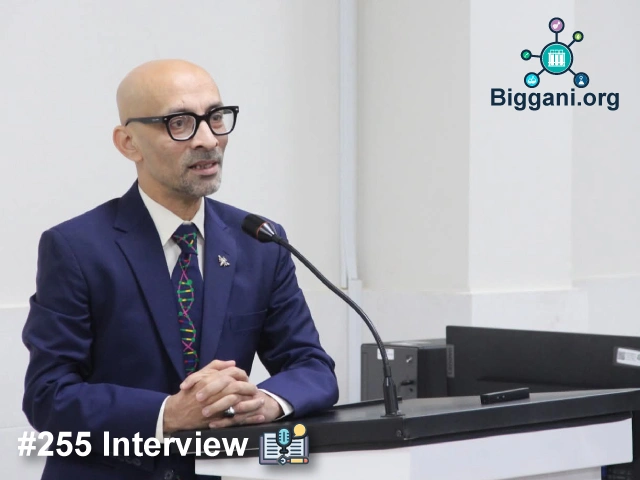
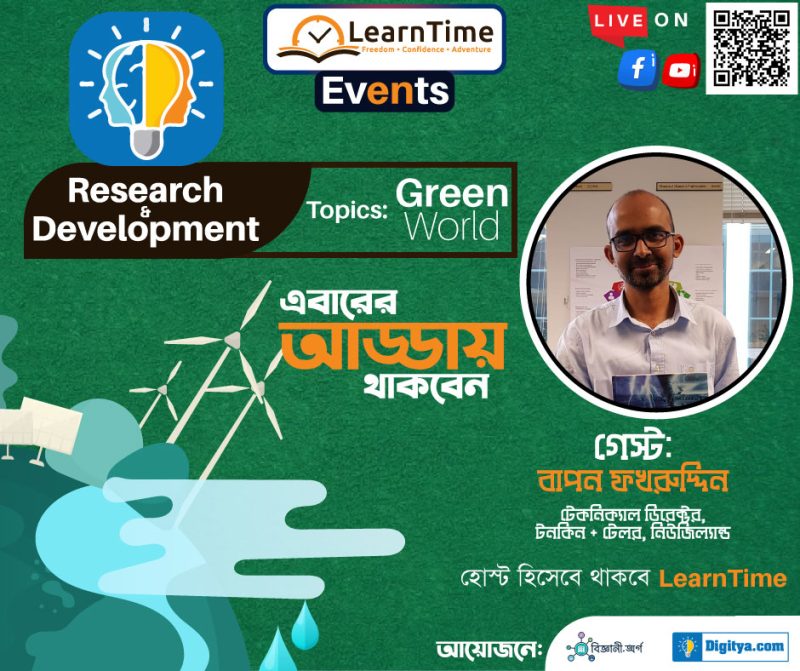
Bapon Fakhruddin, PhD – Technologist in DRR and Climate Resilience. Dr. Fakhruddin is a specialist in climate change risk assessment, with 19 years of global experience working in disaster risk management and climate resilience projects. This experience is a significant advantage in developing climate change adaptation and mitigation strategies. His main areas of expertise include climate and hydrological assessment, early warning and emergency response, climate change adaptation, and capacity building. Dr. Fakhruddin has designed early warning and emergency response projects in more than 25 countries across Asia and the Pacific. He is currently working as Technical Director – Disaster Risk and Climate Resilience at Tonkin + Taylor International in New Zealand, and serves as a consultant and supervisor for postgraduate studies in Disaster Risk Management at the University of Auckland (UoA). He is a steering group member of the UNDRR Global Risk Assessment Framework (GRAF). He is also Co-Chair for Disaster Risk Data and Hazard Interpretation and Applications (RIA) in the ISC/UNDRR IRDR Working Group, and Co-Chair of the CODATA Task Group on Fire Data for disaster risk research.
Question 1. You are a hydrologist. As a specialist in hydrology, disaster, and climate risk management, you have 13 years of experience. What is your story behind becoming a hydrologist?
2. Please tell us about your long years of experience.
3. You completed your graduation in Civil Engineering and post-graduation in Water Engineering from AIT in Thailand. What made you switch from Civil Engineering to Water Engineering?
4. What was the learning environment like at AIT in Thailand?
5. You have a PGD in Integrated Water Resources Management from United Nations University in Canada, and a PhD in Water Engineering and Management. Could you share your experience there?
6. You are a certified instructor in ICS with the United States Forest Service (USFS). Could you share your work experience there?
7. As a hydrologist, you have experience working in disaster and climate risk management in over 15 countries. Can you tell us about that?
8. Currently, you are working as a system developer for the World Meteorological Organization’s (WMO) Coastal Induction Forecasting Demonstration Project (CIDDP). What is your experience working here?
9. Before joining the WMO, you worked with many organizations, such as the University Corporation for Atmospheric Research (UCAR) USA, The United States Agency for International Development (USAID), Regional Integrated Multi-Hazard Early Warning System (RIMES), Asian Disaster Preparedness Center (ADPC), International Federation of Red Cross and Red Crescent Societies (IFRC), Sri Lanka, US Forest Service (USFS), OXFAM-Hong Kong, AECOM International USA, CEGIS, and FFWC of BWDB, Bangladesh. How did you manage to get opportunities to work in so many organizations?
10. Which direction is your field heading now, and where do you think it will go in the future?
11. What kinds of effective short-term and long-term measures do you think should be taken to address natural disasters?
12. What was your childhood and adolescence like, and where did you grow up?
13. If you could share the story of your long educational journey, from primary school to higher education, with its many ups and downs?
14. How do you evaluate your parents’ contribution in your life?
15. What do you think young people should do to overcome unemployment?
16. Should one chase after success or skills?
17. What do you understand by soft skills? What needs to be done to acquire them?
18. What is leadership? Why is it necessary? How can it be achieved?
19. What is your advice for young people?
In the interview with Mr. Bapon Fakhruddin, he recalls memories from his childhood and adolescence. His journey toward an enlightened life began in those growing years. He graduated in Civil Engineering from what was then Khulna Engineering College (now KUET). Keen on Water Engineering, he completed his post-graduation in Water Engineering from AIT in Thailand. He went on to earn a PGD in Integrated Water Resources Management and a PhD in Water Engineering and Management from United Nations University in Canada. Through his interview, we learn many important aspects of the education system and learning environments of those countries. He shares the stories and experiences behind his work in so many national, international, and global organizations. He offers young people advice on skill development, reflecting on the ups and downs of his own life. He recalls some early experiences of pursuing higher education abroad. His career has given him the opportunity to work in about 15 countries, and, while reflecting, he compares and contrasts conditions in different countries. He expresses much hope for disaster management in Bangladesh and shares some effective strategies to reduce unemployment. In short, the key lessons from the life experience of a successful person like Mr. Bapon Fakhruddin will inspire young people to overcome the obstacles of life and move them forward on the path to success. This life-oriented interview will encourage young people to dream and act as a guide toward achieving those dreams.