A silent revolution for food security, nutrition, and climate resilience
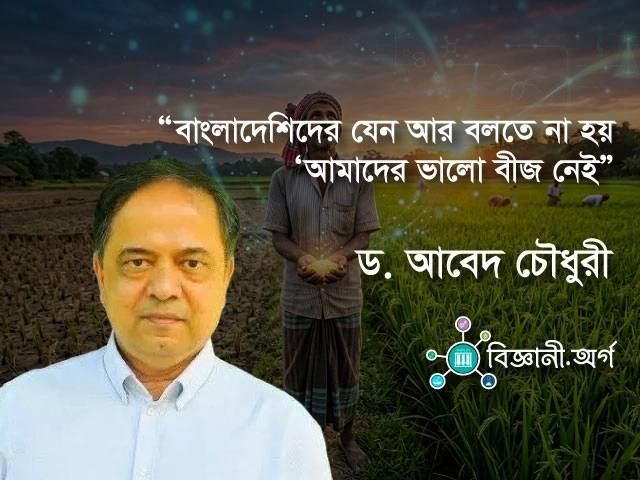
Imagine if, one day, all the rice seeds in your village suddenly vanished. Farmers are ready to go to the fields, but there are no seeds. What would happen then? This is one of the most pressing realities in today’s world. Due to climate change, floods, droughts, and a market-dependent seed system, we’re gradually losing our own local seed resources.
Amidst this crisis, a silent revolution has begun: the “Community Seed Bank.”
What is a Community Seed Bank?
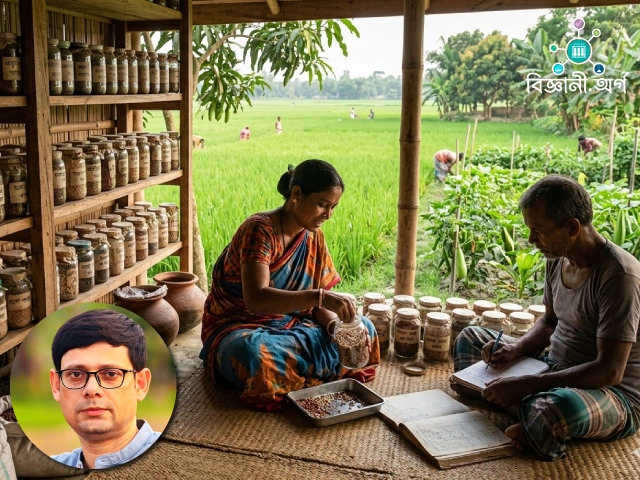
A Community Seed Bank is a system managed by farmers themselves, where local and traditional seeds are collected, preserved, and distributed.
In contrast to commercial seed systems, these banks:
- Preserve local varieties
- Emphasize climate-resilient crops
- Return control of seeds to the farmers
Simply put, it’s not just a bank—
it’s a symbol of the freedom and security of the farmer.
Why is this important for Bangladesh?
In Bangladesh, nearly 40% of the population is involved in agriculture. In the face of challenges like climate change, salinity, floods, and droughts, our agricultural system is at risk.
In these circumstances, commercial seeds don’t always work. But local varieties?
- Kataribhog
- Tulsimala
- Binny
- Radhunipagol are notable examples
These are not just tasty—they are our climate warriors.
Not just food, it’s a fight for nutrition
Community Seed Banks are bringing lost nutrition back to our plates.
For example:
- Carambola (Starfruit)
- Tamarind
- Native guava
- Falsa (Grewia asiatica)
These are not just fruits—
They are powerful weapons against rural malnutrition.
Success stories from around the world
Community Seed Banks have already seen success in various countries:
- Nepal: After the earthquake, farmers restored agriculture with preserved seeds
- India: Women farmers lead seed preservation and economic empowerment
- Africa: Drought-tolerant crops have been revived
These examples prove one point: “Who controls the seed controls the future.”
Progress in Bangladesh: The Role of Government and Projects
This concept is gradually gaining strength in Bangladesh as well.
Notable initiatives include:
- BADC (Bangladesh Agricultural Development Corporation)
- NGOs like UBINIG, BARCIK
- PARTNER project (with support from the World Bank)
- Formation of farmer groups
- Local seed production
- Training and capacity building
- Even urban seed banks have been established in Dhaka.
Research vs. Reality: A Critical Gap
In Bangladesh:
- Over 8,000 rice germplasms at BRRI
- Huge collection of fruits and vegetables at BARI
But the problem is:
These seeds don’t always reach the farmers.
Here’s where Community Seed Banks act as a “bridge”.
The Road Ahead: What Needs to Be Done?
To make Community Seed Banks successful, we need:
- Policy support—government recognition and funding
- Research linkage—coordination with BRRI and BARI
- Farmer training—skills in seed conservation and production
- Market access—branding and market creation for local crops
Final Words: The Key to the Future Lies in Seeds
The future of agriculture will not depend solely on technology—it will rely on diversity, local knowledge, and farmer empowerment.
Community Seed Banks are lighting the way forward.
If we can strengthen this initiative today, we can ensure—
food security, nutrition, and a sustainable planet for future generations.
Author:
Dr. Ripon Sikder,
Deputy Program Director (Seed), PARTNER Project, BADC, Dhaka