


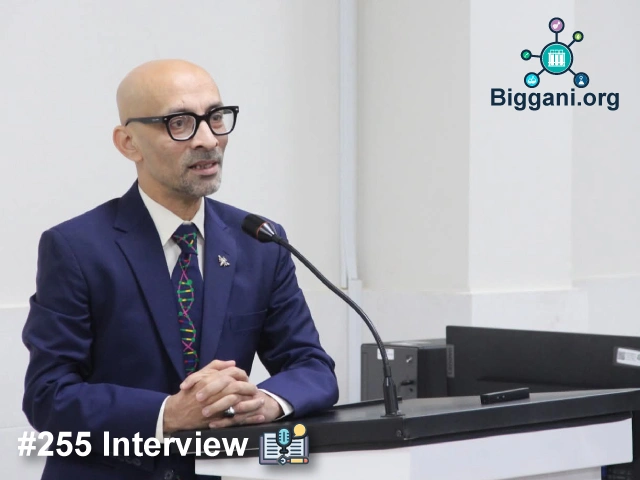
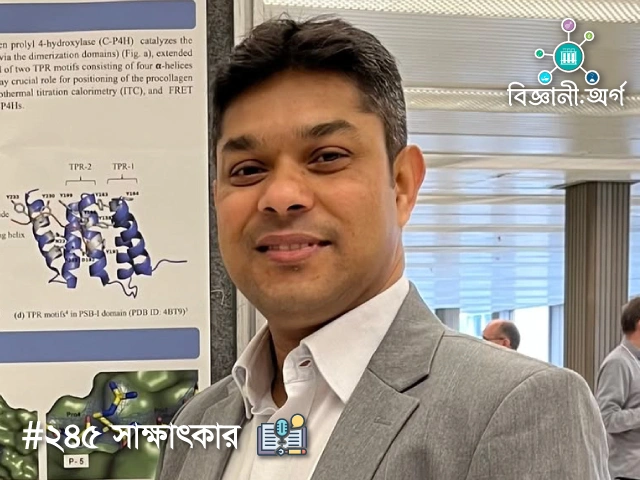
Dr. Abdullah A. Kafi is currently serving as a Research Academic in Carbon Fiber Processing and Composite Manufacturing at the Australian Future Fibres Research and Innovation Centre (AFFRIC) at Deakin University, Australia. He earned his bachelor’s degree in Chemical Engineering and Polymer Science from Shahjalal University of Science and Technology in Bangladesh and completed his PhD in Materials Science and Engineering (Composites) from Deakin University in 2010.
Dr. Kafi’s main research goal is to understand the interface between natural fibers—especially jute—and polymeric matrices, as well as to develop advanced composite materials. He has investigated the fundamental principles of wetting and adhesion in composites and has introduced jute as a promising reinforcing fiber to the international scientific and industrial communities. Dr. Kafi previously worked at the Bangladesh Atomic Energy Commission and currently lives in Melbourne, Australia with his family.
💬 Q&A Session:
Question: Tell us about your childhood and your most inspiring memory from that time.
Answer: I spent a large portion of my childhood in residential areas adjacent to jute mills, where my father worked. Living in different districts allowed me to meet people from various social and religious backgrounds. In 1990, my father predicted that without the right steps, the golden era of jute would come to an end. That experience inspired my commitment to research and serving society.
Question: What childhood moments do you miss that you wish your own child could enjoy?
Answer: I especially miss times spent with family—fishing, long conversations, playing badminton, watching movies, and the constant sound of jute mill machinery.
Question: What are the important outcomes of your research, and how have they impacted innovation?
Answer: During my PhD, I used statistical thermodynamic models to understand wetting and adhesion in composites. I predicted the interactions between fiber and polymeric matrix, optimized production processes, and developed improved biofiber composites. My research demonstrated that jute can be used effectively as a reinforcing fiber.
Question: How should education’s social responsibility be shaped to address rising economic inequality?
Answer: There should be less distance between students and teachers. In Bangladesh, the extra respect I showed to teachers sometimes created barriers to understanding; in Australia, a collaborative approach leads to better results.
Question: Has education failed to build our civic society?
Answer: Our education system should incorporate empathy and practical learning. The foundation should be built from the primary level, with less pressure on reading large books and more connection between learning and real-life examples.
Question: Can microcredit eliminate poverty?
Answer: Professor Yunus’s initiatives have opened new doors, but continuous monitoring is necessary so that people don’t feel burdened by high interest rates.
Question: How can Bangladeshi universities build a better tomorrow?
Answer: More emphasis should be placed on research, creating practical connections to industry, and recruitment of faculty should focus on research and academic qualifications rather than politics. High-quality research should be supported and underperforming institutions should be monitored.
Question: What are the current challenges and opportunities in your research?
Answer: The main challenges are bench-scale simulation of fiber preparation processes and limited raw material data. I overcome these through regular literature review, collaborations with industry and academia, and trial-and-error experiments.
Question: Advice for students interested in higher education and changing the world?
Answer: Love and respect your work or studies, be persistent, and believe in yourself. Life is a continuous learning process.
Question: Would you like to add anything else?
Answer: I have really enjoyed today’s conversation. I look forward to more dialogues in the future.
🔗 Profile Link:
ResearchGate Profile
Dr. Abdullah A. Kafi’s research connects fundamental science to practical innovation, especially in the field of jute fiber composites. His work bridges sustainable materials and social responsibility. The Biggani.org team wishes Dr. Kafi all the best in his research. May his efforts inspire young scientists in Bangladesh.
Advancing Composites with Jute: A Conversation with Dr. Abdullah A. Kafi
Dr. Abdullah A. Kafi is a Research Academic specializing in Carbon Fibre Processing and the Manufacturing of Composites at the Australian Future Fibres Research and Innovation Centre (AFFRIC), Deakin University, Australia. He completed his Bachelor’s degree in Chemical Engineering and Polymer Science from Shah Jalal University of Science and Technology, Bangladesh, and earned his PhD in Materials Science and Engineering (Composites) from Deakin University in 2010.
Dr. Kafi’s research focuses on the interface between natural fibers, particularly jute, and polymeric matrices in composite materials. His work has contributed to understanding the fundamental mechanisms of wetting and adhesion in composites and optimizing biofiber-reinforced materials for enhanced performance. Dr. Kafi has introduced jute as a viable reinforcing fiber to both scientific and industrial communities, advancing sustainable material solutions. He previously worked at the Bangladesh Atomic Energy Commission and currently resides in Melbourne, Australia, with his family.
💬 Q&A Session:
Q: Dr Abdullah-Al Kafi – welcome to biggani.org. Tell us about your childhood and the most inspiring childhood memory.
A: I spent much of my childhood in industry-controlled residential areas as my father worked in several jute mills. Moving between districts gave me the opportunity to interact with people from diverse socio-economic and religious backgrounds. I remember my father’s dedication to jute and his prediction in 1990 that jute’s peak era would end without proper product diversification. That awareness instilled in me empathy and the motivation to contribute meaningfully to society through my research.
Q: What do you miss from your own childhood that you wish your child could experience?
A: I miss the times spent with family—fishing, long conversations at the dining table, playing badminton, watching movies together, and especially hearing the continuous sounds of weaving or spinning machines in jute mills.
Q: What are your critical research findings, and how do they impact innovation?
A: During my PhD, I studied statistical thermodynamic models to understand wetting and adhesion in composites. I successfully predicted interactions between fibers and polymeric matrices, optimized manufacturing processes, and improved biofiber-reinforced composites. My work has highlighted jute as a competitive reinforcing fiber, contributing to sustainable material innovation globally.
Q: Do we need more socially responsible teacher-student and education-business models to address emerging economic inequalities?
A: There should be fewer gaps between teachers and students to tackle inequality. I observed that the respectful distance I maintained in my education in Bangladesh sometimes hindered understanding, while in Australia, a collaborative approach fostered better learning outcomes.
Q: Has education failed to build a civil society, and how can extreme inequality be overcome?
A: Education must focus on empathy and practical learning. The current system often overloads students. We should teach foundational knowledge from primary school, incorporate real-life applications, and make learning interesting through demonstrations rather than excessive rote study.
Q: Can microcredit eliminate poverty, and what other alternatives exist?
A: Prof. Yunus’s microcredit initiatives have opened new opportunities for struggling communities. However, proper monitoring is essential to ensure people are not burdened by high interest rates.
Q: What should Bangladeshi universities do to build a better tomorrow?
A: Universities should emphasize research over teaching, link students with industry through practical placements, recruit faculty based on academic merit rather than politics, and establish professional collaborations nationally and internationally. The government should monitor performance and support high-quality research initiatives while phasing out low-performing institutions.
Q: How do you view your current research commitments and challenges?
A: Simulating fiber-making processes at bench scale and accessing high-quality raw material information are key challenges. I address these through continuous academic and industry engagement, literature review, and systematic trial-and-error experimentation.
Q: What advice do you have for prospective students or teachers aspiring to higher education and global impact?
A: Love and respect your work, stay persistent, and trust in yourself. Life is a continuous learning process, and confidence comes through consistent effort, not comparison with others.
Q: Any final thoughts for our readers?
A: It has been excellent answering your questions. I look forward to more interactions in the future.
🔗 Profile Link:
ResearchGate Profile
Dr. Abdullah A. Kafi’s work bridges fundamental science with practical innovation, particularly in sustainable composites reinforced by natural fibers. His research demonstrates the potential of jute in global materials engineering while emphasizing the importance of empathy and social responsibility in education. The biggani.org team extends its best wishes to Dr. Kafi for continued success, hoping his dedication inspires young scientists in Bangladesh and worldwide.
Shafiul Islam
Email: [email protected]
Website: textek.weebly.com
LinkedIn: www.linkedin.com/in/shafiul2009




Wonderful! Life is a continuous process of learning.
Greetings Salma Akter,
Thanks for your inspirational thoughts.