



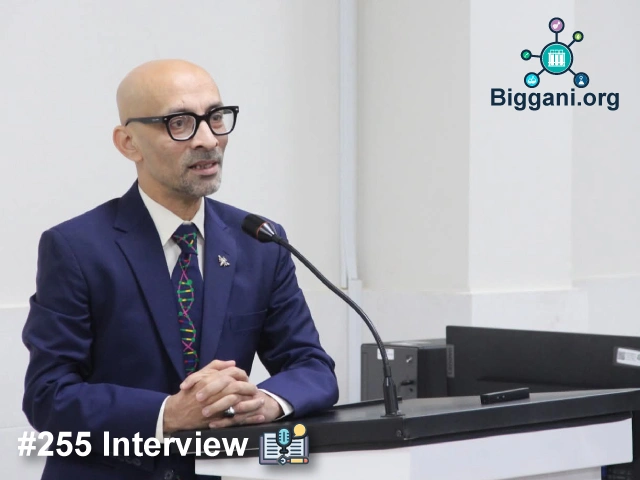
For many of us, Bangladeshi agriculture conjures up romantic images—paddy fields, riverbanks, and mud-soaked rural landscapes. Yet, within this agriculture lies the core of the nation’s food security, economic foundation, and the livelihood of millions. At the heart of it all is “seed”—the most fundamental element of farming, and the area of research in which Bangladeshi scientist Dr. Abed Chowdhury has made significant contributions to global science. Although his life journey shines with the light of international research, the focal point of his thoughts remains Bangladesh’s fields, farmers, and the ongoing seed crisis.
From Dhaka University to the World Stage
Dr. Abed Chowdhury began his academic life in the Department of Chemistry at Dhaka University. There, he built the foundation of his understanding of science. For higher studies, he moved to the United States, where his interests shifted from chemistry to life sciences. Studying biology at the University of Oregon, he then had the opportunity to work in top research institutes such as the National Institutes of Health (NIH) and the Massachusetts Institute of Technology (MIT). Later, he started his permanent research career in Australia, joining CSIRO (Commonwealth Scientific and Industrial Research Organization), the country’s national research agency.
After arriving in Australia in 1989, he began work in a specific branch of botany—plant molecular biology. Simply put, this field studies how the biological processes of life operate at the genetic and cellular levels within plants. Just as human bodies are made of cells, each part of a plant is governed by a complex set of genetic instructions.
The Mystery of Seed Formation and New Science
Dr. Abed Chowdhury’s main research focus is seeds—how seeds are formed and which genes control this process. Generally, it is known that a plant produces seed when pollen from the male organ fertilizes the female organ of the flower. However, in nature, there are also plants that can produce seeds without any involvement from the male part. This process is called “apomixis.” It is somewhat akin to a mother giving birth to a replica of herself, without a father’s role.
Dr. Abed and his colleagues have discovered several genes involved in this process, known as “FIS-class genes.” These genes have helped elucidate the complex regulatory mechanisms inside seed formation. Over the past decade, this research has opened up a new horizon in plant science. If the trait of apomixis can be introduced into staple crops like rice or wheat, then, once high-quality seeds are produced, it will be possible to obtain crops of consistent quality over and over again. This would reduce costs for farmers, increase production, and strengthen food security.
Bangladesh’s Seed Crisis: The Hard Reality of Statistics
Dr. Abed Chowdhury’s research is not confined to the laboratory. Whenever he visits rural areas and talks to farmers, one persistent crisis troubles him—the lack of quality seeds in Bangladesh. Government statistics show that only about 20 percent of the total demand for seeds can be supplied through formal channels. The situation is even worse for potato seeds—just 3 percent. For pulses, only about 1 percent of the required seeds are supplied, and for oil seeds, the supply is extremely low compared to demand.
What does this mean? It means that most farmers save seeds from their own fields each year to use in the next season. This increases the risk of declining yields and raises the chances of spreading diseases. Without good seeds, the farmer’s hard work and soil fertility cannot be fully realized. It is from this reality that Dr. Abed Chowdhury has felt a scientist’s responsibility to stand with the country on the issue of seeds.
“Krishan”: The Meeting Point of Science and Business
This concern led him to plan the creation of an initiative called “Krishan.” The goal is to provide quality seeds to farmers at fair prices. In his view, unless a sustainable business model is created around seeds, there will not be large-scale investment in agriculture. Just as people do not make their own toothbrushes or fertilizers, the production of quality seeds can also be done by specialized organizations. However, one condition must be met—farmers should not fall victim to monopolies; they must have alternatives and access to fair pricing.
There is fear among many regarding the seed business—that once a farmer buys seeds from a company, he will become dependent on that company each year. Dr. Abed believes that just because there is business does not mean there will be exploitation. Rather, there needs to be correct policies and oversight so that farmers get the highest quality seeds and no entity profits excessively at their expense.
Urban-Rural Divide: The Social Realities Behind Agriculture
Dr. Abed Chowdhury sees a deep social reason behind agriculture’s stagnation—the distance between cities and villages. Among Bangladesh’s educated and affluent classes, direct connection to real rural life has diminished. Agriculture is often seen as “backward” or lesser work. As a result, talented youth move to the cities, and the flow of new ideas and technology into agriculture shrinks.
In advanced countries, there is a relationship of mutual respect and cooperation between city and village. He emphasizes the need to restore such relationships in Bangladesh. He believes that neglecting the villages will make agricultural development impossible, and if agriculture is neglected, the country’s overall progress will also be hampered.
A Message for Future Generations
Dr. Abed Chowdhury’s advice is simple yet profound—go back to nature. Bangladesh’s true nature is found in its villages. He urges young people to visit villages, interact with people, and build friendships with local schoolchildren. This not only builds empathy, but also creates opportunities to understand the country’s real problems. From this understanding, future scientists, policymakers, and entrepreneurs will be able to devise practical solutions for the nation.
Final Words
Dr. Abed Chowdhury’s life demonstrates that even after reaching the top of international research, one can remain dedicated to their country. The light of his laboratory and the scent of Bangladeshi village soil—both are part of his thinking. Just as every seed contains the possibility of a new plant, so too does his vision hold new opportunities for Bangladeshi agriculture. This journey is not just a story of one scientist’s personal success; it is a call to the young generation of Bangladesh—not to forget their roots, but to step onto the world stage with pride.
The interview was conducted by Dr. Moshiur Rahman for Biggani.org on July 25, 2007.
Some links related to Dr. Abed Chowdhury:
- Essay by Dr. Abed Chowdhury in “Priyo Australia”
- Article by Dr. Abed Chowdhury published in Holyday
- Article by Dr. Abed Chowdhury published in Holyday
- An essay by Dr. Abed on International Mother Language Day (Ekushey February)
- Dr. Abed’s Kanihati website
- Dr. Abed’s paper published in Nature. Note that Nature is a top-tier scientific journal.









In agriculture field you are great. Highly congratulation to you from the student of Sher-e Bangla Agricultural University, Dhaka.
thank you for share d.abed chy r interview. if very helpfull for our country and people.i know a company theyare also help out youth From the curse of unemployment.
i think you should try this.
visit:https://www.changetechbd.com/