Biggani.org: Greetings from Biggani.org! Thank you for agreeing to this interview. To start with, please tell us a little about yourself.
Dr. Hasan Shahid: Thank you to Biggani.org for giving me the opportunity for this interview. It’s truly inspiring to see such initiatives in our country that bring science before society and enthusiasts.
I was born in Hanuya village, under Bagerganj police station in Barisal. I completed my primary education at the local Hanuya Motijan School and started my secondary education there as well. Later, I graduated SSC and HSC from Barisal Cadet College, securing a third place in the combined merit list of then Jessore Board in both exams. I completed my honors and master’s from the Department of Applied Physics and Electronics at the University of Dhaka, standing first in first class in both. I also taught for a brief period in this department.
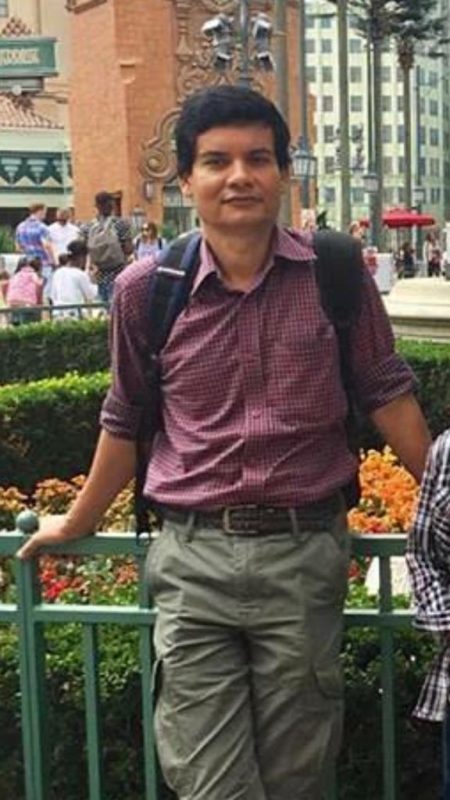
Alongside my studies, I was always keen on writing about science, technology, and the environment. During my university days, I worked as a contributing editor at the monthly magazine Computer Jagat, where I wrote numerous articles on computers and communication. I co-authored two books on computer science with my teachers. Additionally, I have won several national writing competitions. These include winning the gold medal from Bangladesh Tourism Corporation for an essay titled “The Role of Tourism in Economic Development”; first prize from the private organization ‘Commitment’ for a piece on the environment; consecutive awards from UNFPA (a United Nations Organization subsidiary) for two years for articles on population explosion and environmental issues. Since coming here, I’ve written extensively on aliens and space; two of my books, “Possibility and Search for Aliens” and “The Wonders of Space,” have been published by Samay Prokashoni.
Currently, most of my time is spent on research. In 2016, the Annie Scientific Secretariat shortlisted me for the “Annie Award” for my research on renewable energy—regarded as the world’s most prestigious award in this field. Additionally, BBPI-100 listed me twice (2014 and 2015) in its British Bangladeshi Power & Inspiration-100. I still have a strong inclination towards writing, though at the moment it’s difficult to find time. However, I do keep sketches of articles on various subjects. Not all are about science; they’re mostly about society, social irregularities, and reflections on life. I hope to complete these when time allows. [/box]
Biggani.org: You did your PhD at University of Sheffield. What was your research focus there? Could you tell us a bit about your discoveries?
Dr. Hasan Shahid: My primary research in Sheffield was on robot control using artificial intelligence (AI). Robots meant for space or medical fields need to be extremely lightweight. One issue with lightweight robots is vibration. The main goal of my research was the ultra-precise control and vibration reduction of such lightweight robots. Based on my PhD research, five of my papers were published in relevant journals, and aspects of this research have been presented at around ten international conferences. [/box]
Biggani.org: Currently, you are researching robotics. Could you elaborate on the specific fields where you’re focusing robotic applications?
Dr. Hasan Shahid: The fields of robotics I’m working on include aerial robots, solar aerial robots, master-slave robots, capsule robots, robotic retractors, and prosthetic robotic hands.
You have a separate question about aerial robots, so I’ll discuss the others here.
A system where one robot imitates the actions of another is called a master-slave robot. The master controls the slave, meaning the slave follows the master’s actions. These robots are ideal for tasks in environments unsafe for humans, such as nuclear power plants or minefields. The slave robot can be sent to these places, with the operator controlling it safely from a distance using the master robot. Whatever the operator does with the master, the slave replicates. Master-slave robots could also be used for caring for elderly or immobile people. With the rising average age of the world’s population, the number of elderly people is increasing, as is the number of people who have limited mobility due to birth defects, disease, or accidents. Modern life’s pressures mean there is a shortage of people to care for the elderly—already a major problem in developed countries. Scientists see hope in tackling this with master-slave robots, where the master works as a remote controller. Using it, an elderly or immobile person could have the slave robot make tea, bring things, open doors, call someone, remind them of their daily schedule, or play music. Under my supervision, a small master-slave robot has been developed, one student is about to complete their PhD on it, and another PhD researcher will join my team this September.
The capsule robot I’m working on is called the Robotic Active Capsule Endoscope (RaCE). For short, we call it ‘RaCE.’ Alongside me, a consultant surgeon from Royal London Hospital is also part of the research. He performs surgeries to remove cancers from the large intestine (colon). Like other cancers, early detection of colon cancer makes it much easier to cure. Such cancers are usually diagnosed via colonoscopy/endoscopy or, more recently, pill-cam—a capsule with a camera. Patients swallow it like a regular capsule, and as it passes through the alimentary canal, it transmits images of the passage. By analyzing these images, doctors can diagnose cancer or other issues. The use of pill-cam has recently started in our country and is being advertised in newspapers. Its introduction in medicine is revolutionary, sparing patients the pain and discomfort of traditional colonoscopy/endoscopy. However, it has a major limitation: As it passes through, it can only transmit a fixed number of photos per second and cannot be remotely controlled. This means images of the target area may not be taken from optimal angles. To solve this, we are working on a controllable capsule robot (RaCE), and so far, our work is potentially patentable. Several research assistants and postdoctoral fellows have worked under our supervision on this project, and currently, we have one PhD student. In this project, a company called Freehand is also a partner.
To make colon cancer surgery easier, we are also developing a suitable robotic retractor. My co-researcher, a surgeon, had me observe a full three-hour keyhole/laparoscopic surgery on a colon cancer patient to understand the need for this device. During such surgeries, the small intestine often gets in the way of the instruments, recurrently obstructing the surgical field. A hand-like device is needed to move the small intestine aside, but it has to be inserted through an opening not exceeding 12mm and then assume a hand-like shape inside to assist the surgeon. The device is called a robotic retractor. Using soft robotics technology, we’re attempting to develop such a device. Under our supervision, one student has completed a PhD on this, and another will begin in September.
The prosthetic robotic arm is a mechanical hand for those who have lost one by birth or accident. Whatever we do with our hands, commands originate from the brain. When you type or hold something, the brain instantly sends signals that move and control your fingers. Even someone without a hand thinks about grabbing something, and the remaining arm or hand still receives signals from the brain. By capturing these with sensors, a robotic hand can be operated much like a real one. Research in this field includes designing fingers and hands, making them via 3D printing, collecting signals from the arm/hand, and using AI to interpret those signals according to the desired motion. Under my supervision, a student is pursuing a PhD on this subject. [/box]
Biggani.org: What is Aerial Robotics? What kinds of aerial robots are you working on? Its applications are being widely discussed nowadays. What do you find most challenging in this field?
Dr. Hasan Shahid: In robotics, drones are also known as aerial robots. Broadly speaking, any vehicle capable of flying is an aerial robot, but most commonly drones are recognized as aerial robots. My research focuses on rotary wing aerial robots and rotary wing solar aerial robots. Rotary wing vehicles are those that fly by spinning their wings or blades, such as helicopters (rotary wing), as opposed to airplanes (fixed wing). Under my supervision, the world’s first solar helicopter—Solarcopter (a quadrotor)—was invented. This was broadcast by Discovery Channel. Leading science and design publications such as Gizmag, Designboom, and Fast Company featured articles on Solarcopter, and the BBC interviewed me. In Bangladesh, Channel I highlighted it in their main news segment throughout the day; newspapers like Kaler Kantho, The Daily Star, and Bangladesh Pratidin also covered it. Prothom Alo’s “Chutir Dine” ran a special feature. A research article on Solarcopter has been published in the “Aerospace Science and Technology” journal. Under my supervision, a student completed their PhD this year on solar helicopters, and two more are now researching in this field. Most recently, the world’s smallest solar aerial robot, or micro aerial vehicle (MAV), has been developed under my supervision. Its length and width are 0.15m, height 0.02m, and it weighs just 0.07kg. It carries a camera for sending photos and videos and can be recharged in 75 minutes using solar power. It can land anywhere and hibernate for up to 33 days without sunlight, awaiting a recharge.
For a long time, aerial robots were primarily used for military applications. Not anymore. Now, they’re widely used in photography and filming. The scope of filming is immense—weather surveys, agricultural surveys, traffic control, firefighting data, wildlife migration monitoring, and much more. They also hold great potential for goods delivery.
Solarcopter Channel I News
https://www.youtube.com/watch?v=4rqfDFvlF2c
Solarcopter Prothom Alo – Chutir Dine feature
https://www.prothomalo.com/we-are/article/141940/
Solarcopter – The Daily Star news
https://www.thedailystar.net/news/first-solar-powered-chopper-invented-under-supervision-of-bangladeshi
Biggani.org: You are also doing research on some aspects of medicine. What kind of research is that?
Dr. Hasan Shahid: My work on capsule robots and robotic retractors focuses on medical applications. Master-slave robots also have applications in robotic surgery—the famous da Vinci Surgical System is a master-slave robotic system—although it is very expensive. The kind of master-slave robot I work on can be developed into a less costly system suitable for smaller hospitals. Beyond that, I’m working on identifying cancer types and stages based on genetic data. I have two research publications on this topic. [/box]
Biggani.org: Currently, you are teaching at Queen Mary University of London. Which subjects do you teach?
Dr. Hasan Shahid: My main work at Queen Mary is research, along with teaching. For research-focused faculty, the time distribution is generally: 50% research, 25% teaching, and the remaining 25% administration. Here, I teach second-year undergraduates Engineering Instrumentation and Control Systems Design and Analysis, and, for final year undergraduates and postgraduates, Robotics.
Biggani.org: In 2017, you received the National Teaching Fellowship award. Please tell us about this.
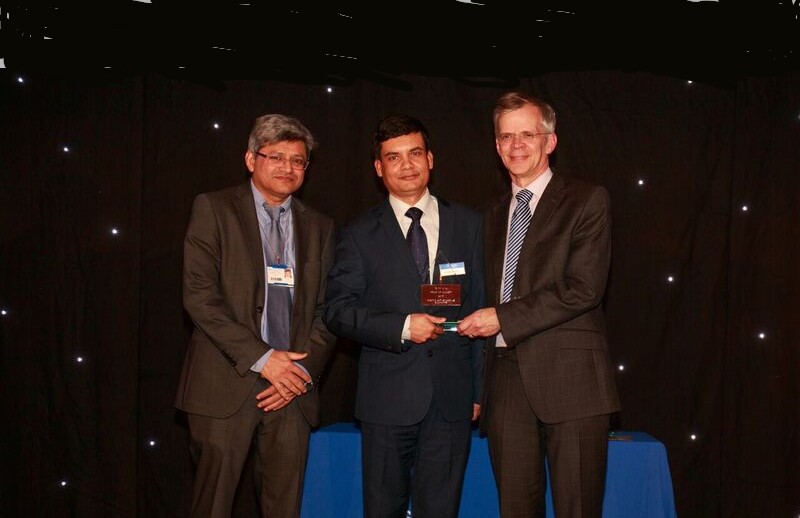
Dr. Hasan Shahid: From primary school to PhD, I have learned from many teachers, and I’m sincerely grateful to all of them. However, only a few have truly inspired me with their teaching. That’s why I’ve dedicated myself to being an excellent teacher and, as a scientist, I have always felt a responsibility—to nurture the next generation of scientists. If my students don’t understand or deeply appreciate my subjects, where is my success as a teacher? Whether I’ve succeeded may best be answered by my students, but several awards have brought recognition. Among these are the Queen Mary Drapers’ Prize in Innovation in Learning and Teaching, the Queen Mary Drapers’ Fellowship, and, most notably, the 2017 national recognition—the National Teaching Fellowship.
Each year, this award is given to 55 academics from universities across the UK for outstanding long-term contributions to teaching. Each university can nominate up to three candidates through an internal competition to the national body, Advance Higher Education, which selects 55 recipients who are designated National Teaching Fellows, along with a £5000 grant to support a project or initiative for education quality improvement. The award is presented at a special national ceremony, and the names of the awardees and their institutions are published in the Times newspaper.
Many factors contributed to my receiving this award, which are too numerous to detail here. But one key factor was “research-informed teaching”—enriching my teaching and making it engaging by incorporating research findings.
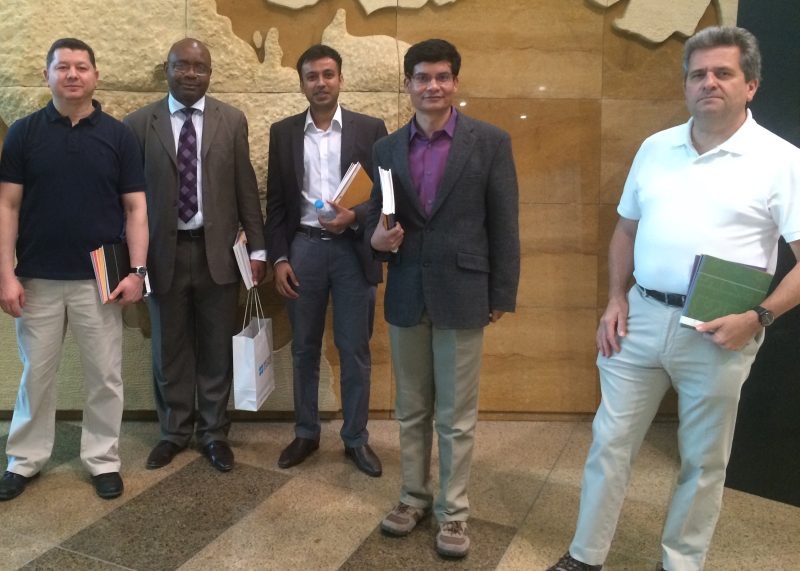
Channel S News link: https://m.facebook.com/story.php?story_fbid=874355829395757&id=562059863958690¬if_t=like¬if_id=1504976053453842&ref=m_notif
Queen Mary School of Engineering and Material Science news: https://sems.qmul.ac.uk/news/4648/sems-academic-awarded-prestigious-national-teaching-fellowship
Times Higher Education NTF 2017 List at the end of the article: https://www.timeshighereducation.com/news/daughter-follows-father-winning-uks-top-teaching-award
Queen Mary University of London news: http://www.qmul.ac.uk/media/news/items/199683.html [/box]
Biggani.org: What would you like to work on in the future?
Dr. Hasan Shahid: All the research topics I mentioned above are ongoing. I’d like to continue working towards practical applications of some of them. Additionally, I’ve been working for several years on renewable energy and water purification. Energy and water are two major challenges for the global population, especially marginalized communities. This realization drove me to research these subjects. [/box]
Biggani.org: Do you have any advice or message for young students interested in pursuing science?
Dr. Hasan Shahid: In most developed countries, a large proportion of a small population enters higher education, but in our country, due to various limitations, only a small portion of a large population gets the chance for higher or scientific studies. Therefore, those who do come to science education/research here are an exceptionally talented group—much more capable than they likely think. Young science students should advance with confidence and big dreams. But remember that working in science or research demands great patience, and unlike many professions, overnight achievement or social recognition is rare. So, passion or love for science/research should be a primary motivation for those entering this field.
Also, we must remember that the main objective of what we’re doing—or wish to do—is the welfare of society and humanity. Therefore, it’s essential to stay connected with people at all levels of society. It’s hard to nurture a sense of social benefit if one becomes disconnected from people and one’s roots.