


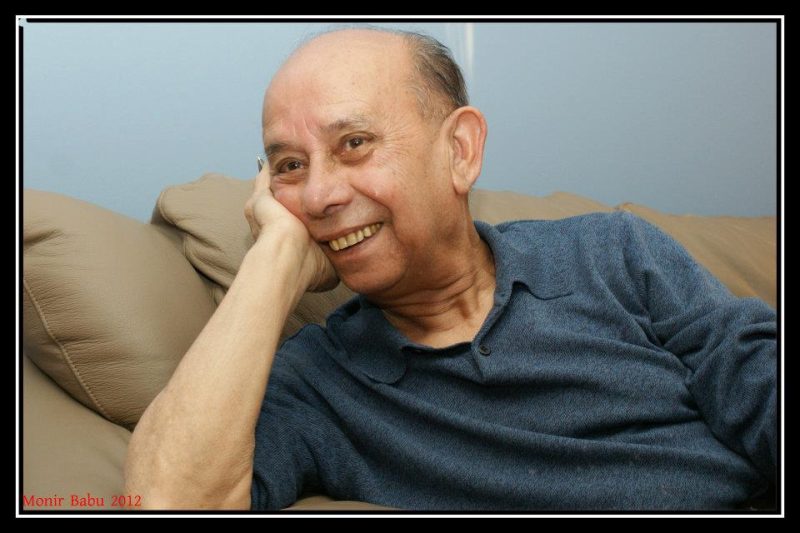
Dr. Mizan Rahman (1932–2015) was a Bangladeshi-Canadian mathematician, teacher, and essayist. He was born in Dhaka and earned his B.Sc. and M.Sc. in Physics and Applied Mathematics from the University of Dhaka. He later completed an M.A. in Mathematics from the University of Cambridge and, in 1965, a Ph.D. from the University of New Brunswick in Canada on “Kinetic Theory of Gases and Plasmas Using Singular Integral Equation Techniques.”
From 1965 to 1998, Dr. Rahman served as a professor at Carleton University in Ottawa, Canada, and after retirement became Professor Emeritus. His research made significant contributions to hypergeometric series, orthogonal polynomials, and special functions, especially through collaborative work with George Gasper.
Alongside mathematics, he worked extensively in philosophy, literature, art, music, politics, and rational thought. He wrote in both Bengali and English, contributing to various blogs and media such as Mukto-Mona, Karmara, and Parabaas, focusing on education, human values, and social responsibility.
💬 Q&A:
Question: Welcome, Dr. Mizan Rahman – please tell us about your birthplace, childhood, and education.
Answer: I was born in 1932 in a rented house in Dhaka. My early education was in my mother’s lap, and later I joined class three at Government Muslim High School. Despite financial difficulties, I was able to continue my studies thanks to scholarships and special funds. My most vivid childhood memory is the famine of 1943, which deeply influenced my character and outlook on life.
Question: You are a father. What do you miss most from your own childhood that your children did not experience?
Answer: The loving affection of grandparents, which my sons did not have.
Question: Tell us about your family and your children’s professions.
Answer: My eldest son Babu went into mechanical engineering and lives a settled life in California. My younger son Raja studied classical Western music at Juilliard; his career is unstable and he is unmarried, but he is pursuing his passion.
Question: Is it good to accumulate wealth for your children?
Answer: No, wealth does not enhance productivity in life. I have no desire for possessions; whatever remains will support my musician son and the rest will be donated.
Question: When and why did you go to Canada?
Answer: In 1962, primarily for higher education and to stay away from family disputes.
Question: Where did your vision and inspiration come from?
Answer: My goal is to achieve the highest standards and dedicate myself to the welfare of society. Inspiration comes from striving for excellence and the desire to contribute to humanity.
Question: What are your main interests?
Answer: To raise quality from the lowest to the highest, even to transcendental levels. The search for beauty and harmony in all forms of human expression is central to my life.
Question: How was your journey in mathematics?
Answer: Although my Ph.D. was in kinetic theory, working with Michael Hoare in London led me to shift to hypergeometric series and orthogonal polynomials. This change determined my main research contributions.
Question: Who are your favorite personalities in various fields?
Answer: Artist: Van Gogh; Musician: Beethoven; Writer: Rabindranath; Politician: Tajuddin Ahmad; Philosopher: Socrates; Economist: Keynes. Most inspiring: Rabindranath.
Question: Thoughts on education and social responsibility?
Answer: The education system in Bangladesh is deeply flawed, which creates inequality and hinders social progress. Contemporary education that emphasizes critical thinking, empathy, and knowledge creation is essential for a responsible society.
Question: Your views on global economic inequality?
Answer: Free trade benefits a few but leaves many behind. Lack of social conscience and unchecked greed worsen poverty. Microcredit can help, but greater societal participation is needed.
Question: The political and social situation in Bangladesh?
Answer: Many politicians are ineffective or corrupt. Progressive thinkers like Dr. Humayun Azad and Taslima Nasrin are undervalued. Military involvement in business reflects systemic corruption.
Question: Advice for students and teachers?
Answer: Knowledge has no bounds. Learning doesn’t end with a Ph.D. It is important to teach others to think creatively and be socially responsible.
🔗 Profile link:
Mizan Rahman – Google Scholar
Dr. Mizan Rahman’s contributions extend across mathematics, literature, philosophy, and social thought. His reflections encourage critical thinking, empathy, and creative education. Beyond academic achievement, he emphasized humanity, cultural understanding, and the responsibility of education in shaping society. The biggani.org team honors his vision and dedication and hopes his insights will inspire students and thinkers in Bangladesh and around the world.
Mathematics, Philosophy, and Humanity – Dr. Mizan Rahman Speaks
Dr. Mizan Rahman (1932–2015) was a Bangladeshi-Canadian mathematician, educator, and prolific writer. Born in Dhaka, Bangladesh, he earned his B.Sc. and M.Sc. in Physics and Applied Mathematics from Dhaka University, followed by an M.A. in Mathematics from Cambridge University. He completed his Ph.D. in 1965 at the University of New Brunswick, Canada, focusing on “The Kinetic Theory of Gases and Plasmas Using Singular Integral Equation Techniques.”
Dr. Rahman served as a professor at Carleton University, Ottawa, Canada, from 1965 until his retirement in 1998, later becoming Professor Emeritus. His research contributions include work on basic hypergeometric series, orthogonal polynomials, and special functions, particularly in collaboration with George Gasper. In addition to mathematics, he explored philosophy, literature, art, music, politics, and rationalism, writing extensively in Bengali and English. Dr. Rahman was an active contributor to multiple media and blogs, including Mukto-Mona, Karamara, and Parabaas, emphasizing education, human values, and social responsibility.
💬 Q&A Session:
Q: Greetings Dr. Mizan Rahman – tell us about your birthplace, childhood, and education.
A: I was born in a rented house in old Dhaka in 1932. My first schooling was in my mother’s lap until I joined class 3 at Govt. Muslim High School. Despite financial constraints, I was able to continue my education thanks to stipends and special funds. My most vivid childhood memory was the devastating famine of 1943, which shaped my character and outlook on life.
Q: You are a father. What do you miss in your children’s childhood that you enjoyed most in yours?
A: I cherished the loving indulgence of my grandparents, which my sons did not experience.
Q: Tell us about your family and your children’s professions.
A: My older son, Babu, followed a traditional career path in Mechanical Engineering and has a stable life in California. My younger son, Raja, pursued classical Western music at Juilliard; his career is less steady and unmarried, but he continues pursuing his passion.
Q: Is saving wealth for children a good idea?
A: No, wealth is not a strong incentive for a productive life. I have no desire for wealth, and any leftover should help my musician son and the rest go to charity.
Q: When and why did you move to Canada?
A: I moved in 1962, mainly for higher education and partly to escape family disputes.
Q: What is your vision and who inspired you?
A: My vision is to aim for the top and give everything for societal benefit. Inspiration comes from striving for excellence and contributing to humanity.
Q: What are your passions?
A: To elevate quality from the lowest reality to higher, transcendental levels. Seeking beauty and harmony in all forms of human expression is central to my life.
Q: Your journey in mathematics?
A: Though my Ph.D. was in kinetic theory, I transitioned to hypergeometric series and orthogonal polynomials through collaboration with Michael Hoare in London. This shift defined my primary research contributions.
Q: Favorite figures across disciplines?
A: Artist: Van Gogh; Musician: Beethoven; Writer: Tagore; Politician: Tajuddin Ahmad; Philosopher: Socrates; Economist: Keynes. Most inspirational: Tagore.
Q: Thoughts on education and societal responsibility?
A: Bangladesh’s education system is deeply flawed, producing inequality and limiting social mobility. Modern education emphasizing critical thinking, empathy, and knowledge creation is vital for a responsible society.
Q: Views on global economic inequality?
A: Free trade benefits few while leaving many behind. Social conscience collapse and unchecked greed exacerbate poverty. Micro-credit can help but requires broader societal participation.
Q: Political and social reflections on Bangladesh?
A: Many politicians are ineffective or corrupt. Progressive thinkers like Dr. Humayun Azad and Taslima Nasrin are undervalued. Military involvement in business reflects systemic corruption.
Q: Advice to students and teachers?
A: Knowledge has no boundaries. Learning never ends after a Ph.D. Teach others how to think creatively and socially responsibly.
🔗 Profile Link:
Mizan Rahman – Google Scholar
Dr. Mizan Rahman’s contributions span mathematics, literature, philosophy, and social thought. His reflections encourage critical thinking, empathy, and creative learning. Beyond academic achievements, he emphasized humanity, cultural understanding, and the responsibility of education in shaping society. The biggani.org team honors Dr. Rahman’s vision and dedication, hoping his insights inspire the next generation of thinkers and educators in Bangladesh and globally.






Right here is the perfect web site for anyone who would like to find out about this topic.
You realize a whole lot its almost tough to argue with you (not that I personally will need to…HaHa).
You certainly put a brand new spin on a topic that has been written about for ages.
Wonderful stuff, just excellent!
AMAZING AND WONDERFUL.